Armenian Cathedral Of Lviv
Lviv, Ukraine
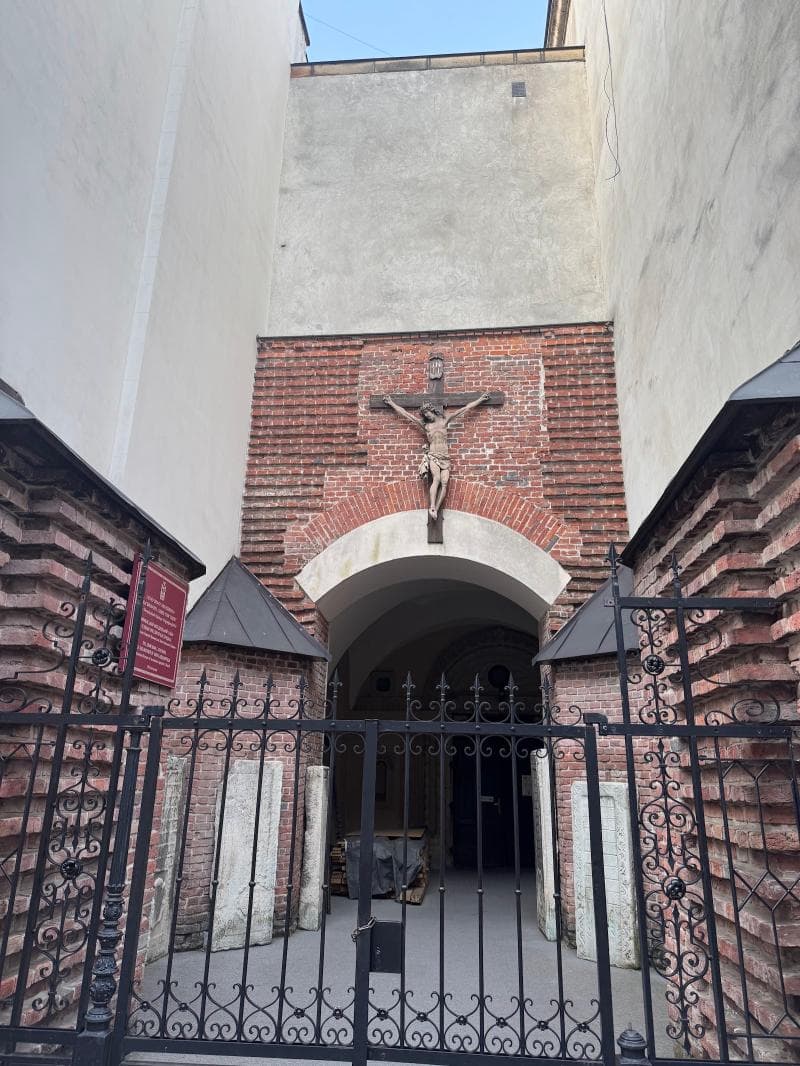
Explore the Armenian Cathedral of Lviv, Ukraine – a UNESCO World Heritage site blending Eastern and Western architectural styles. Discover its rich history, unique art, and tranquil courtyards.
Overview
Tucked away in the historic heart of Lviv, Ukraine, the Armenian Cathedral of the Assumption of Mary stands as a profound testament to centuries of Armenian presence and cultural heritage in the city. This architectural masterpiece, often simply called the Armenian Cathedral, is more than just a religious edifice; it's a living symbol of an enduring diaspora that significantly shaped Lviv's multicultural identity. Constructed primarily between 1356 and 1363, the cathedral is a remarkable blend of Eastern architectural traditions, drawing inspiration from the ancient Armenian capital of Ani, alongside Romanesque, Gothic, Renaissance, and Art Nouveau influences that evolved through numerous reconstructions and expansions.
Today, the cathedral serves as the spiritual center for the Armenian Diocese of Ukraine, belonging to the Armenian Apostolic Church, and is recognized as a UNESCO World Heritage Site as part of Lviv's Old Town. Its complex includes not only the main church but also a bell tower, the former Archbishop's Palace, and tranquil courtyards adorned with ancient tombstones, inviting visitors into a serene world steeped in history. A visit here offers a unique opportunity to explore a sacred space where the East and West harmoniously intertwine, revealing layers of faith, art, and community.
History & Cultural Background
The history of the Armenian community in Lviv dates back to the second half of the 13th century, with Armenian merchants playing a pivotal role in the city's trade networks. Their wealth and influence enabled the construction of the Armenian Cathedral, founded between 1356 and 1363 on the site of an even older wooden church. The initial design was overseen by the Silesian architect Doring, who modeled the church after the revered Cathedral of Ani, the ancient capital of Armenia. This foundational design imbued the Lviv cathedral with distinctive Armenian architectural peculiarities, including thick stone walls—up to 1.5 meters thick—and a unique dome structure with hollow ribs made of clay acoustic jars.
Over the centuries, the cathedral complex underwent numerous transformations. An open arcade was added in 1437, and a new stone bell tower was erected in 1571. Subsequent additions included the extension of the main nave in 1630 and significant interior restorations in the 18th century that introduced Baroque elements following a fire. A major remodeling between 1908 and 1927, led by architects such as Franciszek Monczynski and featuring the artistry of Jan Henryk Rosen for murals and Józef Megoffer for mosaics, gave the interior much of its present-day splendor. Until 1945, the cathedral belonged to the Armenian Catholic Archdiocese of Lviv. However, during the Soviet era, it was closed, its clergy were persecuted, and the building was repurposed, first as an art storage facility and later as the Lenin Museum. Justice was restored in 2000 when the church was returned to the Armenian community, followed by its re-consecration in 2003 by Catholicos Karekin II, marking its rebirth as a vibrant spiritual center.
What Makes It Special
The Armenian Cathedral's distinctiveness lies in its seamless fusion of diverse architectural styles and its role as a bridge between cultures. It is one of the few fully preserved medieval architectural monuments in Lviv, showcasing the robust stone construction that allowed it to endure through centuries. Its design, echoing the ancient Ani Cathedral, brings a piece of historic Armenia to Eastern Europe.
Inside, the cathedral boasts an extraordinary collection of early 20th-century murals by Jan Henryk Rosen, known for their expressive colors and dramatic symbolism, depicting scenes like 'The Last Supper' and the 'Crucifixion'. The mosaics by Józef Megoffer, particularly those adorning the main dome, are another breathtaking feature, masterfully combining Eastern traditions with Art Nouveau elements. Beyond the main sanctuary, the serene courtyards with their ancient tombstones, including that of Patriarch Stephan V who died in Lviv in 1551, and the wooden 'Golgotha' chapel with its carved altar, offer a poignant glimpse into the lives and faith of past generations.
Stories, Fun Facts & Local Details
One fascinating aspect of the Armenian Cathedral's architecture is its unique dome construction, which utilizes hollow clay acoustic jars (holosnyky) embedded in its ribs. This ingenious method was designed not only for structural integrity but also to create exceptional acoustics within the sacred space. The cathedral's interior also features ancient khachkars, Armenian cross-stones, carved into its walls and pillars, some dating back to the 14th-15th centuries, connecting the building directly to Armenian spiritual culture.
During its restoration in the early 20th century, fragments of Byzantine frescoes from the 15th-16th centuries were discovered, providing a rare glimpse into earlier artistic layers. The rich history of the Armenian community in Lviv, once controlling much of eastern trade, meant they were highly influential and prosperous, leading to the creation of this impressive complex as the center of their quarter. The entire complex, including the Archbishop's Palace and the bell tower, creates a sense of a mysterious and sacred space, separated from the urban bustle.
Visitor Perspective
Visiting the Armenian Cathedral offers a visual and spiritual journey. Located at 7/13 Virmenska Street, it's conveniently situated in Lviv's Old Town, just a 5-10 minute walk from the famous Rynok Square. The approach through narrow, atmospheric streets enhances the sense of discovery as you arrive at this historic site. The cathedral doors are generally open to tourists during the daytime, though it's wise to consider that viewing the interiors might be restricted during religious services to respect the faithful.
Allowing one to one and a half hours is recommended to fully appreciate the cathedral and its surrounding courtyards. Begin your exploration in the inner courtyards, where you can admire the historic tombstones, the St. Christopher Column, and the 'Golgotha' chapel. Inside the main temple, be sure to look up at the stunning carved wooden ceiling, the intricate mosaics in the dome, and the expressive murals by Jan Henryk Rosen. While the cathedral remains an active place of worship, it warmly welcomes those interested in Lviv's diverse heritage, offering a serene and profoundly enriching experience.
Coordinates: 24.03083, 49.84333
View on Google Maps💬 How Travelers Describe This Place
Based on community votes
Unique
965Interesting
629Must See
443Beautiful
184Photogenic
176
Traveler Stories
Discover memorable experiences shared by travelers who have visited this place.
No traveler stories yet.
Be the first traveler to share what made this place memorable.
Things to see at Armenian Cathedral Of Lviv



Tour
By
Spot
Discover amazing places around the world. Your journey starts here.
Explore
© 2026 TourBySpot. All rights reserved.