Bell Tower
Lviv, Ukraine
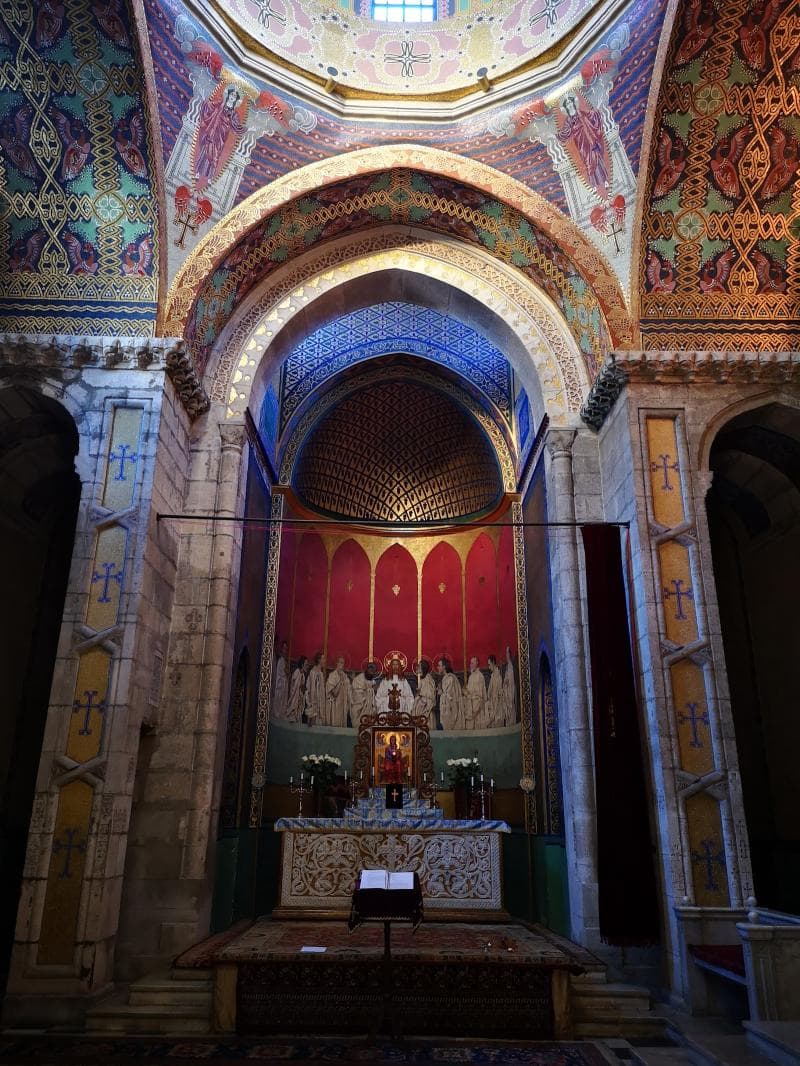
Explore the historic Bell Tower of the Armenian Cathedral in Lviv, Ukraine. Discover its unique Renaissance-Baroque architecture, rich history, and panoramic views of the Old City.
Overview
Perched within the historic heart of Lviv, Ukraine, the Bell Tower of the Armenian Cathedral stands as a venerable sentinel, deeply woven into the fabric of the city's rich past. This distinguished sub-spot is an integral component of the sprawling Armenian Cathedral ensemble, a site recognized for its profound cultural and architectural significance. It was constructed adjacent to what was once the palace of the Armenian Archbishops, forming a seamless and historically rich complex.
Architecturally, the Bell Tower is a captivating blend of styles, notably featuring elements of both Renaissance and Baroque influences, which tell tales of the various eras and tastes that shaped its form. It presents a robust, square-plan structure, built meticulously from stone, rising majestically in three distinct tiers. Capping its height is an elongated cupola, adorned with a delicate lantern, and flanked by four smaller towers at its corners, adding to its unique silhouette against the Lviv skyline. Beyond its architectural grandeur, the tower offers a truly special experience: ascending its steps rewards visitors with breathtaking panoramic views of Lviv's enchanting Old City, a perspective that connects past and present.
History & Cultural Background
The genesis of the Bell Tower is rooted in resilience. Following a devastating city fire in 1527 that damaged the Armenian Cathedral, a new stone bell tower was erected in 1571. This initial construction is attributed to the architect P. Krasowski, also known as Petro Krasovsky. Over the centuries, the tower underwent significant transformations, including a notable reconstruction in 1778, which further refined its features. The final touches to its upper part were completed in the early 19th century, contributing to the harmonious architectural ensemble seen today.
Interestingly, early historical accounts suggest that the Bell Tower may have initially served more than just a religious function. Its robust construction, characterized by thick walls and narrow loopholes, hints at a possible defensive role in its earliest days, safeguarding the Armenian community within the walled city. The Armenian community itself boasts an ancient heritage in Lviv, with settlements dating back to the 13th century. They were instrumental in the city's trade networks and urban development, establishing a vibrant presence centered around their spiritual heart, the Armenian Cathedral, which was first built between 1363 and 1370. Modeled after the famed Cathedral of Ani, the ancient Armenian capital, it served as a symbol of their enduring culture in a new land.
What Makes It Special
The Bell Tower's unique charm lies not only in its architectural composition but also in its profound historical narrative. Its striking fusion of Renaissance and Baroque styles is a testament to the evolving artistic trends and the skilled craftsmanship of different epochs. It stands as a resilient structure, having witnessed and survived fires and the relentless march of time, a silent observer of Lviv's tumultuous history.
More than just a standalone monument, the Bell Tower is an essential part of the larger Armenian Cathedral ensemble, which is rightly recognized as a UNESCO World Heritage site. This complex includes the venerable cathedral itself, the former archbishop's palace, and a serene courtyard, collectively transporting visitors to a bygone era. The opportunity to ascend the tower and behold one of the finest panoramic views of Lviv's Old City is arguably one of its most captivating features, offering a unique perspective on the city's historical layout and architectural splendor.
Stories, Fun Facts & Local Details
The Bell Tower holds many intriguing details that enrich its story. One such detail is the passage beneath the tower, which ingeniously connects to the 'Armenian courtyard'. This courtyard is not merely an open space but a historical pathway that traverses the block, acting as a historical artery within the Armenian Quarter. The courtyard itself is a repository of history, famed for its ancient tombstones with inscriptions that pave its floor and contribute to its distinctly peaceful and contemplative atmosphere.
Another fascinating aspect is the hint of its early defensive capabilities. The notion that a structure now revered for its spiritual and aesthetic qualities once possessed the practical function of protection, with thick walls and narrow openings designed for vigilance, adds a layer of depth to its history. The entire Armenian ensemble, including the Bell Tower, represents a microcosm of Eastern and European influences, reflecting Lviv's historical role as a multicultural crossroads. The integration of the Bell Tower into this celebrated UNESCO World Heritage site further underscores its irreplaceable value.
Visitor Perspective
For the curious traveler, the Bell Tower offers more than just a glimpse into the past; it provides an immersive experience. Its distinct architecture and the sweeping views from its summit make it an unparalleled subject for photography, allowing visitors to capture the timeless beauty of Lviv. Exploring the Bell Tower as part of the broader Armenian Cathedral ensemble is like stepping through a portal into another era, where the intricate details of medieval and early modern life unfold before your eyes.
The Armenian Quarter, with the Bell Tower as a prominent landmark, is exceptionally rich in cultural heritage. As you explore, you will discover that the lower tier of the Bell Tower still preserves a portal dating back to the 17th century, offering a direct tangible link to its long history. This journey through the Armenian Cathedral's Bell Tower promises not just sightseeing, but a meaningful engagement with Lviv's layered past and the enduring legacy of its Armenian community.
Coordinates: 24.03083, 49.84333
View on Google Maps💬 How Travelers Describe This Place
Based on community votes
Interesting
585Beautiful
550Photogenic
546Unique
56Must See
28
Traveler Stories
Discover memorable experiences shared by travelers who have visited this place.
No traveler stories yet.
Be the first traveler to share what made this place memorable.

Tour
By
Spot
Discover amazing places around the world. Your journey starts here.
Explore
© 2026 TourBySpot. All rights reserved.