Wooden Altar
Lviv, Ukraine
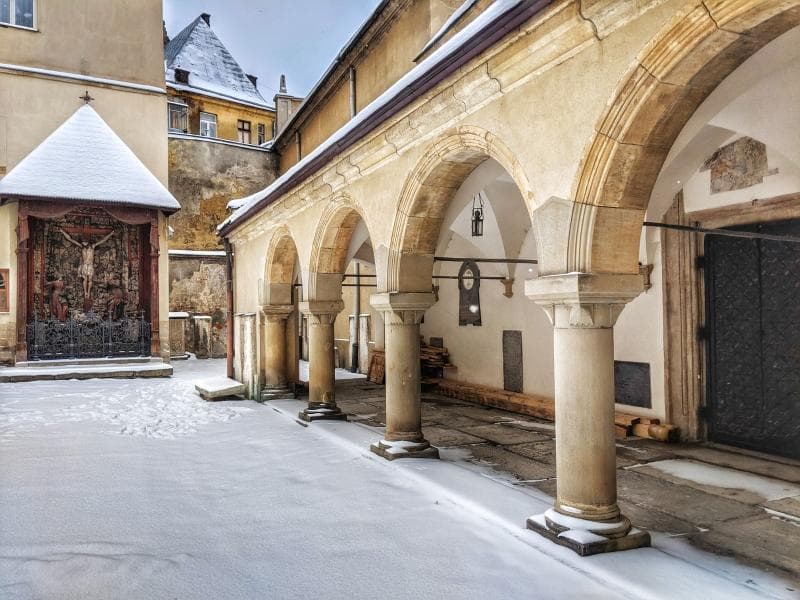
Explore the historic Wooden Altar inside the Armenian Cathedral of Lviv, Ukraine, a UNESCO site featuring stunning art and centuries of history.
Overview
Deep within the ancient city of Lviv, Ukraine, lies the Armenian Cathedral of the Assumption of Mary, a UNESCO World Heritage site and a profound spiritual anchor for the Armenian community. This architectural gem, a blend of Eastern and Western influences, houses a multitude of treasures, among them a significant altar space that serves as the heart of its sacred rituals. While the cathedral is famed for its captivating frescoes and intricate mosaics, the main altar area itself incorporates historically rich wooden elements, contributing to its unique atmosphere.
Beyond the primary altar, the cathedral complex also features other notable wooden artistry, such as a beautifully carved wooden ceiling in the nave and a distinct wooden 'Golgotha' chapel situated within its serene courtyards, further emphasizing the role of wood in its spiritual and artistic expression.
History & Cultural Background
The Armenian Cathedral's history stretches back to the 14th century, with its foundation laid between 1363 and 1370 by Armenian merchants from Caffa. Modeled after the Cathedral of Ani, the ancient Armenian capital, its original construction laid the groundwork for the oldest part of the church, the altar section.
Over centuries, the cathedral underwent numerous transformations and expansions. After a fire in 1712, its interior acquired Baroque characteristics, with new altars installed. A major restoration between 1908 and 1927, led by Franciszek Mączyński, significantly shaped its modern appearance. During this period, the central altar, along with an ambon and semicircular balustrade, was designed by Witold Mińkiewicz between 1927 and 1929. This continuous evolution means that while the core altar space is medieval, its decorative and structural elements reflect diverse historical layers.
What Makes It Special
The altar area of the Armenian Cathedral is a focal point of artistic and spiritual grandeur. Above the altar, visitors can admire a magnificent Murano mosaic gracing the vault and dome, a masterpiece by the renowned Polish artist Józef Mehoffer, combining colored stones and enamel.
Behind the main altar, the compelling fresco of 'The Last Supper' by Jan Henryk Rosen captivates with its unique depiction where all participants are standing, a departure from traditional portrayals. This painting, along with other Art Deco murals by Rosen from the 1920s, injects a striking blend of modern artistry into the ancient space.
Adding to its distinctiveness, a notable wooden altar within the cathedral's interior was subject to protective measures during recent conflicts, highlighting its significant material value and spiritual importance. Furthermore, the main nave features a beautifully carved wooden ceiling from the 17th century, showcasing intricate Oriental motifs that contribute to the cathedral's immersive Eastern ambiance.
Stories, Fun Facts & Local Details
One of the most intriguing aspects of the altar frescoes is Jan Henryk Rosen's 'The Last Supper.' It is said that Rosen invited contemporary celebrities and actors to model for the figures in his paintings, adding a personal and anachronistic touch to the sacred narratives. For example, Judas is subtly depicted in the right corner, turned away, his face unseen, with only his hand betraying him, symbolizing his isolation.
Outside the main sanctuary, within the cathedral's tranquil courtyards, visitors can discover the 'Golgotha' chapel, a unique wooden structure featuring a carved altar that vividly portrays the suffering of Christ. This 18th-century Calvary Altar is a powerful, poignant piece of art that invites contemplation and adds another layer of historical and spiritual narrative to the cathedral complex.
Visitor Perspective
Stepping into the Armenian Cathedral and approaching its altar is like entering a realm where centuries converge. The ancient stone structure, dating back to the 14th century, provides a grounding sense of history, while the vibrant 20th-century artistry of Rosen and Mehoffer infuses the space with a dynamic, almost mystical energy.
The combination of these artistic elements with the subtle presence of wooden features, from the ornate ceiling to the main altar's components, creates an atmosphere of deep reverence and cultural richness. Visitors often describe feeling a profound sense of peace and wonder, transported away from the bustling city outside into a sanctuary where Armenian heritage and Christian faith have intertwined for generations. The experience offers a unique glimpse into Lviv's multicultural past and its enduring spiritual traditions.
Coordinates: 24.0308, 49.8433
View on Google Maps💬 How Travelers Describe This Place
Based on community votes
Photogenic
958Unique
743Interesting
719Must See
629Beautiful
176
Traveler Stories
Discover memorable experiences shared by travelers who have visited this place.
No traveler stories yet.
Be the first traveler to share what made this place memorable.

Tour
By
Spot
Discover amazing places around the world. Your journey starts here.
Explore
© 2026 TourBySpot. All rights reserved.