Zagreb Cathedral
Zagreb, Croatia
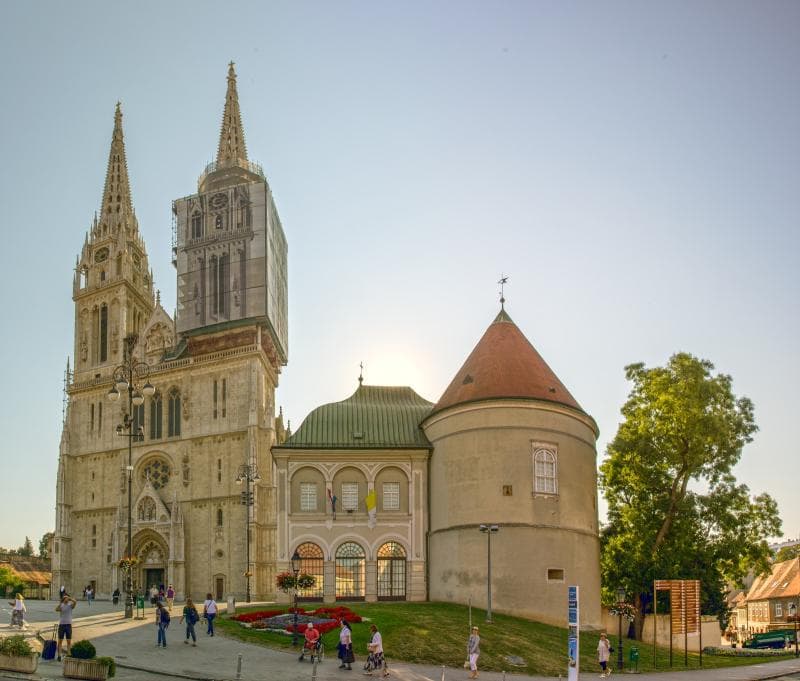
Explore Zagreb Cathedral, Croatia's tallest building and a stunning Neo-Gothic landmark in Zagreb. Discover its rich history, art, and spiritual significance.
Overview
Soaring majestically above the Kaptol district, Zagreb Cathedral, officially known as the Cathedral of the Assumption of the Blessed Virgin Mary and Saints Stephen and Ladislaus, stands as Croatia's tallest and most monumental sacral building. Its iconic twin Neo-Gothic spires, reaching approximately 108 meters into the sky, have long defined the city's skyline and served as an enduring symbol of Zagreb's resilience and deep-rooted Catholic heritage. This architectural marvel, rich in history and spiritual significance, invites visitors to delve into centuries of Croatian faith and culture, despite its ongoing restoration following recent seismic events.
While its current form is largely a result of late 19th-century Neo-Gothic reconstruction, the site itself has been a focal point of worship and ecclesiastical power for over 900 years, making it an irreplaceable treasure of the Croatian capital. The cathedral is not merely a grand edifice; it is a living house of God, a testament to enduring faith, and a repository of art and history that reflects the very soul of Croatia.
History & Cultural Background
The history of Zagreb Cathedral is a dramatic narrative woven with threads of foundation, destruction, and rebirth. A church has stood on this elevated spot since the Zagreb bishopric was established in 1094 by King Ladislaus I of Hungary. The original Romanesque structure, consecrated in 1217, faced an early catastrophe, being heavily damaged during the Mongol (Tatar) invasion of 1242.
Following this devastation, Bishop Timothy initiated a significant reconstruction in the Gothic style during the 13th century, shaping much of the cathedral's medieval character. Over subsequent centuries, the cathedral endured further challenges, including fires, wars, and the persistent threat of Ottoman incursions, which necessitated the construction of robust Renaissance fortification walls and towers around it in the 15th and 16th centuries, some remnants of which are still visible today.
The most profound transformation occurred after the devastating earthquake of 1880, which severely damaged the building, causing the main nave to collapse and one tower to be deemed beyond repair. Austrian architect Hermann Bollé led a sweeping Neo-Gothic restoration and reinvention between 1880 and 1906, giving the cathedral its present iconic appearance with its soaring twin spires. This restoration solidified its status as the most monumental sacral building of Gothic architecture southeast of the Alps.
In March 2020, history repeated itself when another earthquake struck Zagreb, causing considerable damage and necessitating extensive structural repairs, particularly to the spires, which are currently undergoing meticulous restoration.
What Makes It Special
Beyond its impressive scale, Zagreb Cathedral is distinguished by several unique features. Its twin spires, reaching 108 meters, make it the tallest building in Croatia, visible from across the city. The interior boasts a majestic Neo-Gothic high altar, intricately carved Renaissance choir stalls, and a stunning collection of stained-glass windows that bathe the nave in ethereal light.
One of its most revered internal treasures is the tomb of Blessed Cardinal Alojzije Stepinac, a pivotal figure in Croatian Catholicism, located behind the main altar. This resting place attracts numerous faithful, underscoring the cathedral's role as a vibrant spiritual center. The cathedral also houses one of the finest organs in the world, featuring over 6,000 pipes and seventy-eight registers, classified as a zero-category monument of culture. Furthermore, its treasury holds an exceptional collection of precious liturgical artifacts, some dating back to the 11th century, including the St. Ladislaus cloak and an ivory plenarium, offering a glimpse into centuries of ecclesiastical artistry. The sacristy itself is recognized for its great architectural value.
Stories, Fun Facts & Local Details
The cathedral holds many fascinating stories and details. The old clock on the façade, for instance, remains famously stopped at 7:03, precisely the moment the devastating 1880 earthquake struck, serving as a poignant reminder of the city's past tribulations and resilience. Beneath the main altar, where Cardinal Stepinac rests, parishioners often leave handwritten prayers and small offerings, a quiet tradition filling the crypt with a sense of devotion.
Inside, visitors might discover a rare medieval Glagolitic inscription, one of the oldest of its kind, offering a connection to Croatia's ancient liturgical script. Outside, in the square, stands the gilded Marian column, depicting the Virgin Mary with four angels, symbolizing protection and tying the sacred space to the daily life of the bustling Dolac Market nearby. The cathedral was even depicted on the reverse of the Croatian 1000 kuna banknote, highlighting its immense national importance. The ongoing restoration, while challenging, has provided an opportunity for the building to be reinforced to be stronger than ever before.
Visitor Perspective
Visiting Zagreb Cathedral offers a profound experience, even with the ongoing restoration efforts. As an active place of worship, quiet reverence is expected, and visitors are encouraged to dress respectfully, covering shoulders and knees. While interior access may be subject to ongoing works, the sheer magnificence of the exterior, particularly the intricate facade and the scale of the remaining structures, is captivating.
The cathedral's prominent location on Kaptol hill makes it an accessible and essential stop for any traveler exploring Zagreb. It is a short walk from Ban Jelačić Square and adjacent to the vibrant Dolac Market, allowing for a seamless integration into a day of exploring the city's historical heart. Even with scaffolding, the power and beauty of this spiritual landmark are undeniable, offering a unique opportunity to witness its continuous journey through history.
Coordinates: 15.9798, 45.8144
View on Google Maps💬 How Travelers Describe This Place
Based on community votes
Interesting
494Must See
242Photogenic
193Unique
125Beautiful
82
Traveler Stories
Discover memorable experiences shared by travelers who have visited this place.
No traveler stories yet.
Be the first traveler to share what made this place memorable.
Things to see at Zagreb Cathedral



Tour
By
Spot
Discover amazing places around the world. Your journey starts here.
Explore
© 2026 TourBySpot. All rights reserved.