Treasury
Zagreb, Croatia
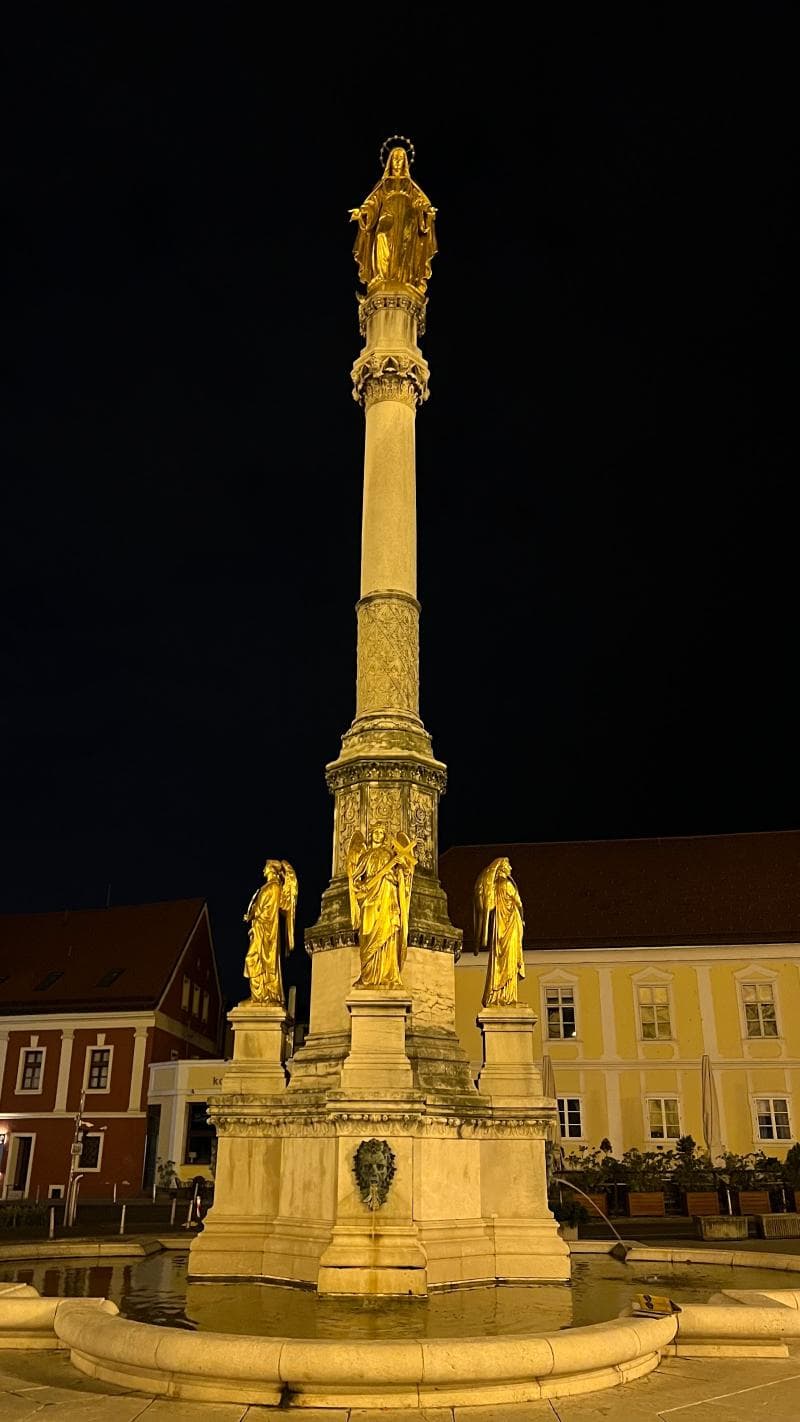
Explore the Zagreb Cathedral Treasury in Zagreb, Croatia. Discover priceless historical artifacts, liturgical vestments, and religious relics dating back to the 11th century, offering a deep dive into Croatia's rich cultural and spiritual heritage.
Overview
Tucked within the grand Zagreb Cathedral in Zagreb, Croatia, lies the Treasury, a captivating repository of history and sacred art. It serves as a vital cultural institution, preserving a vast collection of priceless objects that tell the story of the Zagreb Diocese and Croatian identity itself. The Treasury's holdings span centuries, with items dating from the 11th to the 19th century and beyond, offering a tangible link to a rich past. Visitors can discover an eclectic mix of liturgical books, exquisite metal artifacts, rare textiles, musical notations, medals, devotional objects, and a numismatic collection. Access to this remarkable collection is typically granted through prior arrangement, highlighting its protected and revered status within the cathedral.
History & Cultural Background
The foundation of the Zagreb Cathedral Treasury is deeply intertwined with the establishment of the Zagreb Diocese in 1094 by King Ladislaus I of Hungary. Since then, the Treasury has continuously accumulated its exceptional holdings, acting as a historical chronicle of religious and cultural evolution in the region. Its contents are not merely decorative but serve as a crucial resource for understanding the development of Croatian identity and its enduring religious traditions.
Among its earliest and most significant artifacts are the ivory plenarium and an illuminated Evangeliarium, both originating in the 11th century. A particularly noteworthy document housed here is the Charter of Felician from 1134, which provides one of the oldest recorded mentions of the Zagreb Archdiocese. The Treasury's transformation into a structured church museum was initiated by Cardinal Juraj Haulik, the first Archbishop of Zagreb, further solidifying its role as a guardian of cultural heritage. These collections collectively bear witness to the continuous religious, cultural, and political traditions that have shaped Croatia through the ages.
What Makes It Special
The Zagreb Cathedral Treasury stands out for its extraordinary historical and artistic value, showcasing items of profound significance. One of its most revered pieces is the bell-shaped chasuble, meticulously fashioned from the mantle of Saint Ladislaus, the very founder of the Zagreb Diocese. Beyond this, the collection boasts an incredibly rich assortment of liturgical vestments, encompassing nearly a thousand items and fragments of historical textiles, each telling its own story of craftsmanship and devotion.
The Treasury also houses a stunning array of precious metal artifacts, including intricately designed reliquaries, chalices, ciboria, and monstrances, each piece reflecting centuries of artistic and spiritual dedication. Uniquely, it preserves the oldest known flag and scepter of a Ban of Croatia, symbolic relics that underscore the long-standing tradition of Croatian statehood and autonomy. Furthermore, a rarely exhibited ensemble of tapestries, depicting allegories of the months of the year and presented as a gift from Empress Maria Theresa, adds another layer of artistic grandeur to this already remarkable collection.
Stories, Fun Facts & Local Details
Beyond the formal displays, the Treasury holds items that spark the imagination and offer fascinating glimpses into historical narratives. Consider the 'God's Grave,' a unique sarcophagus-shaped artifact from Bishop Petretić's workshop, which offers a poignant reflection on liturgical practices of the past. Perhaps one of the most intriguing artifacts is the Betlehem child mummy, an object believed to have been brought to Zagreb by King Andrew II himself. Another relic that captures attention is an apparent piece of the True Cross, alongside a fragment said to be from King Ladislaus' arm.
The international recognition of the Treasury is also a point of pride, as its participation in world exhibitions since the 19th century has helped to highlight Croatian cultural heritage on a global stage. Moreover, the ongoing dedication to preserving these treasures is evident in extensive conservation projects, such as the restoration of a 14th-century bishop's mitre and delicate Flemish lace, ensuring that these historical artifacts can be admired by future generations.
Visitor Perspective
For the curious traveler, a visit to the Zagreb Cathedral Treasury is an enriching journey into the heart of Croatia's spiritual and artistic heritage. It is a destination particularly appealing to history buffs, architecture enthusiasts, and those with a keen interest in religious and cultural artifacts. Exploring the Treasury offers a unique and intimate insight into the profound religious and cultural tapestry of both the Zagreb Cathedral and the broader city.
It is important to note that access to this special collection usually requires a prior arrangement or appointment, distinguishing it from the general cathedral visitation. While entry to the main cathedral is often free, there may be a separate ticket or booking process specifically for the Treasury. Travelers should also be aware that, following the significant earthquake in 2020, various parts of the cathedral, and potentially some areas of the Treasury, have been undergoing extensive restoration work. It is advisable to check for the latest visitor information before planning your trip to fully appreciate this extraordinary sub-spot.
Coordinates: 15.979736, 45.814475
View on Google Maps💬 How Travelers Describe This Place
Based on community votes
Unique
670Beautiful
655Photogenic
594Must See
266Interesting
166
Traveler Stories
Discover memorable experiences shared by travelers who have visited this place.
No traveler stories yet.
Be the first traveler to share what made this place memorable.

Tour
By
Spot
Discover amazing places around the world. Your journey starts here.
Explore
© 2026 TourBySpot. All rights reserved.