Archbishop’s Tomb
Zagreb, Croatia
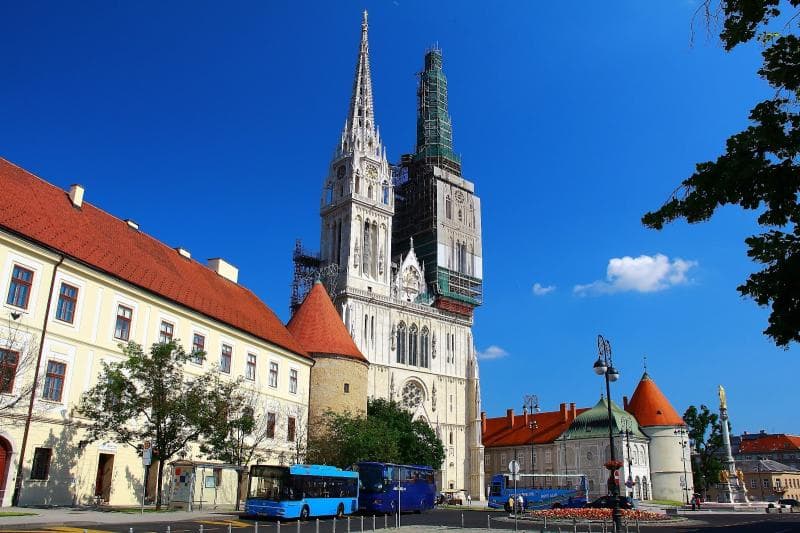
Discover the Archbishop’s Tomb of Cardinal Alojzije Stepinac within Zagreb Cathedral, Croatia. Explore his complex history, beatification, and the tomb's significance as a pilgrimage site.
Overview
Deep within the revered Zagreb Cathedral, a monument of faith and history in Zagreb, Croatia, lies the Archbishop’s Tomb. This sacred resting place belongs to Cardinal Alojzije Stepinac, a figure central to Croatian Catholic identity and a powerful symbol of the nation's turbulent 20th century. Situated prominently behind the main altar, the tomb serves not only as his final resting place but also as a significant pilgrimage site, attracting a steady stream of the faithful from Croatia and beyond.
History & Cultural Background
Cardinal Alojzije Stepinac served as the Archbishop of Zagreb from 1937 until his death in 1960. His tenure spanned one of Croatia's most tumultuous periods, encompassing World War II and the subsequent communist regime. During World War II, Stepinac found himself in a precarious position, navigating the complexities of the Axis-aligned Independent State of Croatia. While he initially welcomed the state, he later openly condemned its atrocities against Jews and Serbs, helping many to escape persecution and criticizing Ustaše actions. However, his failure to break entirely with the regime led to enduring controversy. Following the war, the communist Yugoslav government subjected him to a highly publicized trial, convicting him of high treason and collaboration, a verdict widely viewed as politically motivated. He endured imprisonment and house arrest, steadfastly refusing to sever the Croatian Catholic Church's ties with Rome. His unwavering faith in the face of persecution led Pope John Paul II to beatify him as a martyr in 1998, further solidifying his status as a revered figure within the Catholic Church and among many Croatians.
What Makes It Special
The Archbishop’s Tomb is a powerful focal point of devotion within the cathedral, not merely for its historical significance but also for its artistic merit and profound spiritual resonance. The monument itself, crafted by the renowned Croatian sculptor and architect Ivan Meštrović, features a relief depicting Cardinal Stepinac with Christ, a work that imbues the space with solemn beauty and spiritual contemplation. The tomb is consistently adorned with flowers and candles, left by pilgrims who come to offer prayers and pay their respects, symbolizing a continuous spiritual connection. It stands as a testament to faith's endurance, embodying the strong ties between Croatian identity and Catholicism, making it one of the cathedral's most powerful focuses of devotion.
Stories, Fun Facts & Local Details
The story of Cardinal Stepinac is deeply woven into the fabric of Croatian history, a narrative marked by heroism and contention. His beatification in 1998, twenty-five years ago, was a momentous event in Croatia, underscoring his widespread veneration as a national and religious hero. Yet, his legacy remains a subject of debate, with ongoing discussions about his wartime actions and the push for his full canonization, which is a significant issue for the Croatian Catholic Church. Visitors might observe handwritten prayers and small silver coins slipped into the iron grille of the crypt, a quiet and tactile tradition that speaks volumes about the personal devotion inspired by the Cardinal. His motto, 'In Te, Domine, speravi' ('In Thee, O Lord, have I hoped'), encapsulates his life's principle, particularly during his trials and tribulations. The fact that his physical remains have been interred in the cathedral since his funeral in 1960 further enhances the tomb's sanctity, making it a tangible link to a pivotal era in Croatian history.
Visitor Perspective
Visiting the Archbishop's Tomb offers a unique opportunity for quiet contemplation and historical reflection. As an active place of worship, the Zagreb Cathedral, and particularly the area around the tomb, encourages a respectful demeanor. Visitors are kindly asked to observe proper church etiquette, which includes dressing modestly (covering shoulders and knees), maintaining quiet, and refraining from using flash photography or tripods, especially during services. The atmosphere is one of solemnity and reverence, often filled with the hushed prayers of those paying tribute. Taking a moment to simply observe the faithful, read the informational plaques, and absorb the historical weight of the site can be a profoundly moving experience. It is a place where history, art, and spirituality converge, inviting every visitor to engage with Croatia's complex past and enduring faith.
Coordinates: 15.97974, 45.81447
View on Google Maps💬 How Travelers Describe This Place
Based on community votes
Must See
680Interesting
653Beautiful
588Unique
566Photogenic
503
Traveler Stories
Discover memorable experiences shared by travelers who have visited this place.
No traveler stories yet.
Be the first traveler to share what made this place memorable.

Tour
By
Spot
Discover amazing places around the world. Your journey starts here.
Explore
© 2026 TourBySpot. All rights reserved.