Vyšehrad
Prague, Czech Republic
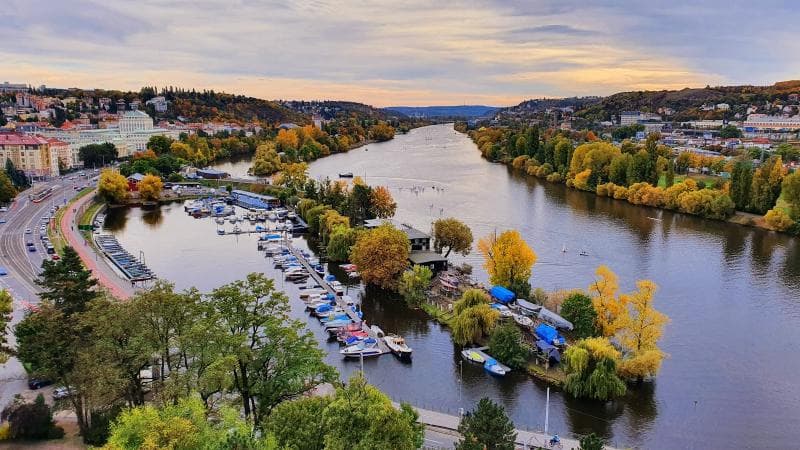
Explore Vyšehrad, Prague's historic fortress and national cultural monument. Discover ancient legends, stunning views, and the resting place of Czech greats in the Czech Republic.
Overview
Perched majestically on a rocky promontory overlooking the Vltava River, Vyšehrad in Prague, Czech Republic, is more than just a historical site; it's a profound symbol of Czech statehood and national identity. This ancient fort, designated a national cultural monument, offers visitors a tranquil escape from the city's bustling center. Unlike the more crowded Prague Castle, Vyšehrad provides a peaceful atmosphere where history, myth, and stunning natural beauty converge. It encompasses significant landmarks such as the Basilica of St. Peter and St. Paul, the revered Vyšehrad Cemetery, and the ancient Rotunda of St. Martin. From its elevated position, Vyšehrad provides breathtaking panoramic views of Prague, making it an ideal spot for quiet reflection and appreciating the city's picturesque skyline. The expansive grounds are open to the public, inviting curious travelers to explore its rich heritage at their own pace.
History & Cultural Background
Vyšehrad's origins trace back to the 10th century, making it one of Prague's earliest settlements. Legend claims it was the seat of the mythical Princess Libuše and Duke Krok, figures central to the founding stories of the Czech nation. For a period in the 11th century, Vyšehrad even served as the royal seat of Bohemia under Vratislav II, who initiated the construction of the original Basilica of St. Peter and St. Paul and established a significant church chapter here. Its strategic importance fluctuated over centuries; it played a crucial defensive role during the Hussite Wars in the 15th century, though it suffered considerable damage. Emperor Charles IV, in the 14th century, revitalized Vyšehrad by rebuilding its fortifications and integrating it into Prague's defense system. Later, in the 17th century, the Habsburgs transformed it into a formidable Baroque military fortress. By the 19th century, during the Czech National Revival, Vyšehrad re-emerged as a powerful symbol of Czech heritage and national pride, fostering a renewed sense of cultural identity.
What Makes It Special
Within Vyšehrad's ancient walls lie several compelling attractions. The most prominent is the Basilica of St. Peter and St. Paul, a magnificent Neo-Gothic church with striking twin towers that dominate the Prague skyline. Its interior is a true artistic marvel, adorned with intricate Art Nouveau paintings inspired by Alfons Mucha and featuring a rare Gothic painting known as the Vyšehrad Madonna. Elevated to a 'basilica minor' by Pope John Paul II in 2003, it holds profound spiritual significance. Adjacent to the basilica is the revered Vyšehrad Cemetery, the national resting place for over 600 of the Czech Republic's most esteemed figures. Here, visitors can pay respects to legendary composers like Antonín Dvořák and Bedřich Smetana, writers such as Karel Čapek, and the painter Alfons Mucha, among many others, their graves often marked by exquisite sculptural art. The grand Slavín tomb serves as a collective pantheon for those granted the highest national honor. Vyšehrad also preserves the Rotunda of St. Martin, Prague's oldest surviving Romanesque building, dating back to the 11th century. For a unique perspective, the underground casemates offer a glimpse into military history, housing original Baroque statues from Charles Bridge.
Stories, Fun Facts & Local Details
Vyšehrad is deeply woven into the fabric of Czech mythology, a place where history and legend are often indistinguishable. One of the most famous tales is that of Princess Libuše, who, from this very hill, prophesied the future glory of Prague, famously declaring, 'I see a great city whose glory will touch the stars.' Another captivating legend recounts the daring escape of Knight Horymír, who, imprisoned at Vyšehrad, leaped from its walls on his faithful horse, Šemík, finding freedom in the Vltava below. Adding to the site's mystique is the Devil's Column, an intriguing formation of three stone pillars. Local lore suggests the devil himself threw these stones in a fit of rage after losing a bet with a priest. Historically, Vyšehrad played a ceremonial role: Charles IV mandated that future Bohemian kings commence their coronation processions from here, underscoring its ancient significance. The harmonious chiming of the Basilica's carillon bells, playing classical and folk melodies daily, adds another layer of charm to the experience.
Visitor Perspective
For those seeking an authentic and serene experience in Prague, Vyšehrad offers a refreshing alternative to more crowded tourist hotspots. It's a place designed for leisurely exploration, where you can wander along its historic ramparts and enjoy the expansive, well-maintained parks. The panoramic views of the Vltava River and the city are simply spectacular, particularly at sunset, offering unforgettable photographic opportunities. Accessing Vyšehrad is straightforward, with a convenient metro station (Vyšehrad on Line C) and several tram stops nearby. While entry to the grounds is free, specific attractions like the Basilica interior and the Casemates require a ticket, allowing you to tailor your visit. Wear comfortable shoes, as there's plenty to explore on foot, and consider visiting early morning or late afternoon for a quieter, more reflective atmosphere. Families with children will appreciate the peaceful environment and playgrounds themed around Czech legends.
Coordinates: 14.420593, 50.063777
View on Google Maps💬 How Travelers Describe This Place
Based on community votes
Beautiful
639Unique
569Photogenic
476Interesting
128Must See
93
Traveler Stories
Discover memorable experiences shared by travelers who have visited this place.
No traveler stories yet.
Be the first traveler to share what made this place memorable.
Things to see at Vyšehrad



Tour
By
Spot
Discover amazing places around the world. Your journey starts here.
Explore
© 2026 TourBySpot. All rights reserved.