Fort walls
Prague, Czech Republic
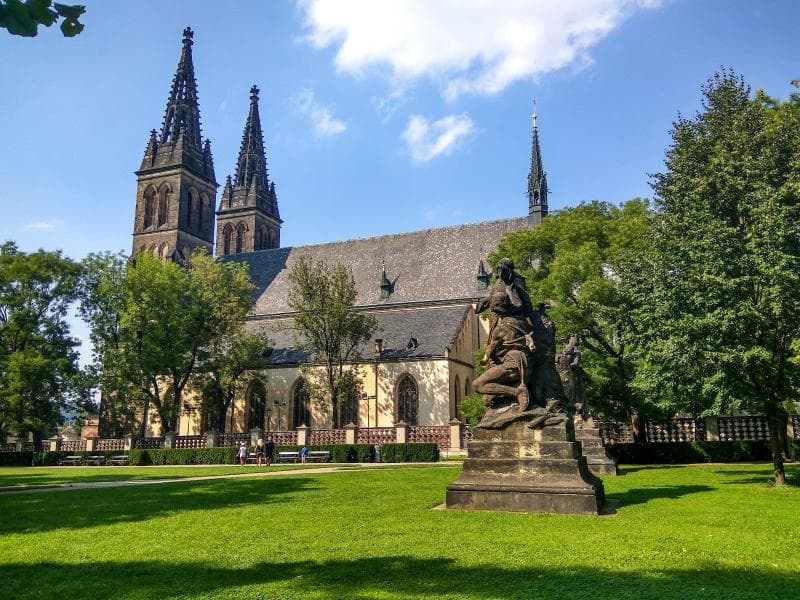
Explore the historic Vyšehrad fort walls in Prague, Czech Republic. Discover centuries of history, legendary tales, and panoramic city views from this ancient stronghold.
Overview
Perched majestically on a rocky outcrop above the Vltava River, the fort walls of Vyšehrad offer a captivating journey into Prague's rich past. More than mere defensive structures, these imposing ramparts encircle a historic complex that has served as a royal seat, a military stronghold, and a revered national symbol of the Czech Republic. Today, the walls invite visitors to embark on a tranquil stroll, providing breathtaking panoramic views of the city and a unique perspective on centuries of history.
The entire Vyšehrad area, including its formidable fortifications, is a testament to Prague's enduring legacy, blending ancient myths with significant architectural evolution. It's a place where history resonates with every step, offering a peaceful escape from the bustling city center while remaining easily accessible.
History & Cultural Background
The origins of Vyšehrad stretch back to at least the 10th century, when it began as a fortified settlement. For a brief but significant period in the 11th century, under King Vratislaus II, Vyšehrad even rivaled Prague Castle as the royal seat, cementing its early importance in Bohemian history. During this era, stone walls and a royal palace were part of the complex.
The 14th century saw a resurgence in Vyšehrad's strategic role. Emperor Charles IV ordered the construction of new Gothic brick walls, integrating them into Prague's broader defense system. However, the 15th century brought devastation with the Hussite Wars, leaving the fortress largely in ruins.
The most substantial transformation occurred in the 17th century. Following the Thirty Years' War, the Habsburg monarchy undertook a massive rebuilding effort between 1653 and 1727, converting Vyšehrad into a modern Baroque fortress. This period saw the construction of the thick brick ramparts and star-shaped bastions that largely define its appearance today. Iconic structures like the Leopold Gate, Tábor Gate, and the elaborate network of Casemates – underground tunnels for troop movement and storage – were also developed during this time.
By the 19th century, with advancements in artillery, the military significance of the fort waned. It was officially decommissioned as a military site in 1911. Concurrently, as Czech nationalism grew, Vyšehrad underwent a profound shift, transforming into a powerful symbol of national identity and heritage.
What Makes It Special
The Vyšehrad fort walls are special not only for their impressive scale but also for their layered history. The Baroque fortification system, with its distinctive bastions and monumental gates such as the Leopold Gate and Tábor Gate, stands as a prime example of 17th-century military engineering. These walls were designed to be robust, reaching heights of 42 to nearly 60 feet and thicknesses of eight to 16 feet in places.
Beyond their architectural might, the walls capitalize on Vyšehrad's naturally strategic position. Situated high above the Vltava River, they offer unparalleled panoramic views of Prague's cityscape, making them a favored spot for photographers and sightseers alike.
An intriguing feature embedded within the walls are the Casemates, a series of underground corridors and chambers. Originally used for troop movement, storage of weapons, and even as prisons, these tunnels now provide a unique visitor experience, housing exhibitions including some original statues from Charles Bridge.
Today, the fort walls seamlessly blend into a sprawling parkland, offering a serene and beautiful environment that invites contemplation and exploration, far removed from the city's usual tourist paths.
Stories, Fun Facts & Local Details
Vyšehrad is steeped in a rich tapestry of Czech legends, often regarded as a place where Czech history truly began. One of the most famous tales attributes its founding to the mythical Princess Libuše, who is said to have prophesied the future glory of Prague from this very rock: 'I see a great city whose glory will touch the stars.' Another beloved legend recounts the daring escape of the knight Horymír and his loyal horse Šemík, who famously leaped over the high fort walls and into the Vltava River to evade capture.
While archaeological evidence suggests Prague Castle might be older, Vyšehrad's mythical status as the initial seat of Czech rulers remains deeply ingrained in the national consciousness. This sense of national pride is further underscored by the Vyšehrad Cemetery, located within the complex, which serves as the final resting place for many of the Czech Republic's most celebrated figures, including composers Antonín Dvořák and Bedřich Smetana, and artist Alfons Mucha. Walking among their graves offers a profound connection to Czech culture and artistry.
Visitor Perspective
For the curious traveler, exploring the Vyšehrad fort walls is an immersive experience. Walking along the wide ramparts provides not only a historical perspective but also some of the most stunning, unobstructed views across Prague and the winding Vltava River below. It's an ideal location for leisurely walks, offering numerous vantage points for photography or simply soaking in the city's beauty.
A visit to the Casemates offers a unique glimpse into the fortress's hidden depths and its military past. Guided tours often provide fascinating insights into their construction and use. Unlike the often-crowded Prague Castle, Vyšehrad maintains a more peaceful and contemplative atmosphere, allowing for a relaxed exploration of its grounds and monuments.
As part of the Prague Heritage Reserve, Vyšehrad is recognized as a UNESCO World Heritage Site. The entire complex is freely accessible, and its location is easily reached by public transport, with a dedicated metro station ('Vyšehrad') just a short walk away. Whether seeking historical depth, cultural connection, or simply a beautiful view, the fort walls of Vyšehrad offer a richly rewarding experience.
Coordinates: 14.42059, 50.06378
View on Google Maps💬 How Travelers Describe This Place
Based on community votes
Beautiful
623Interesting
545Unique
343Must See
302Photogenic
20
Traveler Stories
Discover memorable experiences shared by travelers who have visited this place.
No traveler stories yet.
Be the first traveler to share what made this place memorable.

Tour
By
Spot
Discover amazing places around the world. Your journey starts here.
Explore
© 2026 TourBySpot. All rights reserved.