Casemates
Prague, Czech Republic
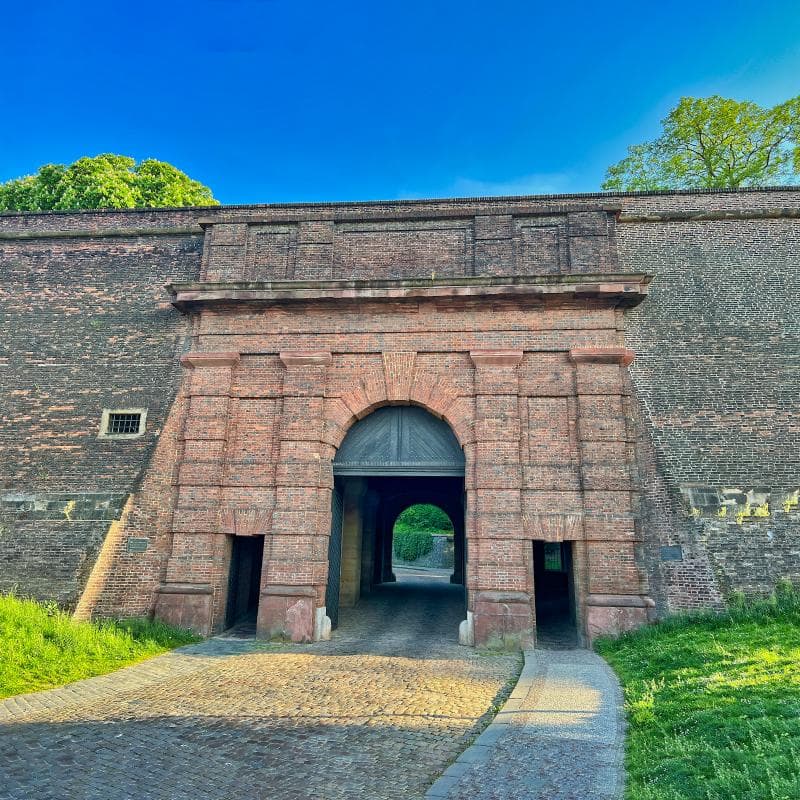
Explore the mysterious Casemates within Vyšehrad, Prague, Czech Republic. Discover hidden military corridors, Gorlice Hall's original Charles Bridge statues, and captivating history underground.
Overview
Deep beneath the historic Vyšehrad fortress in Prague, Czech Republic, lies a fascinating subterranean world known as the Casemates. These intricate vaulted corridors and chambers, a vital part of the fortress's defensive system, offer a unique glimpse into military history and engineering. Designed for the movement of troops, storage of equipment, and even as a prison, the Casemates provide a cool, atmospheric escape into the past, offering a distinct contrast to the sunlit ramparts and lush gardens above.
Today, visitors can explore a section of this underground labyrinth, culminating in the impressive Gorlice Hall. This vast space, once a gathering point for soldiers, now serves as a gallery for six original Baroque statues from Prague's iconic Charles Bridge, whose counterparts on the bridge itself are replicas.
History & Cultural Background
The construction of the Vyšehrad Casemates primarily took place in the second half of the 17th century, a period following the tumultuous Thirty Years' War, as part of a comprehensive Baroque fortification effort to strengthen Prague's defenses. French armies initially contributed to building some sections during their occupation in 1742, with later improvements made by Prussian and Austrian forces. These underground passages were strategically engineered to allow military garrisons to move unseen, storing ammunition and providing shelter from artillery attacks.
Vyšehrad itself holds immense cultural significance, rooted in ancient Czech legends. It was once believed to be the first seat of Czech rulers, a place of mythical figures like Princess Libuše, and later served as a royal castle before becoming a Baroque citadel. The Casemates represent a later, military chapter in this rich history, embodying the practical and defensive needs of the fortress throughout various conflicts.
What Makes It Special
What truly sets the Vyšehrad Casemates apart is the combination of its military purpose and its unexpected artistic treasures. The most notable feature is the Gorlice Hall, an expansive underground vault measuring 300 square meters and 13 meters high. Uniquely, the creation of Gorlice Hall resulted from an architectural miscalculation during construction, transforming a defensive need into a grand, unintended space. Today, this impressive hall houses six of the invaluable original sandstone statues from Charles Bridge. These masterpieces, carefully preserved from the elements, offer a rare opportunity to appreciate the intricate details of Baroque sculpture up close, contrasting with the weather-beaten replicas that adorn the bridge.
Another distinctive element is the Martin's Casemates section, which unveils the medieval Church of St. John the Baptist, now a lapidarium. This deconsecrated church, hidden within the earthen ramparts, houses original portals and fragments of Baroque sculptural decorations. Furthermore, the Casemates were once illuminated by electric light installed by the pioneering Czech inventor Frantisek Krizik in the early 20th century, a testament to early technological adoption in an ancient setting.
Stories, Fun Facts & Local Details
The Casemates are steeped in intriguing stories. One dramatic tale recounts how, in November 1744, Prussian forces attempted to blow up the entire fortress as they retreated from Prague, placing 133 barrels of gunpowder within the Casemates. Three brave local men, however, courageously discovered and removed the fuses at the very last moment, saving Vyšehrad from destruction and earning a reward from Empress Maria Theresa.
Beyond military strategy, the Gorlice Hall has had various lives. In the last century, it served as an air-raid shelter and even a storage place for potatoes and vegetables, highlighting its adaptable utility. Adding a touch of modern fame, parts of the Casemates have even been used as a filming location, appearing in movies like 'Mission Impossible'. Intriguingly, some legends whisper of secret underground passages from the Casemates that were said to extend beneath the Vltava River, potentially reaching as far as Prague Castle, though these remain largely in the realm of myth. The Church of St. John the Baptist, now part of the Martin's Casemates tour, holds its own peculiar history, with its sacristy once serving as a pigsty after its deconsecration in 1787.
Visitor Perspective
Exploring the Casemates offers a truly immersive experience for the curious traveler. Access to this underground world is exclusively via guided tours, typically lasting between 45 to 60 minutes. These tours are available in both Czech and English, with digital guides providing additional language options. The primary entry point for tours is usually the Brick Gate (Cihelná brána), which itself is a 19th-century Empire-style structure housing a visitor information center and often an exhibition on Vyšehrad's development. Comfortable footwear is highly recommended due to the uneven surfaces within the corridors. The narrow, vaulted passages, roughly 1.5 to 1.6 meters wide and 2 to 2.6 meters high, lead visitors through a unique architectural marvel, eventually opening into the grand Gorlice Hall. Visitors should note that the Casemates are not wheelchair accessible. It's an opportunity to step away from the bustling city above and delve into a quiet, atmospheric piece of Prague's enduring legacy.
Coordinates: 14.4206, 50.0638
View on Google Maps💬 How Travelers Describe This Place
Based on community votes
Unique
551Beautiful
547Must See
336Interesting
298Photogenic
212
Traveler Stories
Discover memorable experiences shared by travelers who have visited this place.
No traveler stories yet.
Be the first traveler to share what made this place memorable.

Tour
By
Spot
Discover amazing places around the world. Your journey starts here.
Explore
© 2026 TourBySpot. All rights reserved.