Rotunda of St. Martin
Prague, Czech Republic
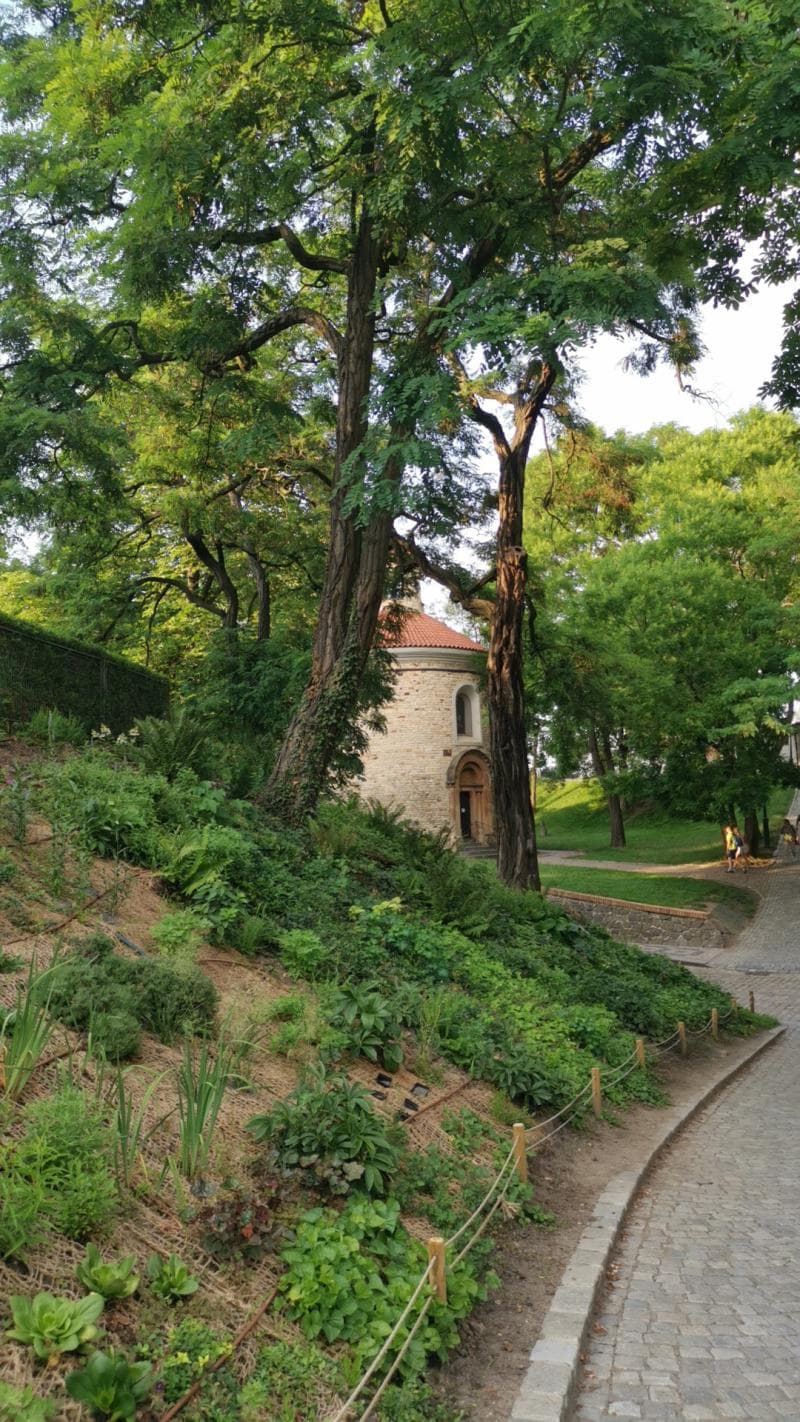
Discover the Rotunda of St. Martin in Vyšehrad, Prague, Czech Republic – the city's oldest and largest preserved Romanesque rotunda from the 11th century.
Overview
Nestled within the historic Vyšehrad fortress complex in Prague, Czech Republic, stands the Rotunda of St. Martin, an architectural marvel and a silent witness to a millennium of history. This Romanesque gem, dating back to the second half of the 11th century, is celebrated as the oldest and largest preserved rotunda in Prague. Its circular form, simple yet profound, offers a striking contrast to the later Gothic and Baroque structures that define much of Prague's cityscape. While visitors typically admire its sturdy exterior during a leisurely stroll through Vyšehrad, its enduring presence provides a tangible link to the city's earliest foundations.
The Rotunda of St. Martin is more than just an old building; it is a foundational piece of Prague's heritage, embodying the architectural style prevalent during the period when Vyšehrad served as a crucial princely and royal seat. Its survival through centuries of conflict and change makes it an exceptionally important monument, inviting contemplation on the passage of time and the resilience of human craftsmanship.
History & Cultural Background
The Rotunda of St. Martin's origins trace back to the reign of Vratislaus II, the first King of Bohemia, marking it as one of the few surviving structures from early medieval Vyšehrad. Constructed around 1100 CE, its initial purpose might have been as a private chapel, though specific records are scarce. Throughout its long history, the rotunda has endured a tumultuous existence, reflecting the turbulent periods Prague itself has weathered. It was ransacked during the Hussite Revolution in 1420 and suffered damage from a fire in 1525.
Beyond its religious function, the rotunda adapted to various roles out of necessity. In the 16th century, it served as a prison, and during the devastating Thirty Years' War, it was repurposed as a gunpowder store. Later, in 1784, it was seized by the military and functioned as a warehouse and even a facility for manufacturing cannon ammunition. A vivid reminder of this past is a cannonball, still visibly embedded in its facade, a scar from the Prussian bombardment of Prague in 1757. The rotunda faced potential demolition in 1841 to make way for a new road, but thanks to the intervention of the culture-loving Governor Karl Chotek, it was preserved. Eventually, in 1875, the Vyšehrad Chapter acquired the building, leading to a significant restoration between 1878 and 1880 by architect Antonín Baum, who also designed a new neo-Romanesque portal.
What Makes It Special
The Rotunda of St. Martin holds a unique place in Prague's architectural landscape. It is the only completely preserved Romanesque building within the Vyšehrad complex and one of the oldest in the entire city. Its robust circular nave and distinctive apse are quintessential examples of Romanesque architecture, showcasing the functional beauty of early medieval construction. The building's age and its remarkable survival across centuries make it exceptionally significant, offering a rare glimpse into Prague's beginnings when Vyšehrad was a primary center of power.
Perhaps its most compelling feature is the embedded cannonball on its facade, a tangible piece of history that speaks volumes about Prague's resilience and the rotunda's enduring strength through sieges and wars. The 19th-century restoration by Antonín Baum thoughtfully incorporated a new neo-Romanesque portal on its southern side, harmonizing modern interventions with historical fidelity. Inside, although rarely accessible to the public, architectural research has hinted at an intriguing, unusual underground level. The interior is also known for its marble altar and wall paintings, which draw their inspiration from the precious 11th-century Vyšehrad Coronation Codex, linking the rotunda directly to Bohemian royal history.
Stories, Fun Facts & Local Details
Beyond its formal history, the Rotunda of St. Martin carries an air of mystery and a wealth of intriguing details. Imagine this sacred space transformed, not just into a gunpowder magazine or a military store, but even into a temporary prison in the 16th century, or later, a shelter for the poor. These varied uses paint a picture of a structure deeply entwined with the changing needs and challenges of the community around it. The cannonball visible in its exterior wall isn't just a historical artifact; it's a stark, compelling reminder of the Prussian bombardment, a silent sentinel of past conflicts.
An interesting tidbit for history enthusiasts is that between the 12th and 13th centuries, the rotunda was surrounded by a cemetery, underscoring its long-standing role as a community focal point. While its interior is generally closed, the murals and the marble altar, inspired by the Vyšehrad Coronation Codex, silently narrate stories of royal power and religious devotion from a bygone era. For those who appreciate subtle narratives, the rotunda, with its simple form, is said to 'invite you to discover it instead of flaunting all its secrets,' hinting at deeper layers of history waiting to be uncovered by the curious traveler. It stands as a testament to Prague's rich heritage of rotundas, being the largest and best preserved of its kind in the city.
Visitor Perspective
Visiting the Rotunda of St. Martin is an integral part of exploring the magnificent Vyšehrad fortress. Conveniently located near the Leopold Gate and the grand Basilica of Sts. Peter and Paul, the rotunda is easily integrated into any exploration of this historic site. For most travelers, the experience involves admiring its ancient exterior as they wander through the serene Vyšehrad grounds. The tranquil setting and the rotunda's dignified presence offer a moment of quiet reflection amidst the broader historical landscape.
While its interior is not regularly open for daily sightseeing, it can sometimes be accessed during religious services or special events organized by the Vyšehrad ecclesiastical chapter. Regardless of interior access, simply walking around this Romanesque pearl and appreciating its enduring form offers a profound connection to Prague's earliest history. Visitors often combine their stop at the Rotunda of St. Martin with visits to Vyšehrad's other attractions, such as the impressive ramparts offering panoramic views, the Basilica of Sts. Peter and Paul, and the renowned Vyšehrad Cemetery. As part of the broader Vyšehrad National Cultural Monument, which is itself a UNESCO World Cultural and Natural Heritage site, the rotunda remains a free-to-view outdoor monument, making it an accessible and essential stop for anyone seeking to understand the deep historical roots of Prague.
Coordinates: 14.4216, 50.0636
View on Google Maps💬 How Travelers Describe This Place
Based on community votes
Interesting
853Must See
667Unique
190Photogenic
93Beautiful
32
Traveler Stories
Discover memorable experiences shared by travelers who have visited this place.
No traveler stories yet.
Be the first traveler to share what made this place memorable.

Tour
By
Spot
Discover amazing places around the world. Your journey starts here.
Explore
© 2026 TourBySpot. All rights reserved.