Basilica of St. Peter and Paul
Prague, Czech Republic
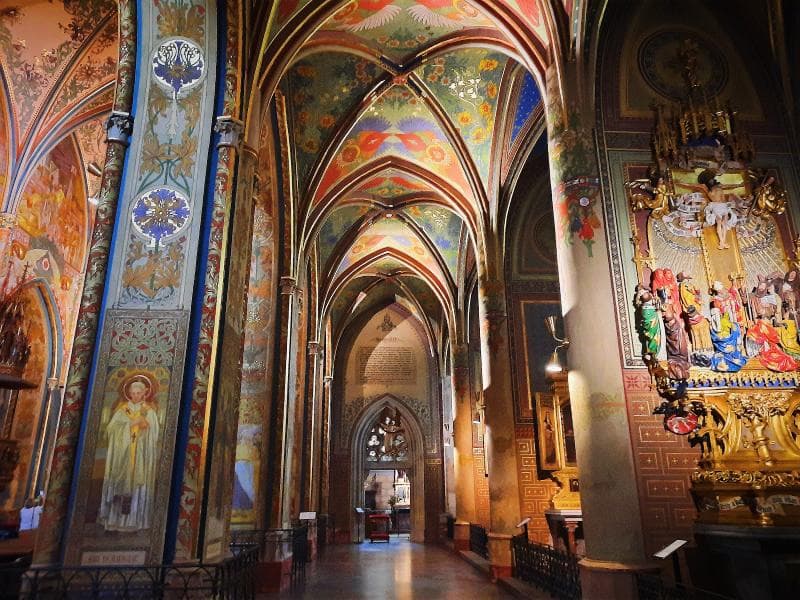
Discover the Basilica of St. Peter and Paul in Vyšehrad, Prague, Czech Republic. Explore its neo-Gothic architecture and stunning Art Nouveau interior.
Overview
Nestled within the historic Vyšehrad fortress in Prague, Czech Republic, stands the magnificent Basilica of St. Peter and Paul. This neo-Gothic collegiate and parish church is a striking landmark, with its towering twin spires dominating the skyline above the Vltava River. More than just a place of worship, it is a testament to centuries of Czech history, art, and national identity. Elevated to the status of a minor basilica by Pope John Paul II in 2003, it invites visitors to step into a world where ancient legends intertwine with breathtaking Art Nouveau beauty.
History & Cultural Background
The story of the Basilica of St. Peter and Paul began in 1070, when King Vratislav II of Bohemia founded it as a Romanesque basilica. Tradition holds that Vratislav sought to establish an ecclesiastical site independent of the Bishop of Prague, aligning directly with Rome, and some accounts suggest it was built in purposeful opposition to St. Vitus Cathedral at Prague Castle. Legend even states that the King personally carried 12 baskets of stones for its foundation. Over its more than 900-year history, the church has undergone numerous transformations. A great fire in 1249 destroyed the original Romanesque structure, leading to subsequent Gothic and Baroque reconstructions. The appearance we see today is largely the result of a comprehensive neo-Gothic rebuilding project undertaken between 1885 and 1903. Initiated by architect Josef Mocker and completed by his partner František Mikš after Mocker's passing, this period cemented the basilica's iconic facade and twin towers. Vyšehrad itself, where the basilica resides, was once the seat of the first Czech kings and has played a crucial role in shaping the country's cultural and political identity, enduring periods of royal residence, military fortification, and ultimately becoming a powerful symbol of Czech heritage.
What Makes It Special
The Basilica's distinguishing features are numerous, beginning with its impressive neo-Gothic exterior and the two 58-meter high towers that serve as a beacon from afar. However, the true surprise often lies within. The interior is a vibrant showcase of Art Nouveau design, richly adorned with murals and ornamental paintings by František Urban and Marie Urbanová-Zahradnická. These intricate decorations, inspired by the style of Alphonse Mucha, envelop the visitor in a symphony of natural forms, gilding, and vibrant colors, creating an atmosphere distinct from other medieval churches in Prague. Among its cherished treasures are the Gothic panel painting known as Our Lady of the Rain (Panna Maria Dešťová), a significant piece of 14th-century Bohemian art, and the Romanesque sarcophagus of St. Longinus. The basilica also boasts a carillon with 21 bells, which plays a repertoire of 50 melodies hourly from 11:00 AM to 9:00 PM, adding a melodic charm to the Vyšehrad complex.
Stories, Fun Facts & Local Details
The basilica is steeped in stories that add to its allure. One fascinating detail about the twin spires is their hollow, delicate design, reportedly inspired by the cone-like formations of the chestnut flowers that bloom in the nearby Vyšehrad cemetery. Inside, the abundant gold and floral patterns across the walls and ceilings evoke the feeling of walking into a 'golden forest' or being enveloped by an 'intricately embroidered gown.' The famous Gothic painting, Our Lady of the Rain, is traditionally associated with prayers for rain during times of drought, highlighting the deep spiritual connection the community has with the basilica. Additionally, a chapel dedicated to Our Lady of the Ramparts houses a statue believed by some to possess miraculous healing powers. During the Christmas season, visitors can marvel at a life-sized Nativity scene, carved from wood in the 19th century, featuring thirteen figures of people and animals. These details contribute to the basilica's unique character and its profound place in Czech folklore and tradition.
Visitor Perspective
For the curious traveler, the Basilica of St. Peter and Paul offers an experience that is both visually stunning and deeply enriching. While its exterior is undeniably grand, the interior is often described as a surprising revelation, contrasting with the more austere medieval churches found elsewhere. It provides a unique opportunity to explore a significant piece of Slavic Art Nouveau architecture and gain insights into Czech history and culture. Unlike some of Prague's more heavily touristed sites, the basilica, and the wider Vyšehrad complex, offer a quieter, more contemplative atmosphere. It's a place where one can stroll through peaceful grounds, explore the adjacent Vyšehrad Cemetery – the final resting place of many national icons like Antonín Dvořák and Karel Čapek – and enjoy panoramic views of the Vltava River and the city. Visiting the Basilica of St. Peter and Paul is not just seeing a building; it's stepping into a living narrative of Bohemia's past and present.
Coordinates: 14.41779, 50.06436
View on Google Maps💬 How Travelers Describe This Place
Based on community votes
Must See
915Unique
873Photogenic
477Interesting
422Beautiful
53
Traveler Stories
Discover memorable experiences shared by travelers who have visited this place.
No traveler stories yet.
Be the first traveler to share what made this place memorable.

Tour
By
Spot
Discover amazing places around the world. Your journey starts here.
Explore
© 2026 TourBySpot. All rights reserved.