Vilnius University
Vilnius, Lithuania
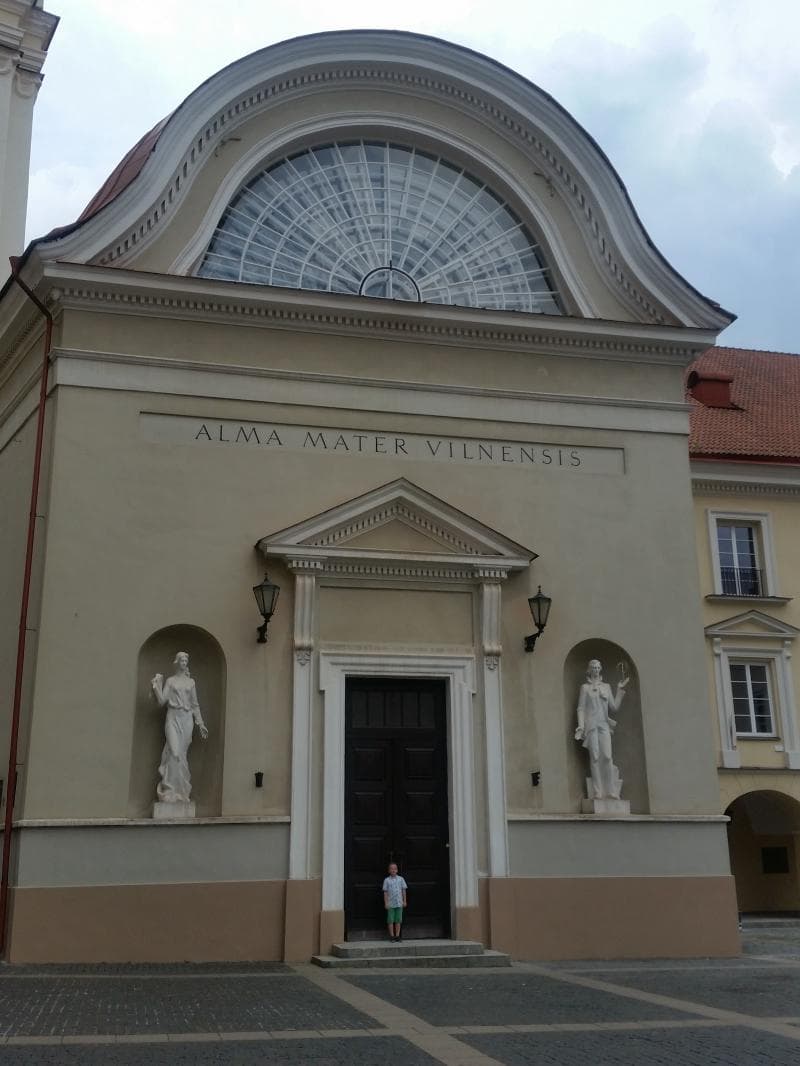
Explore Vilnius University in Vilnius, Lithuania – an ancient academic gem with stunning Gothic, Renaissance, and Baroque architecture and rich history.
Overview
Nestled within the enchanting Old Town of Vilnius, Lithuania, Vilnius University stands as a beacon of academic tradition and architectural splendor. Founded in 1579, it is not only the oldest and largest university in Lithuania but also one of the most distinguished higher education institutions in Central and Eastern Europe. Its historic architectural ensemble, a declared UNESCO World Heritage site, invites visitors to step back in time, offering a captivating journey through centuries of European scholarship and artistry.
More than just an educational establishment, Vilnius University is a living museum, its thirteen courtyards and buildings showcasing a remarkable blend of Gothic, Renaissance, Baroque, and Classicist styles. It serves as a vibrant cultural heart within the capital, attracting curious travelers eager to explore its rich heritage and the stories embedded within its ancient walls.
History & Cultural Background
The story of Vilnius University begins on April 1, 1579, when King Stephen Báthory of Poland and Grand Duke of Lithuania issued a charter to establish the Vilnius Academy. This initiative, supported by Pope Gregory XIII, transformed the Jesuit College of Vilnius (founded in 1570) into a full-fledged university.
From its inception, the university played a crucial role, becoming the sole institution of higher learning in the Grand Duchy of Lithuania and the third oldest in the Polish–Lithuanian Commonwealth. For two centuries, it held the distinction of being the easternmost university in Europe, radiating scientific and cultural light across the region.
Its history is intricately woven with the complex tapestry of Lithuania itself, enduring periods of closure and re-establishment under various political powers, including the Russian Empire, the Polish Stefan Batory University era, and the Soviet occupation. Despite these challenges, the university consistently served to preserve and foster Lithuanian identity and scholarship, re-gaining its autonomy and original name following Lithuania's independence in 1990.
What Makes It Special
What truly sets Vilnius University apart is its breathtaking architectural ensemble, an organic complex that evolved over centuries. Visitors can wander through a labyrinth of thirteen courtyards, each revealing a unique character and a segment of history. The seamless transition between Gothic foundations, Renaissance elements, opulent Baroque facades, and elegant Classicist additions creates a visually stunning and historically layered experience.
The Vilnius University Library, established in 1570, is a cornerstone of the complex, housing millions of prints and ancient manuscripts, including one of the two known copies of the first Lithuanian book. Its historic halls, such as the Franciszek Smuglewicz Hall, are adorned with frescoes and elaborate decorations, offering a glimpse into the grandeur of past scholarship.
Dominating the university ensemble is the magnificent Church of St. John the Baptist and St. John the Apostle and Evangelist, a brilliant example of High Baroque architecture. Its soaring bell tower, one of the tallest structures in Vilnius Old Town, offers panoramic views of the city. Within the complex also lies the historic Astronomical Observatory, established in 1753. Its Rococo-decorated White Hall and astronomical symbols carved into pilasters stand as a testament to the university's early contributions to science.
Stories, Fun Facts & Local Details
The university's motto, 'Hinc itur ad astra' ('From here the way leads to the stars'), inscribed on the wall of the observatory, perfectly encapsulates its aspiration for knowledge and discovery. This phrase reflects the institution's enduring commitment to academic excellence and intellectual exploration.
Over its long history, Vilnius University has educated numerous influential figures. Renowned poets like Adam Mickiewicz and Nobel laureate Czesław Miłosz walked its hallowed halls, leaving their indelible mark on literature and culture. Simonas Daukantas, a significant figure in the Lithuanian national revival, is another notable alumnus.
Visitors might also stumble upon the Foucault pendulum housed within the bell tower of St. John's Church, a fascinating demonstration of the Earth's rotation. The courtyards themselves are named after prominent professors and students, with memorial plaques commemorating their contributions. It's a place where every corner seems to whisper tales of centuries past.
Visitor Perspective
Exploring Vilnius University is an immersive experience, akin to wandering through a living architectural masterpiece. Individual visitors can freely access many of the courtyards, allowing for a self-guided exploration of its unique atmosphere. The cobblestone paths and intricate facades invite a leisurely pace, perfect for soaking in the historical ambiance.
For a deeper understanding, guided tours are available, offering insights into the university's history, architecture, and hidden gems, including access to specific halls and the library. Climbing the St. John's Church bell tower is highly recommended for breathtaking views across Vilnius Old Town. It's advisable to wear comfortable shoes due to the historic paving. Check the university's museum website for up-to-date visiting hours and any ticket requirements for specific areas like the bell tower or special exhibitions, as parts of the complex may occasionally close for university events.
Coordinates: 25.287622, 54.68256
View on Google Maps💬 How Travelers Describe This Place
Based on community votes
Must See
673Photogenic
336Interesting
219Unique
186Beautiful
80
Traveler Stories
Discover memorable experiences shared by travelers who have visited this place.
No traveler stories yet.
Be the first traveler to share what made this place memorable.
Things to see at Vilnius University



Tour
By
Spot
Discover amazing places around the world. Your journey starts here.
Explore
© 2026 TourBySpot. All rights reserved.