Observatory
Vilnius, Lithuania
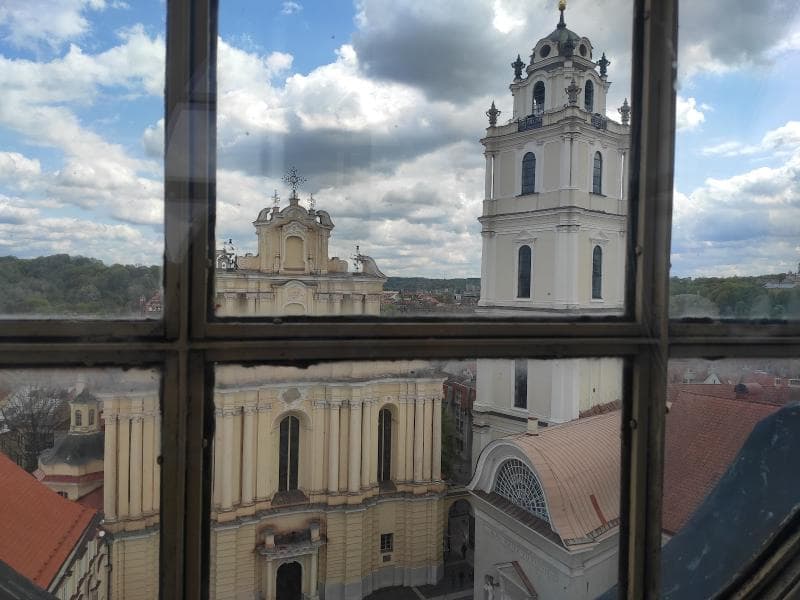
Discover the historic Vilnius University Observatory in Vilnius, Lithuania, Europe's fourth oldest, founded 1753. Explore its Baroque architecture and scientific legacy.
Overview
Tucked within the venerable Vilnius University in Lithuania's charming capital, the Astronomical Observatory is far more than just a historical building; it is a monument to centuries of scientific endeavor and human curiosity. Established in 1753, it proudly holds the distinction of being the fourth oldest observatory in Europe and the first of its kind in the sprawling Polish-Lithuanian Commonwealth. Today, while its original telescopes no longer peer into the urban sky due to light pollution, its legacy continues through the 'Observatory of Ideas,' a vibrant hub for science communication and educational experiences, managed by the Vilnius University Museum.
History & Cultural Background
The journey of the Vilnius University Astronomical Observatory began in the mid-18th century, a period of burgeoning Enlightenment ideals. It was the brainchild of the Jesuit astronomer Thomas Zebrowski, who, with the generous patronage of Elżbieta Ogińska Countess Puzynina, brought this ambitious project to fruition in 1753. Countess Puzynina's support was pivotal, extending to financing Zebrowski's internship at the Royal Greenwich Observatory, underscoring her deep interest in astronomy. This early establishment positioned Vilnius at the forefront of European scientific progress, a beacon in the Grand Duchy of Lithuania. The observatory's 'golden age' flourished under the directorship of Marcin Odlanicki Poczobutt from 1764 to 1807, during which its facilities expanded and it gained international recognition. Its original site on Universiteto Street, nestled within the university's main complex, showcased remarkable Baroque and Classical architecture, enhanced by an expansion designed by architect Marcin Knackfuss in the late 18th century. Tragically, a devastating fire in 1876 severely damaged the observatory, leading to its closure by the Tsarist regime in 1882 and the dispersal of many of its valuable instruments across the Russian Empire. Despite these setbacks, the spirit of astronomical inquiry persisted, and the observatory was revived after both World War I and World War II, continuing its scientific research.
What Makes It Special
What truly sets the Vilnius University Observatory apart is its foundational ethos. Unlike many contemporary European observatories primarily concerned with navigation and cartography, the Vilnius institution was dedicated solely to the pursuit of pure science and education from its inception. This pioneering approach fostered a culture of profound intellectual exploration. Architecturally, the observatory is a visual marvel, seamlessly blending Baroque splendor with Classical lines. Its striking facade, visible from the university courtyard, is adorned with playful Rococo ornaments, medallions featuring the sun, and symbolic representations of the then-known planets and Zodiac signs, making it a unique aesthetic contribution to astronomical architecture. In the 20th century, the observatory continued its innovative stride by pioneering the Vilnius photometric system in the 1960s. This seven-color method for stellar classification became globally recognized and remains influential in astronomical research, showcasing Lithuania's enduring contribution to stellar astronomy.
Stories, Fun Facts & Local Details
The story of Elżbieta Ogińska Countess Puzynina is particularly compelling. As a noblewoman who funded the observatory, she represented a rare and early instance of female patronage in a male-dominated scientific field, demonstrating a personal interest in the cosmos. Imagine her, centuries ago, keenly following the astronomical advancements of her time. Visitors can still witness elements of the observatory's rich past, such as the authentic facade of the main hall building with its unique windows and pilasters depicting astronomical equipment. The observatory's courtyard itself dates back to the 15th century, making it the oldest within the university ensemble and steeped in layers of history. A fascinating detail is the impact of Vilnius's urban growth; as the city expanded and light pollution increased, the necessity to relocate serious astronomical observations arose. This led to the establishment of the Molėtai Astronomical Observatory, some 70 kilometers north of Vilnius, which now houses the largest scientific telescope in Northern Europe. This move, while practical, subtly underscores the ongoing tension between urban development and scientific pursuit.
Visitor Perspective
For the curious traveler, a visit to the Observatory at Vilnius University offers a profound journey through time and scientific discovery. While you won't be observing stars through its original telescopes, the architectural beauty and historical significance of the building itself are captivating. The observatory is accessible to the public, primarily through guided tours that delve into the university's rich history and the observatory's development. The current iteration within the old building, the 'Observatory of Ideas,' curated by the Vilnius University Museum, serves as a dynamic space for education and science communication. It hosts exhibitions like 'Stories of Observatories and Scientists,' providing engaging narratives about the pioneering individuals and groundbreaking discoveries made within these walls. Exploring the ornate facade, understanding the historical context, and learning about the scientific breakthroughs like the Vilnius photometric system offers a unique blend of cultural immersion and intellectual stimulation. It's an opportunity to connect with the past visionaries who gazed at the stars from this very spot, contributing significantly to humanity's understanding of the universe. Consider joining a guided tour to fully appreciate the intricate details and captivating stories embedded in this remarkable historical landmark.
Coordinates: 25.2865, 54.683111
View on Google Maps💬 How Travelers Describe This Place
Based on community votes
Interesting
804Photogenic
733Unique
563Must See
100Beautiful
63
Traveler Stories
Discover memorable experiences shared by travelers who have visited this place.
No traveler stories yet.
Be the first traveler to share what made this place memorable.

Tour
By
Spot
Discover amazing places around the world. Your journey starts here.
Explore
© 2026 TourBySpot. All rights reserved.