St. John’s Church
Vilnius, Lithuania
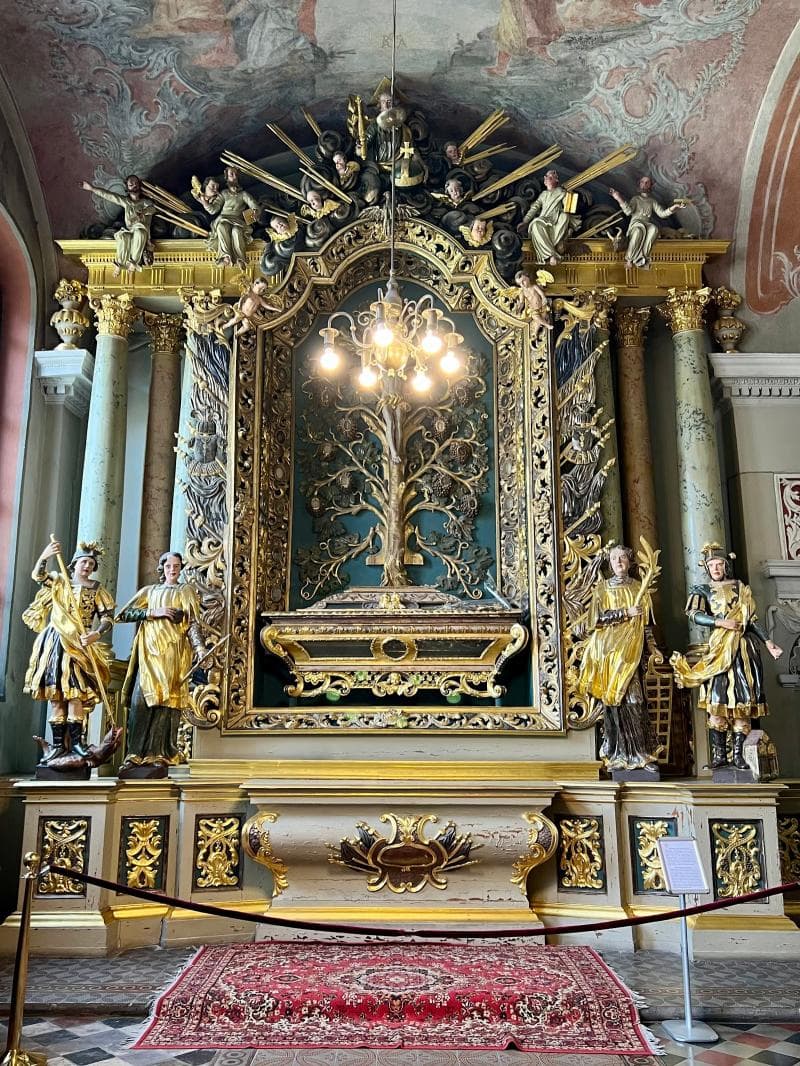
Explore St. John's Church, a historic Gothic and Baroque masterpiece within Vilnius University in Vilnius, Lithuania. Discover its rich history, unique architecture, and climb the bell tower for panoramic city views.
Overview
Nestled within the historic architectural ensemble of Vilnius University in Lithuania's captivating Old Town, St. John's Church, officially known as the Church of St. John the Baptist and St. John the Apostle and Evangelist, stands as a profound symbol of spiritual devotion, academic tradition, and architectural evolution. This magnificent Catholic church is an inseparable part of Vilnius University, enriching its courtyards with centuries of history and a distinctive blend of Gothic, Renaissance, and late Baroque styles.
More than just a place of worship, St. John's Church has long served as the spiritual heart of the university, witnessing academic milestones, hosting important ceremonies, and offering a serene space for contemplation amidst the bustling city. Its iconic bell tower, one of the tallest structures in Vilnius Old Town, offers breathtaking panoramic views, inviting visitors to gaze upon the city's red rooftops and historic spires.
History & Cultural Background
The story of St. John's Church began shortly after Lithuania's Christianization, with its construction initiated by Grand Duke Jogaila in 1386. The Gothic church was completed by 1426, establishing it as one of Vilnius's oldest churches.
A pivotal moment in its history occurred in 1571 when the church was handed over to the Jesuit Order, becoming an integral part of the newly established Vilnius University (founded in 1579).
Over the centuries, the church endured several devastating fires and subsequent reconstructions. Most notably, after a major fire in 1737, the church underwent a grand transformation under the guidance of the renowned architect Johann Christoph Glaubitz, a pioneer of the distinctive Vilnius Baroque style. He reshaped its façade and much of its interior, creating the ornate and theatrical appearance visible today.
The church's resilience was tested further during periods of political upheaval. In the 19th century, substantial parts of its lavish Baroque interior were unfortunately destroyed during a reconstruction effort. During Soviet times, the church was closed and even served as a warehouse before being converted into the University Museum. However, after Lithuania regained independence, it was returned to its parishioners in 1991 and continues its sacred and academic functions today, including hosting university graduation ceremonies.
What Makes It Special
St. John's Church is a fascinating architectural tapestry, showcasing a harmonious blend of Gothic origins, Renaissance adaptations, and the opulent flourishes of late Baroque. Inside, a striking feature is the unique composition of ten presbytery altars, arranged in a semi-circle on varying planes and levels, illuminated by light filtering through the Gothic presbytery windows. The church's central nave is adorned with eighteen sculptures, twelve of which fittingly represent various saints named John.
Its freestanding bell tower, built between 1600 and 1610, is a remarkable landmark. Standing at 68 meters, it is the tallest structure in Vilnius Old Town. Visitors can ascend the 193 authentic wooden steps or take a modern lift to reach an observation platform at 45 meters, offering unparalleled 360-degree views of Vilnius, including iconic sights like St. Anne's Church, Gediminas' Tower, and Pilies Street.
Stories, Fun Facts & Local Details
Beyond its grand architecture, St. John's Church holds many intriguing details and stories. The bell tower houses Lithuania's only functioning Foucault's Pendulum, a scientific installation that visibly demonstrates the Earth's rotation. This unique exhibit underscores the church's deep connection to the academic pursuits of Vilnius University.
During its time as a university church, it was a hub of intellectual life, where professors and students prayed, held plays, and defended dissertations. Even today, the tradition continues, with graduation ceremonies for Vilnius University students taking place within its historic walls, making it a place of both solemn reflection and joyful celebration.
Look closely at the eastern facade facing Pilies Street, and you might spot a marble plaque—the Chreptowicz family memorial. It's a poignant historical artifact, once accompanied by frescoes depicting the plague epidemic of 1706–1710, which were later painted over. The church also contains memorial monuments to significant Lithuanian figures such as Adam Mickiewicz and Simonas Daukantas.
Visitor Perspective
For any curious traveler, a visit to St. John's Church offers a rich, immersive experience. You can explore the church's intricate interior, admiring the Baroque altars and the surviving Gothic elements that tell a story of centuries of architectural evolution. The blend of styles creates a captivating atmosphere, a tangible link to Lithuania's layered past.
A highlight for many is the ascent of the bell tower. Whether you choose the traditional wooden steps or the modern lift, the reward is a truly magnificent panorama of Vilnius Old Town. It's a perfect spot for capturing stunning photographs and gaining a new appreciation for the city's unique urban landscape. The church itself generally offers free entry, while a separate ticket is usually required to access the bell tower, which operates seasonally from spring to autumn. Remember to check the opening hours, especially for the bell tower, to make the most of your visit to this spiritual and academic gem within Vilnius University.
Coordinates: 25.28833, 54.6825
View on Google Maps💬 How Travelers Describe This Place
Based on community votes
Photogenic
639Unique
421Interesting
366Must See
298Beautiful
212
Traveler Stories
Discover memorable experiences shared by travelers who have visited this place.
No traveler stories yet.
Be the first traveler to share what made this place memorable.

Tour
By
Spot
Discover amazing places around the world. Your journey starts here.
Explore
© 2026 TourBySpot. All rights reserved.