Vilnius Cathedral
Vilnius, Lithuania
Discover Vilnius Cathedral, Lithuania's spiritual heart in Vilnius. Explore its neoclassical beauty, royal crypts, and rich history.
Overview
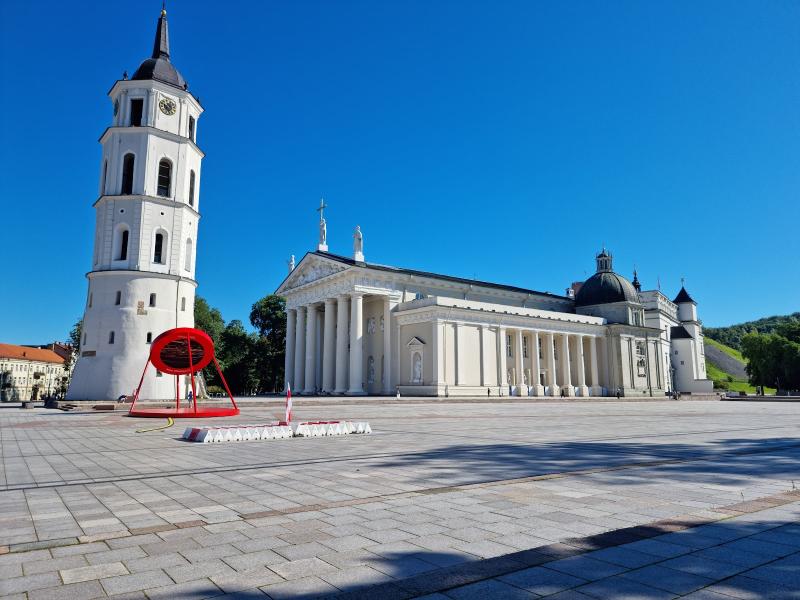
At the very heart of Vilnius, Lithuania's capital, stands the iconic Vilnius Cathedral, officially known as the Cathedral Basilica of St. Stanislaus and St. Ladislaus. More than just a place of worship, it is a profound symbol of the nation's spiritual life and a testament to its enduring history. Its striking neoclassical facade, reminiscent of a classical Greek temple, belies centuries of transformation and stories contained within its walls. Situated prominently on Cathedral Square, this majestic structure draws visitors into a narrative spanning from pagan antiquity to modern-day Lithuania.
The cathedral serves as the principal Catholic sanctuary in Lithuania and is a cornerstone of the Vilnius Old Town, a UNESCO World Heritage site.
History & Cultural Background
The site upon which Vilnius Cathedral stands has been considered sacred for millennia, with archaeological evidence suggesting it was once home to a pagan temple dedicated to Perkūnas, the Baltic god of thunder.
The first Christian church here was believed to have been commissioned by Grand Duke Mindaugas in 1251 following his conversion to Christianity, marking the early Christianization of Lithuania.
Over subsequent centuries, the cathedral endured numerous rebuilds due to devastating fires, wars, and even unstable soil conditions. Each reconstruction layered new architectural styles onto its foundations, revealing traces of Gothic, Renaissance, and Baroque periods beneath its current exterior.
The present-day appearance, a grand neoclassical masterpiece, is largely the result of extensive reconstruction overseen by architect Laurynas Gucevičius (also known as Laurynas Stuoka-Gucevičius) in the late 18th and early 19th centuries, with the interior completed by 1801.
Historically, the cathedral was the ceremonial heart of the Grand Duchy of Lithuania, hosting coronations of Grand Dukes.
During the Soviet occupation, the cathedral faced a period of profound challenge. From 1949 to 1988, it was closed as a place of worship and controversially converted into a warehouse and later an art gallery. In a significant moment for national and religious freedom, masses resumed in 1988, and its status as a cathedral was fully restored in 1989.
What Makes It Special
What truly sets Vilnius Cathedral apart is its unique blend of architectural styles. While its facade presents a harmonious neoclassical design with imposing columns and a triangular pediment, a closer look, especially in its underground sections, reveals earlier Gothic, Renaissance, and Baroque elements.
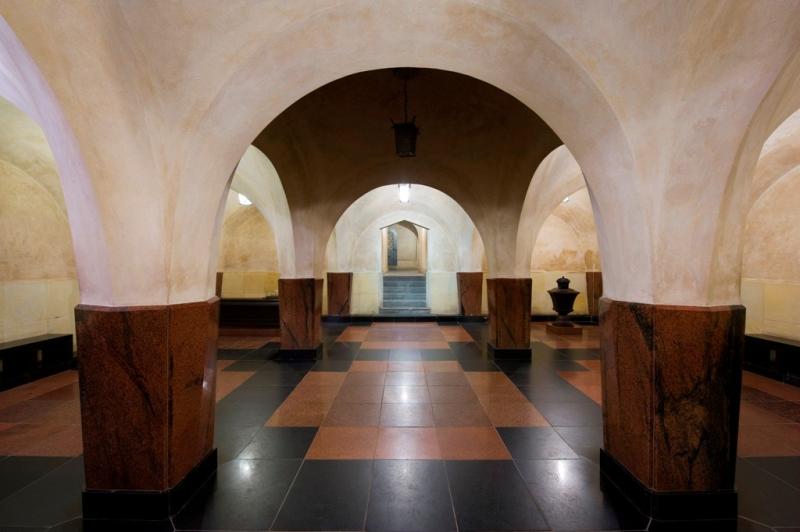
Beneath the main floor lie the extensive crypts, serving as the royal mausoleum and final resting place for many pivotal figures in Lithuanian history, including Grand Dukes such as Vytautas the Great and Alexander Jagiellon, as well as Queens Elizabeth of Austria and Barbara Radziwiłł.
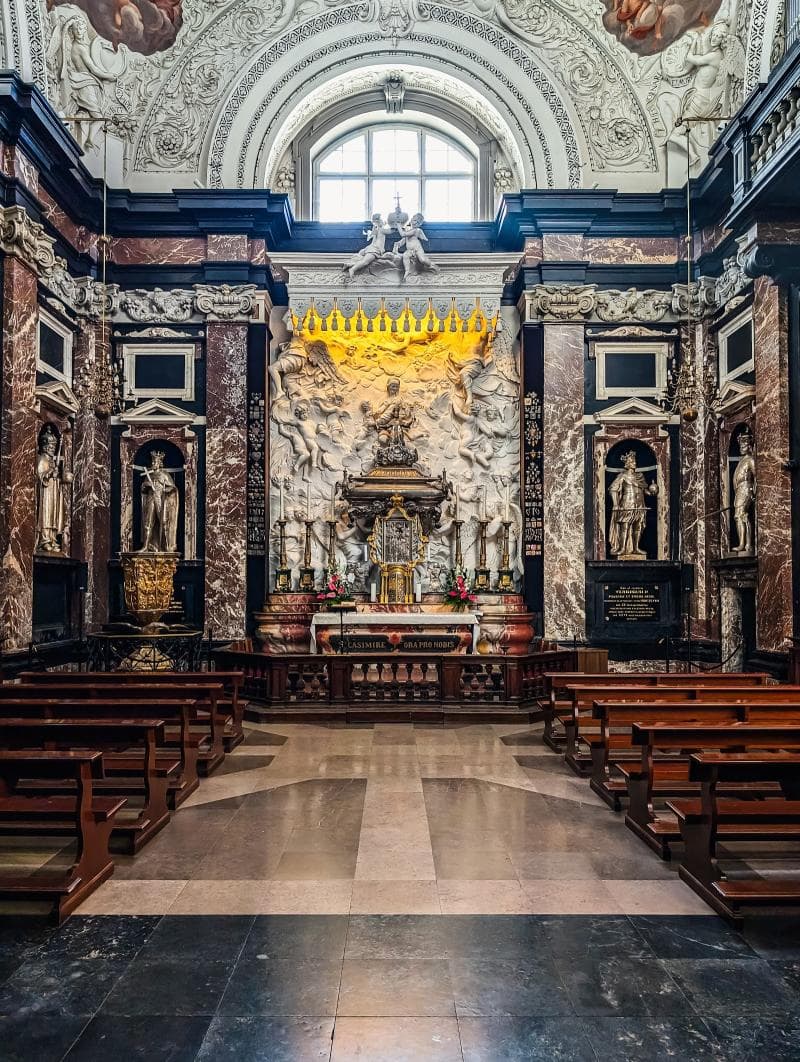
The Chapel of Saint Casimir, a stunning Baroque masterpiece from the 17th century, is one of the cathedral's most precious treasures. It houses the sarcophagus containing the relics of Saint Casimir, Lithuania's patron saint.
Inside the cathedral, visitors can discover a rich collection of artworks dating from the 16th to 19th centuries, including frescoes and paintings. Among these is Lithuania's oldest known fresco, 'The Crucifixion,' dating back to the 14th century, found in one of the underground chapels.
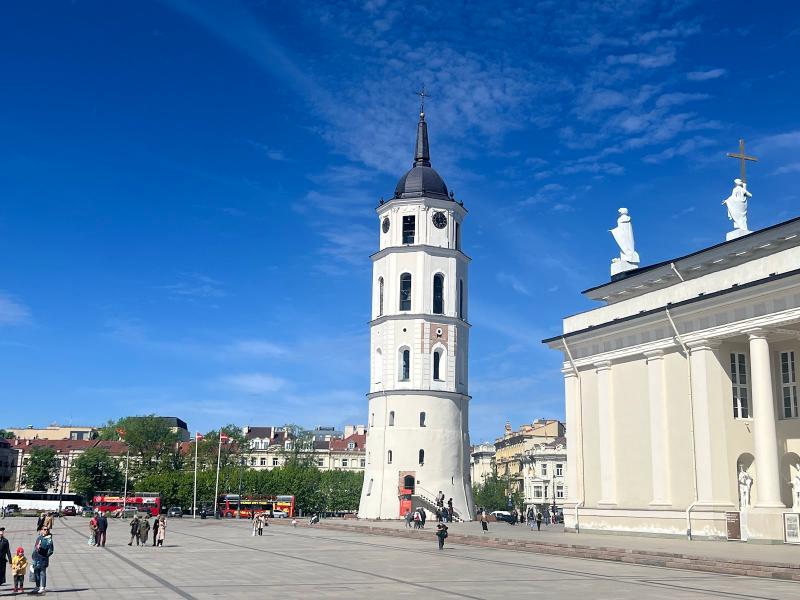
Adjacent to the cathedral, its freestanding bell tower, with origins tracing back to a 13th-century defensive city wall, stands as an iconic landmark. At 57 meters tall (52 meters without the cross), it offers panoramic views of Vilnius Old Town.
Stories, Fun Facts & Local Details
- The cathedral's foundation atop a former pagan worship site highlights Lithuania's transition from paganism to Christianity, a journey deeply etched into its very stones.
- The Chapel of Saint Casimir features a fascinating painting of 'Three-Handed St. Casimir' which, according to legend, depicts the saint with three hands because the artist could not erase the original and painted a third.
- The crypts hold more than just historical figures; they have also yielded incredible archaeological discoveries, including burial regalia of Lithuanian-Polish rulers that were hidden during World War II and only recently presented after meticulous restoration.
- The three sculptures adorning the cathedral's roof, depicting St. Casimir, St. Stanislaus, and St. Helen, were rebuilt after being destroyed during the Soviet era. St. Helen is famously believed to have discovered the True Cross.
- In 1993, Pope John Paul II began his historic apostolic journey to Lithuania with a prayer at the Vilnius Cathedral Basilica, calling it 'the beating heart of the Lithuanian nation'.
- The cathedral's separated bell tower, originally a defensive structure, reflects medieval city planning, where such towers often served dual purposes.
Visitor Perspective
Vilnius Cathedral is freely accessible to the public, allowing visitors to experience its grand interior and spiritual atmosphere without an admission fee.
However, for a deeper dive into its secrets, guided tours of the crypts and the opportunity to climb the bell tower are available for a fee. These specialized tours offer unparalleled insights into the cathedral's archaeological findings, burial traditions, and breathtaking views of the city.
Located in the heart of Vilnius Old Town, the cathedral is easily reachable on foot, making it a perfect starting point for exploring the city's historical sites.
The surrounding Cathedral Square is a lively civic space that often hosts festivals, concerts, and public events, adding to the vibrant cultural experience. Visitors are encouraged to dress modestly out of respect for the sacred nature of the site, particularly if planning to attend religious services.
Coordinates: 25.28778, 54.68583
View on Google Maps💬 How Travelers Describe This Place
Based on community votes
Beautiful
980Must See
288Interesting
247Photogenic
171Unique
130
Traveler Stories
Discover memorable experiences shared by travelers who have visited this place.
No traveler stories yet.
Be the first traveler to share what made this place memorable.
Things to see at Vilnius Cathedral





Tour
By
Spot
Discover amazing places around the world. Your journey starts here.
Explore
© 2026 TourBySpot. All rights reserved.