Chapels
Vilnius, Lithuania
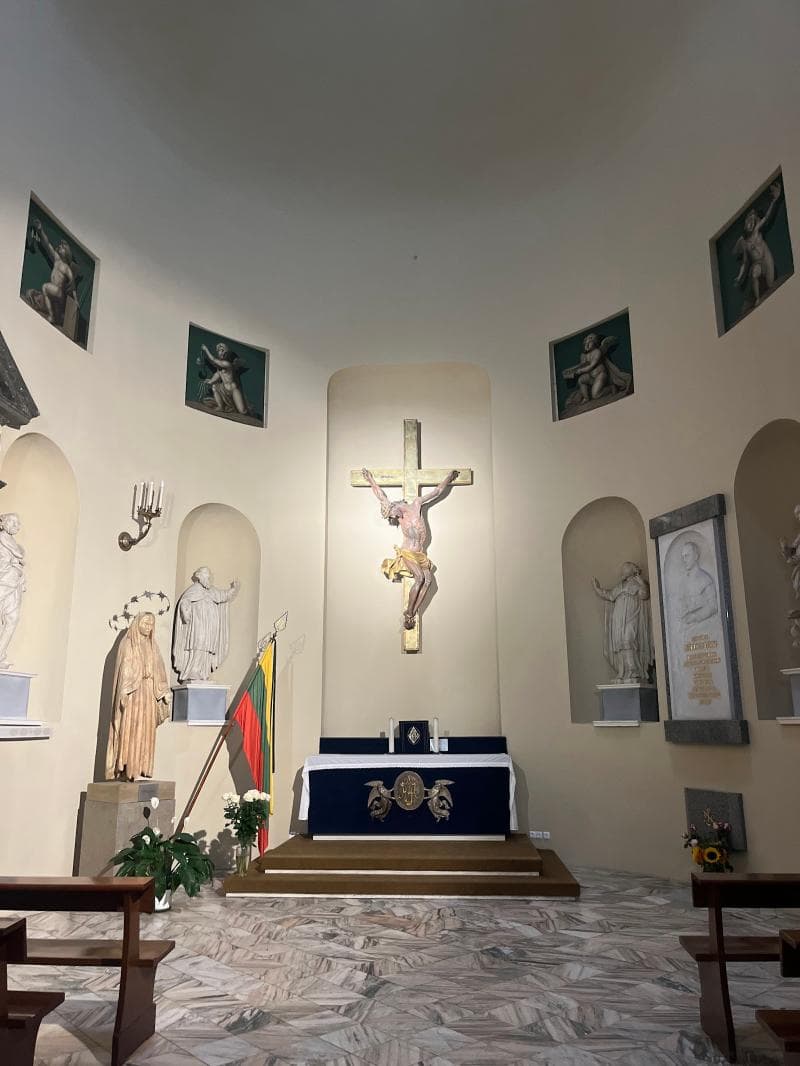
Explore the historic chapels within Vilnius Cathedral, Lithuania. Discover the ornate Baroque Chapel of Saint Casimir and royal crypts.
Overview
Deep within the revered Vilnius Cathedral, a spiritual and architectural gem in Lithuania's capital, lie its numerous chapels, each telling a profound story of faith, history, and art. While the Cathedral itself, officially known as the Cathedral of St. Stanislaus and St. Vladislaus, is a stunning example of Neoclassical architecture, it houses a rich tapestry of styles and narratives within its walls, reflecting centuries of transformation. These chapels serve not only as places of worship but also as mausoleums for many of Lithuania's most influential historical figures, preserving their legacies for generations. Of the eleven chapels present, the Chapel of Saint Casimir stands out as a particular highlight, revered for its opulent Baroque design and its significance as the resting place of Lithuania's patron saint.
Visitors stepping into these sacred spaces are transported through time, from the remnants of Gothic structures to the grandeur of Baroque artistry, all nestled within a cathedral that has repeatedly risen from the ashes of fires and conflicts. The chapels, alongside the extensive crypts below, offer a unique glimpse into the spiritual heart of Lithuania and its complex past.
History & Cultural Background
The history of Vilnius Cathedral's chapels is intrinsically linked to the Cathedral's own tumultuous past. The site itself has been a place of worship since the 13th century, with various structures built, destroyed, and rebuilt over time. It is believed that the earliest cathedral was constructed by Grand Duke Mindaugas in 1251, on a site potentially dedicated to the Baltic pagan god Perkunas.
As Lithuania embraced Christianity, the cathedral evolved. The first Gothic cathedral, built in 1387, was said to have five chapels. Subsequent reconstructions in the 16th century saw the addition of more chapels and crypts, acquiring Renaissance architectural features. However, it was the canonization of Prince Casimir in the early 17th century that spurred the creation of the most renowned chapel. The Chapel of Saint Casimir was constructed between 1623 and 1636, a magnificent Baroque addition commissioned by King Sigismund III Vasa and completed by his son Władysław IV Vasa.
Throughout its history, the Cathedral, including its chapels, has witnessed coronations of Grand Dukes, served as a burial ground for royalty and nobility, and endured periods of destruction, including a devastating fire in 1610 and damage during the Russo-Polish War of 1654–1667. During the Soviet occupation from 1949 to 1988, the Cathedral was closed and repurposed as a warehouse or art gallery, a period of religious oppression from which it eventually emerged, with its sacred relics and functions restored.
What Makes It Special
Each chapel within Vilnius Cathedral holds its own allure, but the Chapel of Saint Casimir is undeniably the most spectacular. It is a masterpiece of Baroque art and architecture, a lavish tribute to Lithuania's patron saint. The chapel's interior dazzles with rich marble ornamentation—red, black, and white—and features twelve commanding red marble pilasters.
At its heart lies the silver sarcophagus housing the incorrupt remains of Saint Casimir, a poignant focal point for pilgrims and visitors. This sarcophagus alone required nearly 1,100 kilograms of silver, underscoring its immense value and reverence. Adding to its uniqueness is the famous 'Three-Handed St. Casimir' painting, where the saint is depicted with two right hands holding lilies. This artistic anomaly is steeped in legend, with tales of the painter's inability to obscure the 'miraculous' extra hand.
Beyond Saint Casimir's, other chapels contribute to the Cathedral's distinctiveness. The Gostautai Chapel, for instance, features the venerated painting of the Sapiega Madonna, which was crowned by the Pope in 1750. The Royal (Valavičiai) Chapel, built in the late 15th century, also holds historical significance. The Cathedral's extensive crypts, accessible by guided tour, are a solemn and fascinating feature, housing the royal mausoleum beneath Saint Casimir's Chapel where King Alexander Jagiellon and the hearts of other royals rest. They also contain the oldest known fresco in Lithuania, a 14th-century depiction of 'The Crucifixion.'
Stories, Fun Facts & Local Details
The Chapel of Saint Casimir is not just a visual marvel; it's a repository of captivating stories. The legend of the 'Three-Handed St. Casimir' painting, which depicts the saint with an impossible third hand holding a lily, is one such tale. It is said that the artist, attempting to alter the composition, painted over one of the right hands, only for it to mysteriously reappear, leading to its preservation as a miraculous detail. This intriguing portrayal is believed to symbolize St. Casimir's boundless generosity and purity.
Another fascinating detail lies in the crypts beneath the chapels. The royal mausoleum is the final resting place for numerous Polish and Lithuanian historical figures, including King Alexander Jagiellon and the heart of King Władysław IV Vasa, whose body is interred in Poland. It's also within these crypts that an empty sarcophagus for Vytautas the Great awaits, a testament to a grand duke whose remains have yet to be definitively found.
During the Soviet era, the Cathedral and its treasures faced threats. The Vilnius Cathedral treasury, a collection of Lithuanian goldsmith masterpieces, was hastily hidden in a niche between the Gostautai and Exiles Chapels in 1939 to protect it during World War II, only to be rediscovered in 1985 after almost half a century. These hidden gems and historical echoes add layers of intrigue to every visit.
Visitor Perspective
For the curious traveler, exploring the chapels of Vilnius Cathedral is an immersive journey into Lithuania's rich heritage. The main cathedral is generally free to enter, allowing visitors to experience the serene atmosphere and admire the architecture at their own pace.
However, to truly appreciate the historical depth and artistic grandeur of the crypts and some specific chapels, guided tours are highly recommended. These tours often provide detailed explanations of the architectural transformations, the stories behind the burials, and the significance of various artworks. While the Chapel of Saint Casimir is often accessible within the main cathedral, access to the crypts usually requires a ticket and a guided tour, which can be booked through the Church Heritage Museum. It is advisable to check the Cathedral's official website for current opening times and tour availability, as these can vary, especially during religious services. Expect a profound experience, blending solemn reflection with artistic admiration, in these sacred spaces that have witnessed centuries of Lithuanian history.
Coordinates: 25.286, 54.6848
View on Google Maps💬 How Travelers Describe This Place
Based on community votes
Photogenic
846Must See
564Beautiful
201Unique
121Interesting
87
Traveler Stories
Discover memorable experiences shared by travelers who have visited this place.
No traveler stories yet.
Be the first traveler to share what made this place memorable.

Tour
By
Spot
Discover amazing places around the world. Your journey starts here.
Explore
© 2026 TourBySpot. All rights reserved.