Interior Nave
Vilnius, Lithuania
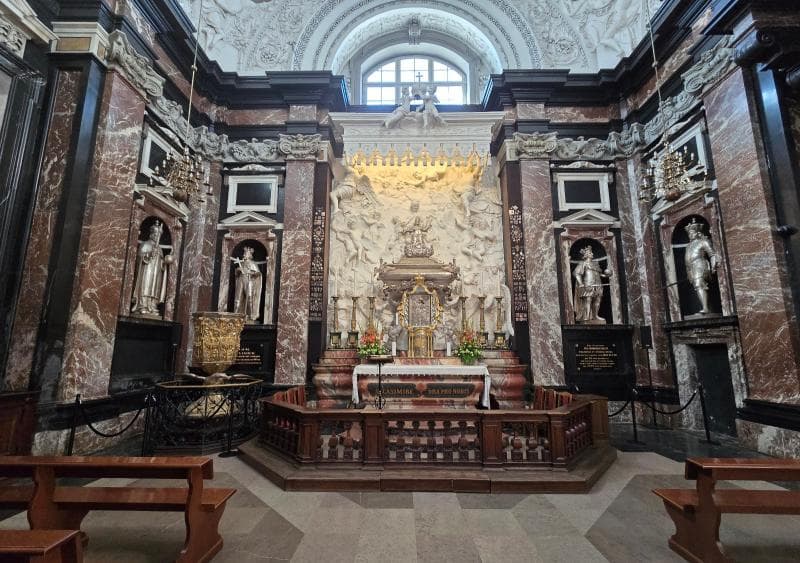
Explore the Interior Nave of Vilnius Cathedral in Vilnius, Lithuania – a neoclassical masterpiece steeped in centuries of history, art, and national significance.
Overview
Stepping into the Interior Nave of Vilnius Cathedral is to enter the very heart of Lithuania's spiritual and historical narrative. This magnificent space, formally known as the Cathedral Basilica of St. Stanislaus and St. Ladislaus, stands proudly in Vilnius' Old Town, acting as a central landmark and the principal Roman Catholic cathedral of the nation. Its neoclassical grandeur, characterized by clear symmetrical lines and majestic columns, instantly captivates visitors. Within these sacred walls, a blend of architectural styles, developed over centuries of rebuilding, creates an environment of profound historical depth and artistic richness. The nave itself, vast and imposing, invites contemplation of its storied past and the countless lives it has touched.
The interior seamlessly combines neoclassical elegance with touches of baroque artistry, featuring intricate frescoes, ornate stucco work, marble altars, and gilded details that catch the light. More than forty works of art from the 16th to 19th centuries adorn the space, enriching the visitor's experience. As the heart of Catholic life in Lithuania, the nave serves as a powerful symbol of faith and national identity, a place where history resonates with every step.
History & Cultural Background
The site upon which Vilnius Cathedral now stands has been sacred for centuries, believed by some to have once hosted a pagan temple dedicated to the Baltic god Perkūnas before the arrival of Christianity. The first cathedral was commissioned by Grand Duke Mindaugas in 1251 following his conversion, marking Lithuania's initial embrace of the Christian faith. However, the building's history is a testament to resilience, having undergone numerous destructions and reconstructions due to fires, wars, and even unstable soil conditions.
Throughout the 14th to 17th centuries, the cathedral evolved through Gothic, Renaissance, and Baroque phases, each leaving its indelible mark on the structure. The current neoclassical appearance, which largely defines the interior nave today, was the result of an extensive reconstruction project led by architect Laurynas Gucevičius between 1779 and 1801. This period saw the interior completed, embodying the classical ideals of the Enlightenment era. Beyond its architectural evolution, the cathedral has been a focal point for Lithuanian history, serving as the site for the coronations of Grand Dukes and the final resting place for many significant historical figures, including Lithuanian and Polish monarchs and nobles. During the Soviet occupation from 1949 to 1988, the cathedral was desacralized and functioned as a warehouse, its religious status only fully restored in 1989.
What Makes It Special
The Interior Nave's distinctive character stems from its harmonious neoclassical design, a deliberate creation by Laurynas Gucevičius. Unlike many classical basilicas where side aisles are typically lower, the Vilnius Cathedral features a hall church design with three naves of equal height, creating an expansive and open feel. The monumental, bright interior showcases Gucevičius's skill in refining classical forms, with a broad central nave leading to an impressive main altar. The decorative elements, from the grand main altar to the various chapels, are adorned with intricate designs that reflect the craftsmanship of Lithuanian artists.
Within the cathedral, the Chapel of Saint Casimir stands as a jewel of early Baroque art, offering a striking contrast to the surrounding neoclassical lines. Dedicated to Lithuania's patron saint, it is richly decorated with frescoes by Michelangelo Palloni and elaborate stucco work by Pietro Perti. This chapel houses the sarcophagus containing St. Casimir's remains, making it a profound site of pilgrimage and veneration. The blend of these styles within the cathedral, particularly the neoclassical nave leading to such a lavish Baroque chapel, underscores the building's unique architectural journey and artistic significance.
Stories, Fun Facts & Local Details
The very foundations of Vilnius Cathedral hold secrets, with archaeological discoveries revealing remains of earlier structures, including a 13th-century church and evidence suggesting the presence of a pagan shrine. It's a fascinating thought that this bastion of Christianity might have once echoed with the rituals of ancient Baltic deities. The cathedral's turbulent past is evident in its numerous rebuilds; it's said the floor alone has been renewed twelve times over its history. These reconstructions often uncovered fragments of colored stucco and glazed bricks, indicating the sophisticated interior decorations of even its earlier incarnations.
Among the cathedral's artistic treasures is 'The Crucifixion', a 14th-century fresco discovered in one of its underground chapels, which is believed to be the oldest known fresco in Lithuania. Another intriguing detail resides in the Chapel of Saint Casimir: a miraculous painting of St. Casimir famously depicts him with three hands. Legend has it that the painter repeatedly tried to cover the third hand, but it mysteriously reappeared each time, leading him to leave it as a testament to its inexplicable nature. The cathedral has served as the final resting place for many pivotal figures in Lithuanian and Polish history, including Grand Dukes Vytautas the Great and Alexander Jagiellon. Even during the bleak years of Soviet rule, when the cathedral was used as a warehouse, its profound historical and cultural significance could not be erased.
Visitor Perspective
Walking through the Interior Nave of Vilnius Cathedral offers a uniquely contemplative experience. The bright, spacious design, with its soaring ceilings and elegant columns, instills a sense of awe and tranquility. The quiet reverence of the space allows visitors to immerse themselves in centuries of history, imagining the coronations of Grand Dukes, the fervent prayers of generations, and the solemn funerals of national heroes that have taken place here. The subtle blend of styles, from the overarching neoclassical aesthetic to the glimpses of earlier architectural periods and the opulent Baroque of St. Casimir's Chapel, invites close observation and appreciation of the craftsmanship.
The feeling is one of connection to a resilient nation and its enduring faith. The cathedral is more than just a building; it's a living monument that embodies Lithuania's journey. Experiencing the sheer scale and the intricate details, from the artworks adorning the walls to the grandeur of the main altar, is truly moving. For those seeking a deeper understanding of Vilnius and Lithuania, a visit to the cathedral's nave is an essential and free experience, offering a profound insight into the country's spiritual and cultural heart.
Coordinates: 25.28778, 54.68583
View on Google Maps💬 How Travelers Describe This Place
Based on community votes
Photogenic
996Must See
953Beautiful
658Interesting
585Unique
69
Traveler Stories
Discover memorable experiences shared by travelers who have visited this place.
No traveler stories yet.
Be the first traveler to share what made this place memorable.

Tour
By
Spot
Discover amazing places around the world. Your journey starts here.
Explore
© 2026 TourBySpot. All rights reserved.