Uluwatu Temple
Bali, Indonesia
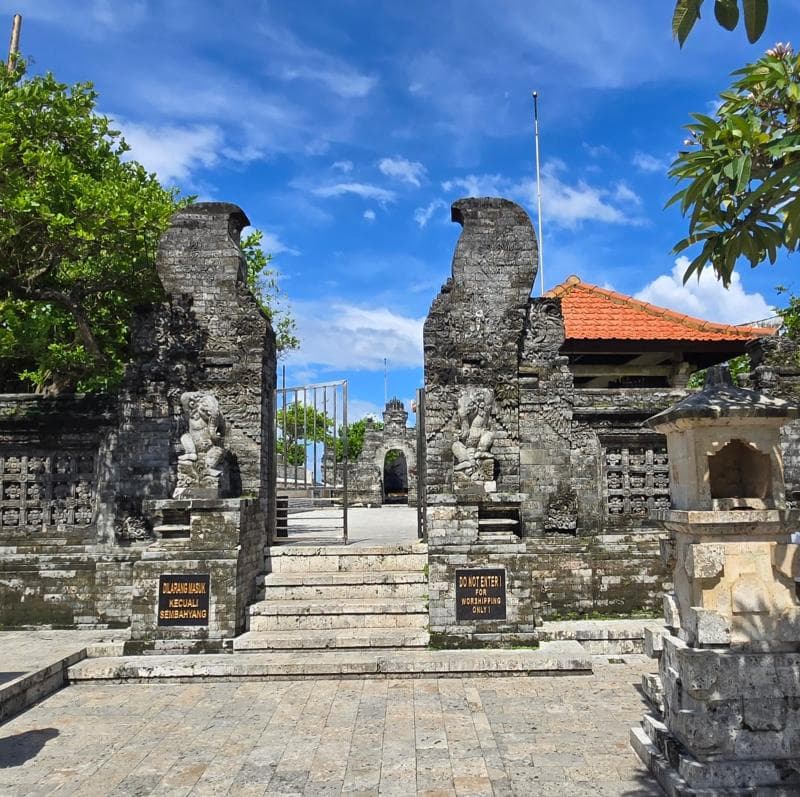
Discover Uluwatu Temple in Bali, Indonesia – a sacred cliff-edge temple offering stunning ocean views, historic insights, and the iconic Kecak dance.
Overview
Perched dramatically atop a 70-meter (230-foot) limestone cliff, Uluwatu Temple, known locally as Pura Luhur Uluwatu, stands as one of Bali, Indonesia's most iconic and spiritually significant sea temples. Its name itself, derived from 'ulu' meaning 'land's end' or 'tip' and 'watu' meaning 'rock', perfectly describes its breathtaking location on the southwestern tip of the Bukit Peninsula. Beyond its stunning natural beauty, offering panoramic views of the Indian Ocean, Uluwatu Temple is a vital spiritual pillar for Balinese Hindus, revered for its role in protecting the island from negative forces. Visitors are drawn here not only by the majestic scenery, particularly at sunset, but also by the rich cultural experiences, including the renowned Kecak fire dance and encounters with its resident population of mischievous monkeys.
History & Cultural Background
The exact origins of Uluwatu Temple are steeped in history, with archaeological evidence suggesting a temple has existed on this dramatic site since at least the 9th century. However, its significant expansion and development are largely attributed to two influential Javanese sages. In the 11th century, Mpu Kuturan, a Hindu priest, is credited with establishing the temple, playing a pivotal role in unifying spiritual practices across Bali and introducing the concept of the 'Tri Kahyangan', which includes sea temples like Uluwatu. Centuries later, in the 16th century, Dang Hyang Nirartha, another revered sage, contributed to the temple's structure, notably adding the 'Padmasana' shrines (empty throne shrines awaiting the arrival of the gods). Legend also holds that Nirartha achieved 'moksha', or spiritual liberation, at this very site, further cementing Uluwatu's sacred status.
Uluwatu Temple is recognized as one of Bali's 'Sad Kahyangan', or six key directional temples, strategically positioned around the island to maintain spiritual balance and act as guardians against malevolent spirits from the ocean. It is dedicated to Sang Hyang Widhi Wasa, the Supreme God of Indonesian Hinduism, in his manifestation as Shiva Rudra, the deity associated with transformation, dissolution, and all elements of life. Balinese Hindus believe that the divine powers of Brahma, Vishnu, and Shiva converge here, making it a powerful place of worship.
What Makes It Special
Uluwatu Temple's allure lies in a captivating blend of its natural setting, deep spirituality, and vibrant cultural expressions. Its most striking feature is undoubtedly its unparalleled location: a majestic temple complex seemingly defying gravity on the edge of a towering cliff, with the vast expanse of the Indian Ocean stretching out before it. This dramatic backdrop creates an atmosphere of profound serenity and awe, particularly as the sun dips below the horizon, painting the sky with fiery hues.
The architecture, characterized by traditional Balinese split gates and intricately carved stone, complements the rugged natural environment. The temple is also surrounded by 'Alas Kekeran', a small, sacred forest believed to protect it. This combination of a sacred site, breathtaking views, and significant historical narrative makes Uluwatu Temple a unique and unforgettable destination, offering a profound sense of connection to Bali's spiritual heartland.
Stories, Fun Facts & Local Details
- The Sacred Monkeys: The temple grounds are home to a thriving community of long-tailed macaques, considered spiritual guardians of the temple. However, these monkeys are famously mischievous and have a reputation for snatching visitors' belongings like sunglasses, hats, and phones. Visitors are often advised to secure their valuables and avoid direct interaction or feeding the monkeys, as this can encourage their pilfering habits.
- The Kecak Dance: One of Bali's most iconic cultural performances, the Kecak Fire Dance, is staged nightly in an open-air amphitheater adjacent to the temple, just as the sun sets. This captivating dance, which re-enacts scenes from the Hindu epic Ramayana, is unique because it features a chorus of male performers chanting rhythmically instead of relying on musical instruments, creating an immersive and powerful vocal soundtrack.
- Legends of the Land: The name Uluwatu itself ('ulu' for tip or end, 'watu' for rock) is a testament to its location. Local folklore suggests that the rock on which the temple stands is part of Dewi Danu's petrified barque, further weaving mystical narratives into its physical presence.
Visitor Perspective
A visit to Uluwatu Temple offers more than just sightseeing; it's an immersive cultural and spiritual journey. To fully appreciate its grandeur, arriving in the late afternoon, ideally around 4:00 PM to 5:00 PM, is highly recommended. This timing allows ample opportunity to explore the temple's outer courtyards and pathways, which snake along the cliff edge, providing breathtaking ocean vistas. As dusk approaches, the temple becomes an ideal spot to witness Bali's legendary sunsets, a truly magical experience.
For those attending the Kecak dance, it's wise to secure tickets in advance, especially during peak season, as the performance often sells out quickly. Be mindful of the dress code: visitors are required to wear a sarong and sash, which are typically provided at the entrance as a sign of respect for the sacred site. While the inner sanctum is generally reserved for worshippers, the accessible areas provide a profound sense of peace and a chance to connect with Balinese culture and spirituality. Remember to keep a watchful eye on your belongings due to the resident monkeys, and embrace the reverence and natural beauty that define Pura Luhur Uluwatu.
Coordinates: 115.08441, -8.82939
View on Google Maps💬 How Travelers Describe This Place
Based on community votes
Must See
836Beautiful
797Photogenic
695Interesting
396Unique
286
Traveler Stories
Discover memorable experiences shared by travelers who have visited this place.
No traveler stories yet.
Be the first traveler to share what made this place memorable.
Things to see at Uluwatu Temple


Tour
By
Spot
Discover amazing places around the world. Your journey starts here.
Explore
© 2026 TourBySpot. All rights reserved.