Kecak Dance Amphitheater
Bali, Indonesia
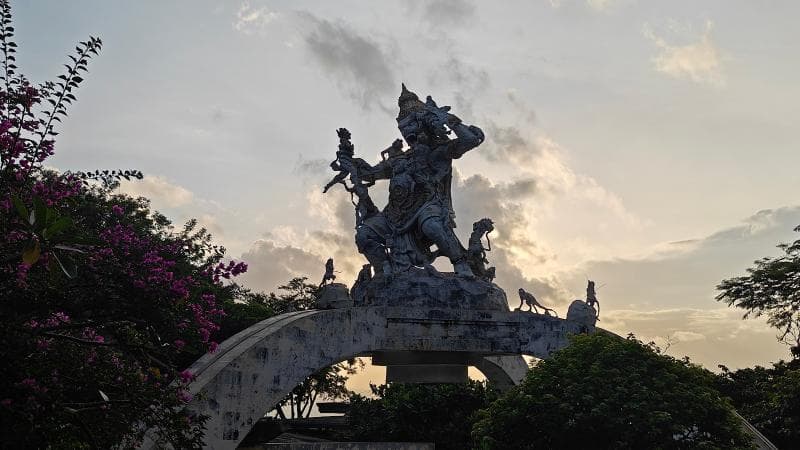
Experience the captivating Kecak Dance at Uluwatu Temple, Bali, Indonesia. Witness this unique fire dance and rhythmic chanting against a stunning sunset backdrop.
Overview
Perched dramatically on a clifftop 70 meters above the Indian Ocean, the Kecak Dance Amphitheater at Uluwatu Temple in Bali, Indonesia, offers a mesmerizing cultural experience unlike any other. This open-air venue provides a breathtaking setting for the renowned Kecak Fire Dance, perfectly timed with the spectacular Balinese sunset. It's not merely a performance but an immersive journey into ancient Hindu mythology and local tradition, drawing visitors into a world of rhythmic chants, vibrant costumes, and a powerful narrative without the use of musical instruments. The amphitheater itself is a modern addition to the sacred grounds of Uluwatu Temple, specifically designed to host this iconic dance drama, making it a focal point for cultural tourism on the island.
Witnessing the Kecak Dance here means experiencing an art form deeply intertwined with the spiritual essence of Bali, where the natural grandeur of the cliffside temple amplifies the performance's dramatic impact. The ocean breeze, the crashing waves below, and the changing hues of the sky as the sun dips below the horizon create an unforgettable backdrop.
History & Cultural Background
The Kecak Dance, often referred to as the 'Ramayana Monkey Chant' or 'Fire Dance', has a relatively modern origin, despite its ancient-feeling aesthetic. It was developed in the 1930s through a collaboration between Balinese dancer I Wayan Limbak and German painter and musician Walter Spies.
Its roots lie in the traditional Balinese trance ritual known as Sang Hyang, a ceremonial dance used to ward off evil spirits and facilitate communication with ancestral spirits or gods. Limbak and Spies adapted elements of this ritual, incorporating the popular Hindu epic, the Ramayana, to create a theatrical spectacle that could be shared with a wider audience.
The performance at Uluwatu Temple explicitly draws from the Ramayana, particularly the segment detailing Prince Rama's quest to rescue his abducted wife, Sita, from the demon king Ravana, aided by the monkey general Hanuman.
What Makes It Special
What truly sets the Kecak Dance Amphitheater at Uluwatu apart is the unique confluence of its setting, the dance's musicality, and its cultural narrative. Unlike most Balinese dances accompanied by a gamelan orchestra, Kecak relies solely on the rhythmic chanting of a large male chorus. Typically comprising 50 to 100 bare-chested men, seated in concentric circles, they chant 'cak-cak-cak' in a mesmerizing, percussive symphony that acts as the entire musical backdrop.
The absence of instruments places the human voice at the forefront, creating a primal and deeply moving experience. The amphitheater's cliffside location takes full advantage of the natural panorama. The performance deliberately begins before sunset, allowing the dramatic skies and the vast expanse of the Indian Ocean to become an integral, ever-changing stage element. The climax often involves a captivating fire dance, symbolizing purification and the triumph of good over evil, adding another layer of visual drama.
Stories, Fun Facts & Local Details
The narrative of the Kecak Dance at Uluwatu primarily focuses on the abduction of Sita by Ravana and Rama's heroic efforts to rescue her, with significant involvement from Hanuman, the white monkey god.
- One of the most iconic moments is when Hanuman, having been captured by Ravana, has his tail set alight. However, due to his divine powers, the fire does not harm him, and he uses it to burn down Ravana's palace, a scene often depicted with real flames in the amphitheater.
- The 'cak' chant is meant to imitate the sounds of a monkey army, reflecting the Vanara (monkey-like beings) who assist Prince Rama in the Ramayana epic.
- While traditionally performed by men, women have also begun performing Kecak Dance, with the first all-female performance recorded in 2006.
- Uluwatu Temple itself is one of Bali's six 'sad kahyangan' or directional temples, believed to protect the island from evil, making the dance performed here even more spiritually significant.
Visitor Perspective
For visitors, the Kecak Dance Amphitheater offers an unforgettable evening. The spectacle typically lasts around 60-75 minutes. It is highly recommended to arrive at least an hour before the scheduled start time (usually around 6:00 PM for the sunset show) to secure good seats, as they are often on a first-come, first-served basis, and the amphitheater can get crowded.
Dress modestly when visiting the temple grounds; sarongs and sashes are provided at the entrance. Be mindful of the resident macaques, who are known for their mischievous behavior; it's wise to secure belongings like sunglasses and phones. Choosing a seat slightly to the left side of the stage can offer prime views of both the performance and the sunset. The entire experience, from the hypnotic chants to the dramatic fire sequence against the backdrop of the ocean, leaves a lasting impression, deeply connecting travelers to Bali's rich cultural heritage.
Coordinates: 115.08528, -8.82889
View on Google Maps💬 How Travelers Describe This Place
Based on community votes
Must See
836Beautiful
797Photogenic
695Interesting
396Unique
286
Traveler Stories
Discover memorable experiences shared by travelers who have visited this place.
No traveler stories yet.
Be the first traveler to share what made this place memorable.

Tour
By
Spot
Discover amazing places around the world. Your journey starts here.
Explore
© 2026 TourBySpot. All rights reserved.