Ocean Lookouts
Bali, Indonesia
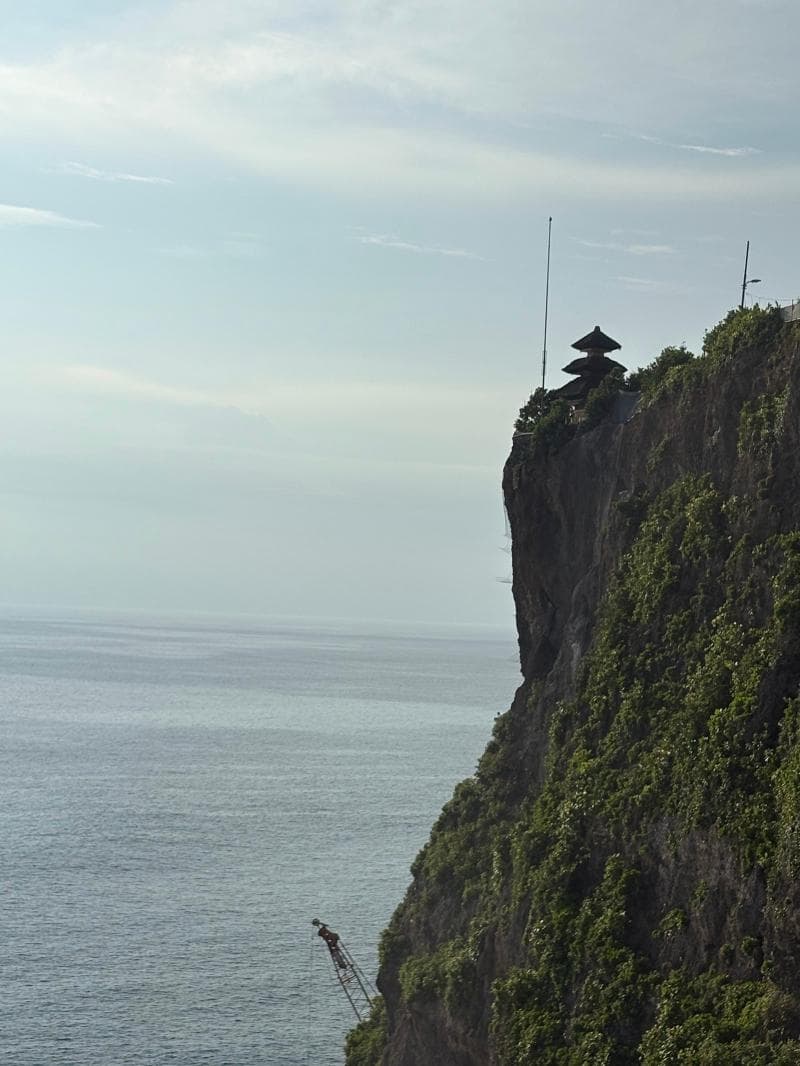
Discover Uluwatu Temple's stunning 'Ocean Lookouts' in Bali, Indonesia. Explore ancient history, cultural tales, and breathtaking cliffside views.
Overview
Perched dramatically atop a 70-meter-high limestone cliff, Uluwatu Temple, or Pura Luhur Uluwatu, offers some of Bali, Indonesia's most awe-inspiring vistas. This ancient sea temple, located on the southwestern tip of the Bukit Peninsula, is renowned for its spectacular 'Ocean Lookouts' – a series of vantage points along its clifftop pathways that provide breathtaking panoramic views of the Indian Ocean. It's a place where natural beauty, profound spirituality, and captivating cultural experiences converge, inviting visitors to witness Bali's majestic coastline and sacred heritage.
While 'Ocean Lookouts' is not a formal sub-spot name, it perfectly encapsulates the temple's main draw: its unparalleled cliffside perspective. Visitors can stroll along these protected pathways, observing the powerful waves crashing against the rocks far below, feeling the ocean breeze, and soaking in the expansive horizon. The temple grounds are also home to a protected forest inhabited by mischievous long-tailed macaques, considered the temple's guardians, adding a lively, natural element to the spiritual atmosphere.
History & Cultural Background
Uluwatu Temple holds immense historical and cultural significance as one of Bali's Sad Kahyangan Jagat, or six key directional temples, strategically positioned to maintain the island's spiritual balance. Its origins can be traced back to at least the 9th century, with evidence suggesting the year 886 AD. However, its development is largely attributed to two influential Hindu sages. The 11th-century sage Mpu Kuturan is believed to have initiated its foundation, introducing the concept of Tri Kahyangan, which classified Balinese temples into spiritual centers. Uluwatu was established as a sea temple, designed to protect Bali from negative spiritual forces emanating from the ocean.
Later, in the 16th century, Dang Hyang Nirartha, another revered Hindu sage, significantly expanded the temple and is credited with constructing the Padmasana shrines. Legend says that Nirartha chose Uluwatu as his final earthly abode, meditating here before achieving moksha, or spiritual liberation. It is believed that his shawl transformed into the rocky base of the temple, embedding his spiritual essence within its very foundations. This profound connection leads many Balinese Hindus to consider Uluwatu Temple a 'portal to heaven'. The temple is dedicated to Shiva Rudra, a manifestation of Lord Shiva, solidifying its role as a sacred site for prayers and ceremonies.
What Makes It Special
The primary allure of Uluwatu Temple lies in its dramatic juxtaposition of ancient spirituality with raw natural grandeur. What makes its 'Ocean Lookouts' truly special is not just the height of the cliff, which soars 70 meters above the sea, but the unbroken, expansive views of the Indian Ocean it provides. The curving pathways allow for diverse perspectives, from seeing surfers tackle formidable waves far below to gazing upon the endless blue expanse that merges with the sky.
Beyond the views, the temple's atmosphere is profoundly unique. The ancient architecture, intricate stone carvings, and traditional gateways tell stories of a rich past. The sense of reverence is palpable, particularly as sunset approaches, painting the sky in fiery hues that reflect off the ocean. This spectacle becomes the backdrop for the famous Kecak Fire Dance, a traditional Balinese performance that combines rhythmic chanting with a dramatic retelling of the Ramayana epic, making the sunset experience truly unforgettable.
Stories, Fun Facts & Local Details
The mischievous long-tailed macaques residing in the temple grounds are more than just wildlife; they are integral to the local lore. Many believe these monkeys are descendants of Dang Hyang Nirartha's soldiers, transformed to eternally guard the sacred temple. These clever creatures are known for their playful antics, often snatching sunglasses, hats, or other loose belongings from unsuspecting visitors. Local guides sometimes refer to this as a 'bartering system,' where the monkeys might return items in exchange for food.
Another fascinating detail is the temple's construction. The word 'Uluwatu' itself comes from 'ulu', meaning 'land's end' or 'head', and 'watu', meaning 'rock', perfectly describing its precarious and sacred position. The temple's ceremony, known as Odalan, commemorates Nirartha's ascension and is held twice a year according to the Balinese Pawukon calendar. It's said that during auspicious nights, spiritually powerful individuals pray here, and the monkeys temporarily transform into their original human forms to guard against evil spirits.
Visitor Perspective
Visiting Uluwatu Temple is an immersive experience. As you walk along the well-maintained clifftop paths, the vastness of the ocean inspires a sense of calm and wonder. The 'Ocean Lookouts' offer countless opportunities for reflection and photography, especially during the late afternoon when the sun begins its descent. To respect the sacred nature of the site, visitors are required to wear a sarong and sash, which are typically provided at the entrance.
While the inner sanctum of the temple is generally reserved for Hindu worshippers, the extensive grounds and cliffside walkways provide ample beauty and cultural insight. Be mindful of the resident monkeys; it's wise to secure all loose belongings to avoid any playful snatching. Staying for the Kecak dance at sunset is highly recommended, as it transforms the scenic backdrop into a vibrant cultural spectacle. The combination of ancient history, spiritual significance, and breathtaking natural beauty makes Uluwatu Temple a truly profound and memorable destination in Bali.
Coordinates: 115.08441, -8.82939
View on Google Maps💬 How Travelers Describe This Place
Based on community votes
Unique
989Beautiful
613Photogenic
603Interesting
581Must See
207
Traveler Stories
Discover memorable experiences shared by travelers who have visited this place.
No traveler stories yet.
Be the first traveler to share what made this place memorable.

Tour
By
Spot
Discover amazing places around the world. Your journey starts here.
Explore
© 2026 TourBySpot. All rights reserved.