Southern Cliffs
Bali, Indonesia
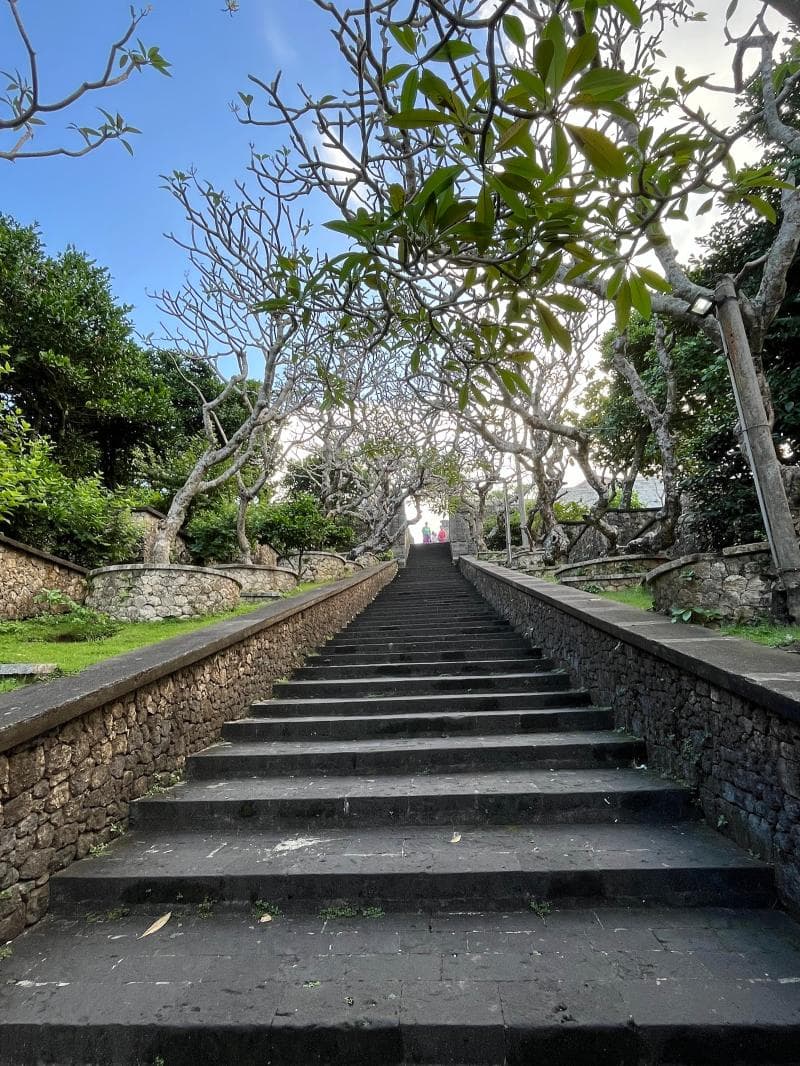
Explore the Southern Cliffs of Uluwatu Temple in Bali, Indonesia. Discover its sacred history, dramatic cliffside views, and cultural significance.
Overview
Perched majestically on the southwestern tip of Bali, Indonesia, the area known descriptively as the 'Southern Cliffs' is synonymous with the awe-inspiring Uluwatu Temple (Pura Luhur Uluwatu). This sacred Hindu sea temple commands a dramatic position atop a steep limestone cliff, approximately 70 meters (230 feet) above the crashing waves of the Indian Ocean. It is not merely a temple; it is a convergence of breathtaking natural beauty and profound spiritual significance. The term 'Southern Cliffs' encapsulates the spectacular geographical feature that cradles this ancient sanctuary, offering visitors panoramic ocean vistas, especially captivating during sunset.
Uluwatu Temple is one of Bali's 'Sad Kahyangan' or six key directional temples, playing a crucial role in the island's spiritual balance. Its formidable location is believed to protect Bali from negative sea spirits, anchoring the island's spiritual energy.
History & Cultural Background
The origins of Uluwatu Temple are deeply rooted in Balinese history, with archaeological evidence suggesting its presence as early as the 9th or 10th century. However, its significant expansion and prominence are largely attributed to two revered Hindu sages. In the 11th century, Empu Kuturan, a Javanese sage, is credited with laying the foundations for Balinese architecture and organizing the island's spiritual system, including the establishment of several key temples.
Centuries later, in the 16th century, Dang Hyang Nirartha, another influential Hindu priest from East Java, further shaped the temple's spiritual landscape. Legend has it that Nirartha attained moksha (spiritual liberation) at these very cliffs, dissolving into divine light above the ocean—an event locally known as 'ngeluhur,' meaning 'to go up.' This narrative imbues the Southern Cliffs with immense sanctity, transforming them into a place where the divine touches the earthly realm. The temple is dedicated to Sang Hyang Widhi Wasa in his manifestation as Rudra, the deity associated with wind and storm, or Shiva Rudra, the Balinese Hindu deity of all elements and aspects of life.
What Makes It Special
The allure of the Southern Cliffs lies in their powerful synthesis of nature and spirituality. The sheer drop of the limestone cliffs into the turquoise expanse of the Indian Ocean creates an unforgettable backdrop, widely regarded as one of Bali's most breathtaking viewpoints. This dramatic landscape is not merely scenic; it holds profound spiritual meaning. In Balinese belief, the meeting point between land and ocean is charged with powerful spiritual energy, and the temple's strategic position symbolizes strength, clarity, and the continuous relationship between humans and nature.
Beyond the architectural marvel and the stunning natural setting, the temple is renowned for its iconic Kecak dance performances. Held daily at sunset in an amphitheater perched on an adjacent cliff, these fiery traditional Balinese dances, narrating tales from the Ramayana, unfold against the canvas of a fading sun dipping below the horizon. This spectacle perfectly blends cultural storytelling with the raw beauty of the Southern Cliffs.
Stories, Fun Facts & Local Details
The Southern Cliffs of Uluwatu are home to more than just divine tales; they are also inhabited by a lively troop of long-tailed macaques. These monkeys are considered sacred guardians of the temple, believed to protect it from negative influences. However, they are also famously mischievous, known for snatching visitors' belongings like sunglasses, hats, and cameras. Local lore even suggests they 'barter' these items back for food. This interaction with the playful, yet cunning, inhabitants adds a unique, memorable, and often humorous dimension to the visit.
Another fascinating detail is the meaning behind the temple's name: 'Ulu' means 'head' or 'tip,' and 'watu' means 'stone' or 'rock' in Balinese, aptly describing its position at the 'head of the rock.' The pathways along the cliffs are fortified by concrete walls, offering a secure yet exhilarating walk with various fenced viewpoints where one can pause and soak in the majestic scenery.
Visitor Perspective
Visiting the Southern Cliffs of Uluwatu Temple is an immersive experience that engages all senses. Travelers are guided along winding pathways that hug the cliff's edge, revealing ever-changing perspectives of the vast Indian Ocean. The sheer scale of the cliffs, combined with the intricate Balinese architecture, creates an atmosphere of reverence and wonder. To honor the sacredness of the site, visitors are required to dress modestly, typically by wearing a sarong and sash, which are provided at the entrance.
The journey to the temple's core, while offering unparalleled views, also provides a tangible connection to Bali's spiritual heritage. The best time to visit is often late afternoon, allowing ample time to explore the grounds, appreciate the cliffside splendor, and then witness the legendary Kecak dance as the sun sets. The combination of natural grandeur, cultural immersion, and spiritual tranquility makes the Southern Cliffs of Uluwatu Temple a truly unforgettable destination for any curious traveler.
Coordinates: 115.0848, -8.8197
View on Google Maps💬 How Travelers Describe This Place
Based on community votes
Interesting
953Beautiful
695Photogenic
658Must See
396Unique
22
Traveler Stories
Discover memorable experiences shared by travelers who have visited this place.
No traveler stories yet.
Be the first traveler to share what made this place memorable.

Tour
By
Spot
Discover amazing places around the world. Your journey starts here.
Explore
© 2026 TourBySpot. All rights reserved.