Temple Gates
Bali, Indonesia
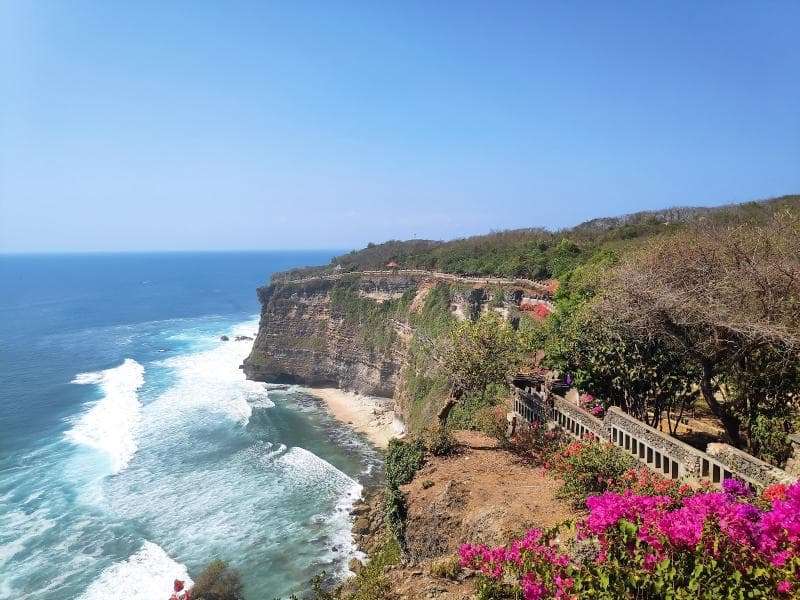
Discover the spiritual Temple Gates of Uluwatu Temple in Bali, Indonesia. Explore their history, cultural symbolism, and the unique architecture of Candi Bentar and Paduraksa at this cliffside sanctuary.
Overview
Perched dramatically atop a 70-meter limestone cliff, Uluwatu Temple, or Pura Luhur Uluwatu, in Bali, Indonesia, is far more than just a scenic viewpoint. It is one of the island's six cardinal temples, known as Sad Kahyangan, playing a crucial role in maintaining Bali's spiritual balance and safeguarding it from negative sea influences. The name itself provides a clue to its striking location: 'Ulu' means 'head' or 'land's end', and 'Watu' means 'stone' or 'rock' in Balinese. Within this revered complex, the 'Temple Gates' serve as powerful architectural and spiritual thresholds, guiding visitors and worshippers through increasingly sacred spaces, each imbued with deep cultural and historical meaning.
These gates, intricate in their design and profound in their symbolism, are an integral part of the Balinese spiritual journey. They range from the iconic split gates, known as Candi Bentar, which greet visitors at the outer perimeters, to the more elaborate towering gateways, or Paduraksa, that mark entry into the temple's inner sanctums. As you approach and pass through these ancient structures, you are not merely walking through stone archways, but engaging in a timeless ritual of transition from the mundane world to the divine.
History & Cultural Background
The origins of Uluwatu Temple can be traced back to at least the 10th or 11th century, with some archaeological remains suggesting an even earlier megalithic presence. Its significant expansion and establishment as a pivotal spiritual site are attributed to two revered sages. The 11th-century Javanese sage, Empu Kuturan, is credited with laying the foundations for Balinese architecture and introducing the concept of the Tri Kahyangan, positioning Uluwatu as a vital sea temple. Centuries later, in the 16th century, Dang Hyang Nirartha, another holy man from East Java, further enhanced the temple. He is believed to have constructed the Padmasana shrines and, most profoundly, to have attained moksha – spiritual liberation – at this very spot, an event locally called 'ngeluhur' (to go up), which elevated the temple's spiritual status significantly.
The temple is dedicated to Sang Hyang Widhi Wasa in his manifestation as Rudra, the deity associated with wind and storms, or Shiva Rudra, who is believed to protect the balance of nature and the island from evil sea spirits. The architectural elements, including its distinctive gates, are not merely decorative but are integral to Balinese Hindu cosmology, symbolizing sacred thresholds and divine protection.
What Makes It Special
The Temple Gates of Uluwatu are exquisite examples of traditional Balinese architecture, each designed with specific symbolic functions. The most recognizable are the Candi Bentar, or split gates. These tall, symmetrical structures are split down the middle, creating an open passage rather than a solid doorway. Unlike most gateways, they lack a connecting lintel or roof, symbolizing the duality of life – good and evil, physical and spiritual – and inviting passage between these realms. As you pass through a Candi Bentar, you are symbolically moving from the outer, profane world into a more sacred space, leaving negativity behind.
Deeper within the temple complex, you will encounter the Paduraksa, also known as Kori Agung. These gates are distinct from the Candi Bentar as they are covered with towering roofs and often feature elaborately carved wooden doors. A Paduraksa marks the entrance to the temple's innermost and most sacred sanctums, representing a profound transition into the divine presence. Uluwatu Temple notably features ancient and intricate stone carvings on its gates, including a rare 10th-century 'one-piece winged stone gate' leading to an inner courtyard, a design not commonly seen elsewhere on the island. The main entrances to the temple area are also guarded by imposing sculptures, sometimes depicting elephant-headed figures or other mythical protectors, further enhancing their role as spiritual guardians.
Stories, Fun Facts & Local Details
The gates of Uluwatu are not just stone and mortar; they are steeped in local lore and spiritual significance. According to ancient Balinese lontar (palm-leaf scrolls), the temple itself, and by extension its gates, can act as a 'portal to heaven' for those who pray with intense focus and devotion. This legend underscores the profound spiritual power attributed to the site. The split Candi Bentar gates are also said to represent Mount Meru, the cosmic mountain, split in two to welcome pilgrims into a sacred realm, requiring visitors to find inner balance to pass through. Occasionally, figures like Bhuta Nggawa Sari – giants bearing flowers – are depicted near the Candi Bentar, tasked with neutralizing negative energies and welcoming positive influences into the temple.
Perhaps the most famous inhabitants of Uluwatu are its resident long-tailed macaques. These monkeys are considered sacred guardians of the temple, believed by some to ward off evil spirits. A popular local legend even suggests that these monkeys are the transformed soldiers of Dang Hyang Nirartha, bound to protect the temple forever. While revered, they are also famously mischievous, known for snatching belongings like sunglasses, hats, and phones from unsuspecting visitors. They have even been observed to engage in a learned 'bartering' behavior, trading stolen items for food.
Visitor Perspective
For visitors, approaching the Temple Gates of Uluwatu is the beginning of an unforgettable journey. The architectural grandeur of the gates provides a stunning introduction to the spiritual heart of the temple. Navigating the winding paths that lead to and through these gates, with the vast Indian Ocean stretching out to the horizon, offers breathtaking panoramic views. It's essential to remember that this is an active place of worship, and respect for local customs is paramount. All visitors are required to wear modest attire, including a sarong and sash, which are typically provided at the entrance.
While admiring the beauty of the gates and the surrounding scenery, visitors should remain mindful of the temple's lively monkey population. Keeping belongings secure is highly recommended to avoid any playful 'thefts.' The pathways, while well-maintained, can be uneven, so comfortable, non-slip footwear is advisable. Passing through each successive gate at Uluwatu Temple is a step further into Bali's rich cultural tapestry, offering a serene and awe-inspiring experience that blends natural beauty with profound spiritual significance.
Coordinates: 115.08528, -8.82889
View on Google Maps💬 How Travelers Describe This Place
Based on community votes
Beautiful
791Photogenic
613Unique
514Must See
457Interesting
207
Traveler Stories
Discover memorable experiences shared by travelers who have visited this place.
No traveler stories yet.
Be the first traveler to share what made this place memorable.

Tour
By
Spot
Discover amazing places around the world. Your journey starts here.
Explore
© 2026 TourBySpot. All rights reserved.