Main Temple Complex
Bali, Indonesia
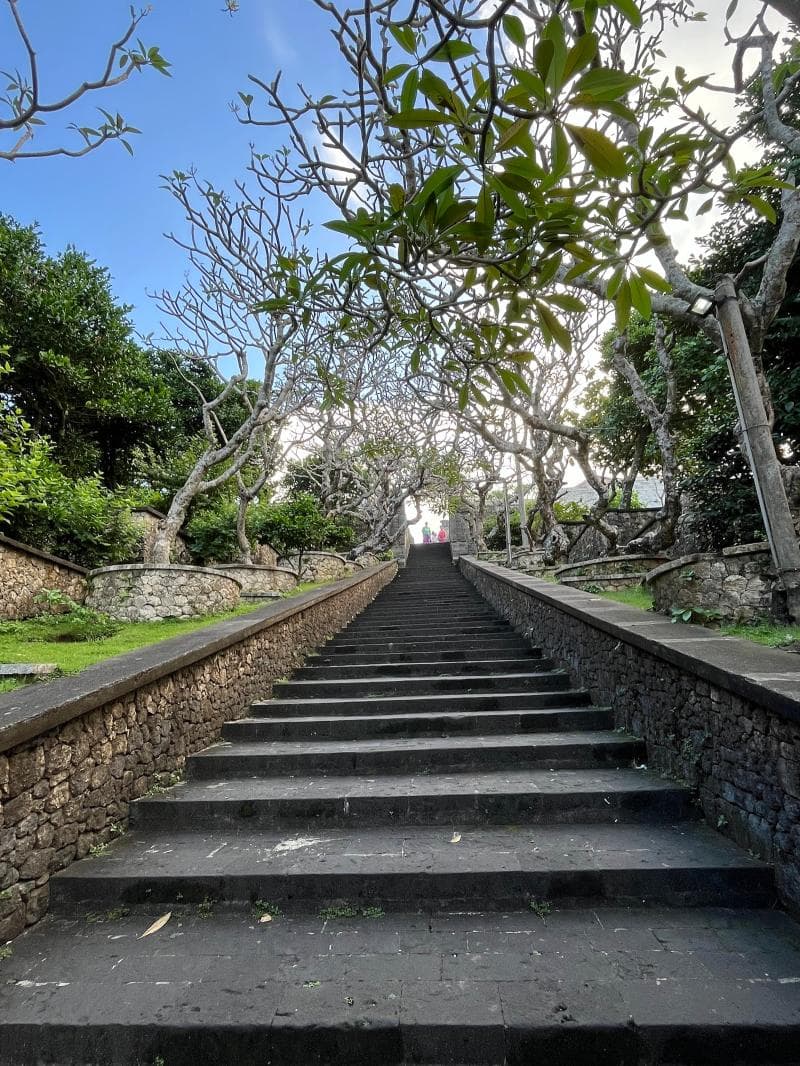
Explore the sacred Main Temple Complex of Uluwatu Temple in Bali, Indonesia, perched on a dramatic cliff with rich history and spiritual significance.
Overview
Perched majestically on a dramatic 70-meter limestone cliff, the Main Temple Complex within Uluwatu Temple (Pura Luhur Uluwatu) in Bali, Indonesia, stands as a profound testament to Balinese Hinduism and natural beauty. This revered site, often simply referred to as Uluwatu Temple, is not just a breathtaking viewpoint but a crucial spiritual pillar for the island. Its name, 'Uluwatu', is derived from 'ulu' meaning 'land's end' and 'watu' meaning 'rock', perfectly describing its spectacular location at the southwestern tip of the Bukit Peninsula, overlooking the vast Indian Ocean.
While the broader temple grounds offer expansive ocean vistas and cultural performances, the Main Temple Complex represents the innermost, most sacred heart of this 'sea temple' (Pura Segara). This core area houses the primary shrines and is typically reserved for Hindu worshippers, though its significant architectural features and spiritual aura are palpable to all who approach. It serves as one of Bali's six holiest temples, strategically positioned to provide spiritual protection to the island from negative forces emanating from the sea.
History & Cultural Background
The origins of Uluwatu Temple can be traced back to at least the 10th or 11th century. Historical records suggest a temple structure existed even earlier, with evidence of an ancient split gateway dating to 886 AD. However, its significant expansion and development are largely attributed to two influential Javanese sages. In the 11th century, Empu Kuturan, a Hindu priest, is credited with establishing the site as a spiritual boundary marker and introducing the tiered Meru tower design. He played a pivotal role in unifying Balinese spiritual practices.
Centuries later, in the 16th century, Dang Hyang Nirartha, another revered priest, further expanded the temple. He introduced the distinctive padmasana shrines—open, throne-like stone towers dedicated to the supreme god Sang Hyang Widhi Wasa. The temple is specifically dedicated to Sang Hyang Widhi Wasa in his manifestation as Rudra, the God of Storms and a form of Shiva. This dedication highlights Uluwatu's role as one of Bali's directional temples (Pura Kahyangan Jagat), designed to guard the island against malevolent sea spirits and maintain spiritual balance.
What Makes It Special
The Main Temple Complex is distinguished by its unique architecture, primarily constructed from dark grey coral stone carved directly from the surrounding cliffs. Within this sacred enclosure, the padmasana shrines stand as focal points of worship, symbolizing a throne for the gods and particularly honoring Sang Hyang Widhi Wasa. Visitors can also find a limestone statue behind the main pagoda, believed to represent Dhang Hyang Dwijendra, surveying the Indian Ocean. Another important structure within the complex is the Pura Dalem Jurit temple, added in the 16th century, which houses statues, including one of Brahma.
The intricate Balinese architecture, traditional gateways, and ancient sculptures adorning the complex add to its profound spiritual ambiance. While non-Hindu visitors cannot enter the innermost sanctum, the low stone walls allow glimpses into this deeply holy space, offering a visual connection to its spiritual significance. The placement of the temple on the precipice is not merely for aesthetics; it physically embodies its protective role, serving as a fortress against the chaotic energies of the sea.
Stories, Fun Facts & Local Details
Uluwatu is steeped in fascinating folklore and local beliefs. Legend has it that Dang Hyang Nirartha attained moksha, or ultimate spiritual liberation, right on these cliffs. Locals say a lightning strike marked the moment his physical body vanished, leading to the temple being given the title 'Luhur', signifying its divine origin and elevated status. Another tale suggests the very rock on which the temple sits is part of Dewi Danu's petrified boat.
The temple is also famously inhabited by long-tailed macaques, considered sacred guardians by locals who believe they protect the temple from negative influences. However, these monkeys are notoriously mischievous, known for snatching belongings from visitors. Scientists have observed that these macaques engage in a learned bartering system, exchanging stolen items for food—a behavior passed down through generations. This unique interaction adds an element of playful unpredictability to the sacred site.
Visitor Perspective
Visiting Uluwatu's Main Temple Complex offers a unique blend of spiritual encounter and natural wonder. While access to the central shrines is restricted to Hindu devotees, the pathways around the complex provide awe-inspiring views of the ocean and the temple's formidable cliffside perch. Visitors are required to wear a sarong and sash, provided at the entrance, as a mark of respect for the sacred site. Exploring the grounds involves walking along cliffside paths, leading to various viewpoints and architectural marvels.
The serene atmosphere, especially in the quieter moments, allows for reflection on the temple's profound spiritual role. The sound of waves crashing against the cliffs below creates a powerful backdrop, enhancing the sense of ancient divinity. Witnessing the Main Temple Complex at sunset, when the sky transforms into a canvas of vibrant colors, is an experience that resonates deeply, connecting visitors to the timeless spiritual essence of Bali. The daily Kecak fire dance, performed in an amphitheater nearby, further enriches the cultural immersion.
Coordinates: 115.08441, -8.82939
View on Google Maps💬 How Travelers Describe This Place
Based on community votes
Unique
953Must See
695Interesting
658Photogenic
69Beautiful
22
Traveler Stories
Discover memorable experiences shared by travelers who have visited this place.
No traveler stories yet.
Be the first traveler to share what made this place memorable.

Tour
By
Spot
Discover amazing places around the world. Your journey starts here.
Explore
© 2026 TourBySpot. All rights reserved.