Teatro La Fenice
Venice, Italy
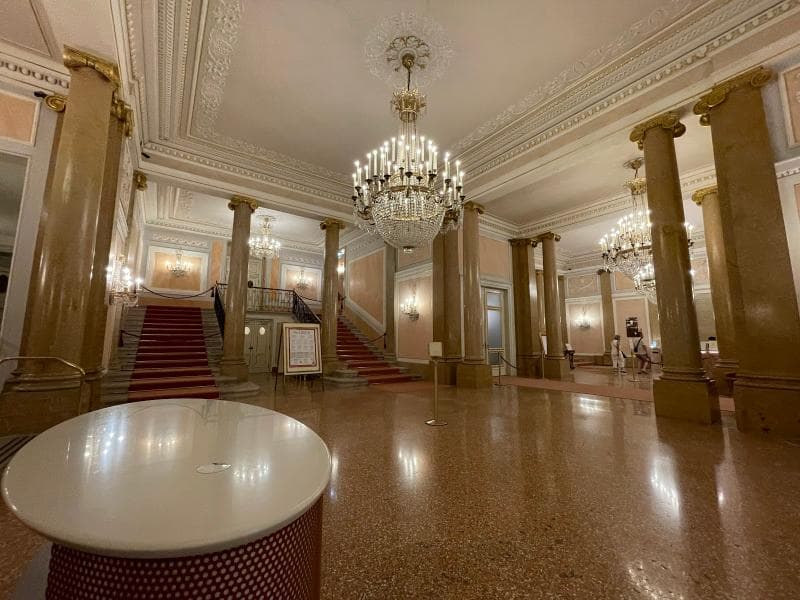
Explore Teatro La Fenice, Venice's iconic opera house. Discover its dramatic history of rebirth, stunning neoclassical architecture, and world-class acoustics in Italy.
Overview
Teatro La Fenice, or 'The Phoenix Theatre,' stands as a magnificent testament to resilience and the enduring power of opera in the heart of Venice, Italy. It is not merely an opera house but a symbol of cultural rebirth, having literally risen from its ashes multiple times. Located in the San Marco district, on Campo San Fantin, La Fenice is recognized globally as one of the most famous and historically significant landmarks in Italian theatre and opera as a whole. Its neoclassical facade, while elegant, belies the opulent and richly decorated interiors that have captivated audiences for centuries. As a vibrant hub of musical and theatrical arts, it continues to host world-class opera, ballet, and symphony performances, drawing visitors from across the globe to experience its unique grandeur and exceptional acoustics.
History & Cultural Background
The story of Teatro La Fenice began in the late 18th century. After Venice's leading opera house, the Teatro San Benedetto, burned down in 1774 and ownership disputes arose, a 'Noble Society of Box-holders' decided to commission a new, grand theatre. Construction, designed by architect Gianantonio Selva, commenced in 1790 and was completed with remarkable speed, opening its doors on May 16, 1792. Its name, 'La Fenice,' was chosen to reflect the company's ability to 'rise from the ashes' despite their previous loss and challenges.
This symbolic name proved prophetic. The first major disaster struck in December 1836, when a fire, attributed to a defective stove, devastated the theatre. However, true to its name, La Fenice was swiftly rebuilt within a year by the architects Tommaso and Gian Battista Meduna, maintaining much of its original design. Throughout the 19th century, La Fenice became a crucial stage for Italian opera, hosting numerous world premieres by legendary composers such as Gioachino Rossini, Vincenzo Bellini, Gaetano Donizetti, and Giuseppe Verdi. Iconic works like Verdi's 'Rigoletto' and 'La Traviata' debuted here, cementing its place in operatic history.
The theatre's resilience was tested once more on January 29, 1996, when an act of arson completely destroyed it, leaving only the exterior walls. The loss was immense, but the spirit of the Phoenix prevailed. A massive reconstruction effort began, guided by the principle 'com'era, dov'era' (as it was, where it was), aiming for a faithful recreation of the original design. The theatre officially reopened in December 2003 (some sources say November 2004), marking another glorious rebirth. Since its reopening on January 1, 2004, La Fenice has famously hosted the annual New Year's Concert, broadcast internationally.
What Makes It Special
Beyond its dramatic history of rebirth, Teatro La Fenice is distinguished by several unique qualities. Its architectural design, a stunning example of neoclassical style, features a traditional horseshoe-shaped auditorium with five tiers of boxes, sumptuously adorned with gilding, red velvet, and intricate frescoes. Every element, from the seating to the magnificent central chandelier and gilded balustrades, contributes to an atmosphere of old European elegance.
One of La Fenice's most celebrated attributes is its exceptional acoustics, widely considered among the finest in the world. This is no accident but the result of meticulous architectural planning, where the shape of the hall, choice of materials, and even decorations work in harmony to distribute sound evenly to every seat. Visitors taking tours often witness demonstrations where a whisper from the stage can be clearly heard in the furthest reaches of the auditorium, showcasing this remarkable sonic quality.
The theatre's importance is further underscored by its role as a birthplace for numerous operatic masterpieces. The premieres of works by Verdi, Rossini, and Bellini not only shaped the canon of Italian opera but also solidified La Fenice's status as a global cultural icon.
Stories, Fun Facts & Local Details
- The Phoenix Name: The name 'La Fenice' was chosen to symbolize the opera company's survival and resurgence after losing its previous theatre and then enduring repeated fires, truly living up to its mythological namesake.
- Rebuilding After the 1996 Fire: Following the devastating 1996 fire, clips from Luchino Visconti's 1954 film 'Senso,' which was partly shot in the theatre, were reportedly used as a guide to faithfully recreate the interiors. This commitment to historical accuracy ensured its reconstruction 'as it was, where it was.'
- Hidden Treasures: During the reconstruction after the 1996 fire, workers discovered ancient frescoes depicting Dante Alighieri's journey into hell. These unexpected artistic finds added another layer to the theatre's rich history.
- The Original Entrance: Historically, the primary entrance to Venetian palaces and important buildings, including La Fenice, was from the canal, reflecting Venice's unique mode of transport by gondola. Today's main entrance on Campo San Fantin was once considered a secondary access point.
- An Unflattering Premiere: Despite its later fame, Giuseppe Verdi's 'La Traviata' reportedly received a rather cold reception at its La Fenice premiere on March 6, 1853, with spectators booing the performance. Verdi himself was quite hurt by its initial failure.
Visitor Perspective
Visiting Teatro La Fenice offers a captivating experience, whether you're attending a performance or taking a daytime tour. The theatre is generally open daily for visits, usually from 9:30 AM to 6 PM, though schedules can vary due to rehearsals or performances. Audio guides are available in several languages, providing detailed historical and architectural insights, making it accessible to a wide range of international visitors. Guided tours offer an even deeper dive into its stories and spaces.
The main entrance is located on Campo San Fantin. For those with special needs, the theatre is fully compliant with accessibility regulations and provides elevator access from the ground floor. It is advisable to check the official website for current opening hours and any specific accessibility arrangements, especially if planning a visit during Venice's high water periods, as La Fenice is situated in one of the city's lower-lying areas. While photography is generally restricted inside the auditorium during performances and tours, the visual splendor of its foyer, Apollonian Rooms, and the main hall's grandeur are designed to be savored in person.
Coordinates: 12.3338, 45.4336
View on Google Maps💬 How Travelers Describe This Place
Based on community votes
Photogenic
872Interesting
846Must See
201Beautiful
121Unique
87
Traveler Stories
Discover memorable experiences shared by travelers who have visited this place.
No traveler stories yet.
Be the first traveler to share what made this place memorable.
Things to see at Teatro La Fenice



Tour
By
Spot
Discover amazing places around the world. Your journey starts here.
Explore
© 2026 TourBySpot. All rights reserved.