Main Auditorium
Venice, Italy
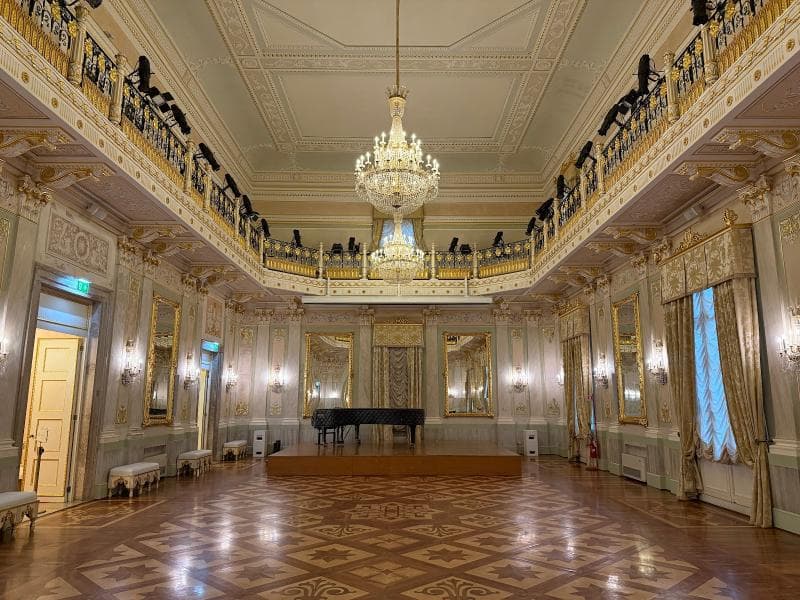
Explore the Main Auditorium of Teatro La Fenice in Venice, Italy – a legendary opera house reborn from ashes, famed for its stunning acoustics and rich history.
Overview
The Main Auditorium of Teatro La Fenice in Venice, Italy, is far more than just a performance space; it is a profound symbol of resilience and artistic grandeur. Known affectionately as 'The Phoenix Theatre,' its very name, 'La Fenice,' reflects its extraordinary history of rising from the ashes after devastating fires. Situated in the heart of Venice, this historic opera house is celebrated as one of the most famous and renowned landmarks in the history of Italian theatre and opera as a whole. Visitors stepping into the opulent main hall are immediately enveloped by its golden light, ivory velvet, and painted ceilings, a testament to two centuries of rich musical tradition. The auditorium remains a vibrant cultural hub, hosting world-class opera and classical music performances, and inviting travelers to delve into its storied past through guided tours.
History & Cultural Background
The story of La Fenice's Main Auditorium is one of dramatic rebirth. The theatre first opened its doors in 1792, commissioned by a group of Venetian noble families who sought to replace their previous theatre lost to fire. Designed by architect Gianantonio Selva, its neoclassical elegance and superb acoustics were immediately recognized. However, true to its name, La Fenice was ravaged by fire in 1836, only to be meticulously rebuilt within a year by the architect-engineer brothers Tommaso and Giovanni Battista Meduna, maintaining its original design and enhancing its luxurious interior. The theatre's resilience was tested once more in 1996, when arson completely destroyed it. The world watched as Venice committed to rebuilding ‘com'era, dov'era’ – 'as it was, where it was'. Architect Aldo Rossi oversaw this monumental reconstruction, which was completed in 2003, preserving its historical integrity while integrating modern facilities.
Throughout the 19th century, La Fenice became a crucial stage for operatic premieres, hosting works by the great bel canto composers such as Rossini, Bellini, and Donizetti. Most notably, Giuseppe Verdi premiered several of his iconic operas here, including 'Ernani,' 'Attila,' 'Rigoletto,' and 'La traviata,' cementing the auditorium's place in operatic history.
What Makes It Special
The Main Auditorium of Teatro La Fenice is a masterpiece of architectural and acoustic design. Its classical horseshoe shape, characterized by five tiers of ornate boxes, provides optimal sightlines and sound distribution, creating an intimate yet grand atmosphere. The lavish interior is adorned with intricate gilt decorations, plush ivory velvet, and stunning frescoes, creating an immersive experience of 19th-century luxury. One of its most extraordinary features is its perfect acoustics, widely considered among the best in the world. This is not by chance, but the result of meticulous architectural planning, where every element, from the materials used to the decorative details, contributes to the even distribution of sound. Even a whisper from the stage can be clearly heard in the furthest seats, a testament to its engineering brilliance. Additionally, the reconstructed auditorium thoughtfully incorporates modern comforts, such as a sophisticated air conditioning system installed under each seat for enhanced visitor enjoyment.
Stories, Fun Facts & Local Details
The name 'La Fenice,' meaning 'The Phoenix,' was prophetically chosen, symbolizing the company's survival despite losing previous theatres to fire. This mythological bird's cycle of destruction and rebirth perfectly encapsulates the theatre's own dramatic history. An intriguing detail from its reconstruction after the 1996 fire is that builders reportedly used Luchino Visconti's clips from the movie 'Senso' as a guide to faithfully recreate the spaces, demonstrating the profound cultural memory associated with the venue. Historically, the theatre featured distinct entrances: aristocrats arrived by gondola via a canal-side entrance, while the public used a land-based entry, a fascinating glimpse into Venetian society.
The Main Auditorium also holds special significance for fans of Maria Callas; a permanent photographic exhibition within the theatre is dedicated to the legendary soprano, celebrating her pivotal connection to La Fenice and Venice. Despite the fires, the theatre's historical archive, housed in a separate building, miraculously survived, preserving invaluable documents from its foundation to the present day. Another hidden gem is a subtle tribute to Andrea Palladio, with a scale model of the Palladian Basilica found in one of the rehearsal rooms, revealing the deep artistic reverence embedded within the building.
Visitor Perspective
For the curious traveler, visiting the Main Auditorium of Teatro La Fenice offers an unforgettable journey into operatic history and Venetian culture. Daily guided tours, often accompanied by audio guides in multiple languages, lead visitors through the magnificent hall. These tours provide a unique opportunity to explore the horseshoe-shaped auditorium, marvel at the gilded boxes and painted ceiling, and even step onto the prestigious stage where countless legendary artists have performed. A highlight for many is seeing the Royal Box, an ornately decorated space where royalty and dignitaries once enjoyed performances. Beyond the main hall, visitors can explore areas like the Apollonian Rooms, traditionally used for social gatherings. The Maria Callas exhibition adds another layer of cultural enrichment. The theatre is also accessible, with elevators providing access to the upper tiers. Whether attending a performance or simply taking a daytime tour, experiencing the Main Auditorium is to touch the living history and enduring spirit of Venice.
Coordinates: 12.3339, 45.4337
View on Google Maps💬 How Travelers Describe This Place
Based on community votes
Must See
797Interesting
695Unique
396Beautiful
286Photogenic
22
Traveler Stories
Discover memorable experiences shared by travelers who have visited this place.
No traveler stories yet.
Be the first traveler to share what made this place memorable.

Tour
By
Spot
Discover amazing places around the world. Your journey starts here.
Explore
© 2026 TourBySpot. All rights reserved.