Exhibition Rooms
Venice, Italy
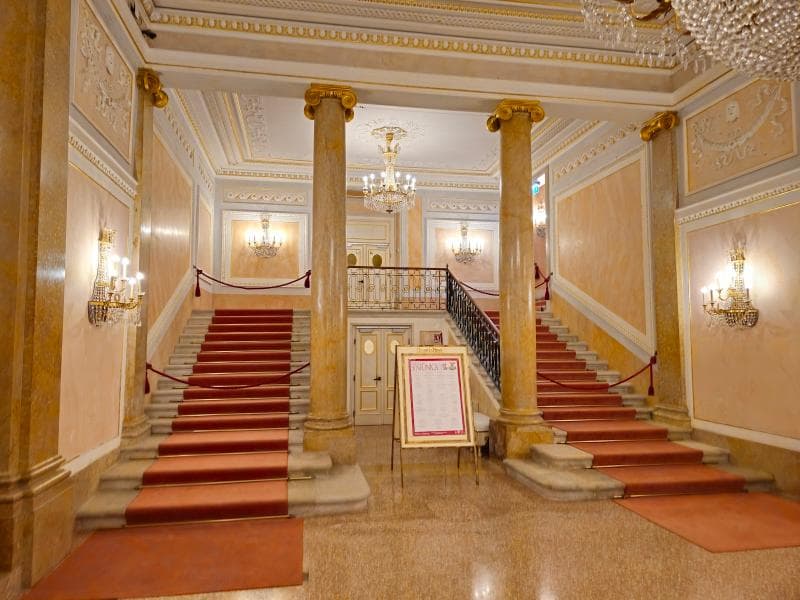
Explore the Exhibition Rooms of Teatro La Fenice in Venice, Italy, including the Apollonian Halls and the Maria Callas exhibition. Discover its rich history.
Overview
Deep within the grandeur of Venice's iconic Teatro La Fenice lie its captivating Exhibition Rooms, often referred to as the Sale Apollinee or Apollonian Rooms. These meticulously restored spaces offer visitors a unique journey through the opera house's rich history and cultural significance. Beyond the main auditorium, these rooms, including the opulent Foyer and other magnificent halls, serve as a testament to Venetian artistry and resilience. They are integral to the theatre's visitor experience, providing a deeper understanding of its past and its enduring legacy in the world of opera. A highlight of these rooms is a poignant permanent exhibition dedicated to the legendary soprano Maria Callas, thoughtfully situated in one of the theatre's historic boxes.
Visiting these Exhibition Rooms allows a glimpse into the vibrant social life that once thrived within La Fenice's walls. They showcase not only the architectural splendor but also the stories of the celebrated artists and historical events that have shaped this revered institution. These spaces are accessible to the public, typically through guided tours or self-guided visits with an audio guide, ensuring that every curious traveler can explore their beauty and historical depth.
History & Cultural Background
Teatro La Fenice, meaning 'The Phoenix' in Italian, first opened its doors in 1792, immediately establishing itself as a pivotal cultural landmark in Venice. Its name proved prophetic, as the theatre has famously risen from the ashes not once, but twice, after devastating fires. The first major blaze occurred in 1836, and after a swift reconstruction, it reopened within a year.
However, the most severe fire, caused by arson, ravaged the theatre in 1996, leaving only its exterior walls. The decision was made to rebuild it 'as it was, where it was,' a painstaking process that saw the theatre faithfully restored to its 19th-century splendor and reopened in December 2003. The Apollonian Rooms, then, are not just architectural spaces; they embody this enduring spirit of rebirth and cultural perseverance. Historically, these rooms, particularly the Sala Apollinea Grande, served as lavish ballrooms for the Venetian aristocracy, hosting grand social events and complementing the operatic performances with a vibrant after-show atmosphere.
What Makes It Special
What truly sets the Exhibition Rooms apart is their ability to transport visitors directly into the heart of Venetian cultural heritage. The meticulous restoration after the 1996 fire means that the intricate details, from the gilded stucco work to the elegant frescoes, are authentic recreations of their historical counterparts. Walking through the Foyer and the Sale Apollinee, one can almost hear the echoes of 19th-century revelry and the hushed anticipation before a grand operatic premiere.
The permanent exhibition dedicated to Maria Callas is a significant draw. Located in a box on the third tier, it offers an intimate look into the life and career of one of opera's most iconic figures, with a particular focus on her connection to Venice. This personal touch provides a human element to the historical grandeur, allowing visitors to connect with the emotional depth of the performing arts. The ability to witness these spaces, once exclusive to the Venetian elite, now open for all to explore, fosters a deep appreciation for the theatre's enduring legacy and its symbolic role as a beacon of cultural resilience.
Stories, Fun Facts & Local Details
The name 'La Fenice' itself is a captivating story. It was chosen to symbolize the rebirth of the Noble Society of Box Holders, who had lost their previous theatre to a legal dispute. This initial act of resilience foreshadowed the theatre's incredible ability to rise from its own ashes after two devastating fires, cementing its reputation as a symbol of Venice's unwavering spirit.
The Exhibition Rooms hold their own intriguing secrets. For instance, after the 1996 fire, during the reconstruction, ancient frescoes depicting Dante in Hell were discovered in what is now the Sala Dante, a room that currently houses the theatre's bar. Another fascinating detail is that the original main entrance to the theatre was from the water, reflecting the Venetian nobility's preference for arriving by gondola. This highlights how integral the city's unique waterways were to its social fabric.
And while La Fenice hosted many triumphant premieres, including those by Verdi, Rossini, and Bellini, it's a fun fact that Giuseppe Verdi's masterpiece, 'La Traviata,' initially received a rather cold reception at its premiere here in 1853, a stark contrast to its later global acclaim.
Visitor Perspective
For the curious traveler, visiting the Exhibition Rooms of Teatro La Fenice is an immersive cultural experience. Whether opting for a self-guided tour with a multilingual audio guide or joining an expert-led group, visitors can explore the Foyer, the grand staircase, and the various Apollonian Halls at their own pace. The audio guide provides detailed explanations and historical anecdotes, bringing the spaces to life.
The Maria Callas exhibition is a highlight, offering a chance to delve into the career of the iconic diva within the very walls where operatic history was made. The theatre's commitment to accessibility means that wheelchair users can also navigate these historic areas. Tickets can be conveniently purchased either at the theatre's ticket office or online. It is important to note that while the theatre is generally open for visits daily, schedules may vary due to rehearsals or performances, so checking the official website beforehand is advisable. Photography for non-commercial use is typically permitted, allowing visitors to capture the enduring beauty and historical resonance of these extraordinary spaces.
Coordinates: 12.3338, 45.4336
View on Google Maps💬 How Travelers Describe This Place
Based on community votes
Photogenic
872Interesting
846Must See
201Beautiful
121Unique
87
Traveler Stories
Discover memorable experiences shared by travelers who have visited this place.
No traveler stories yet.
Be the first traveler to share what made this place memorable.

Tour
By
Spot
Discover amazing places around the world. Your journey starts here.
Explore
© 2026 TourBySpot. All rights reserved.