St. Stephen’s Cathedral
Vienna, Austria
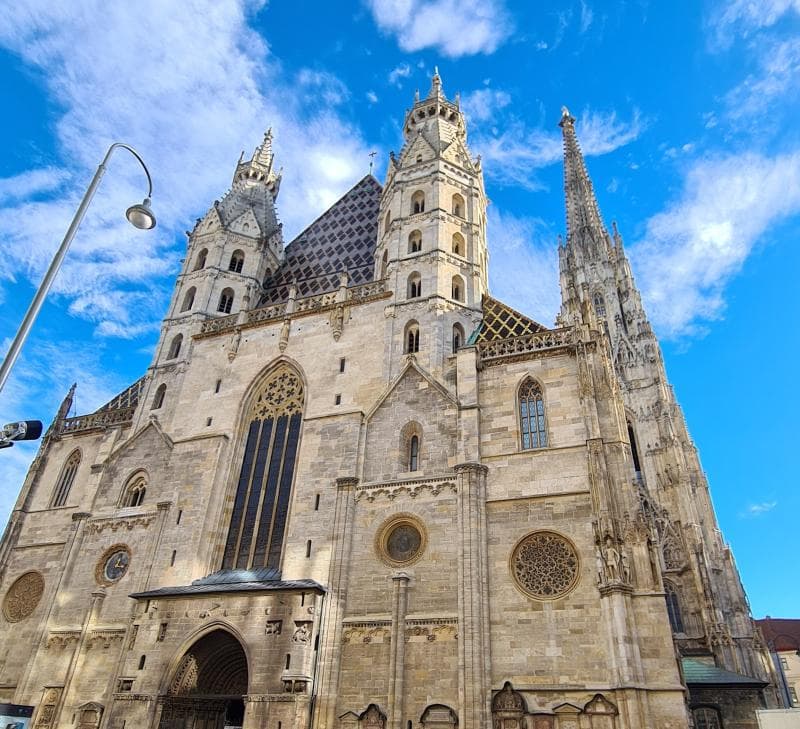
Explore St. Stephen's Cathedral in Vienna, Austria, a stunning Gothic masterpiece and iconic symbol. Discover its rich history, intricate architecture, and unique features.
Overview
St. Stephen's Cathedral, known locally as ‘Steffl’, stands as an enduring symbol of Vienna, Austria. Located prominently in Stephansplatz, it is the mother church of the Roman Catholic Archdiocese of Vienna and a stunning example of mixed architectural styles, predominantly Gothic with significant Romanesque elements. Its distinctive roof, adorned with vibrant tiles, and its towering spires dominate the city's skyline, making it an unmistakable landmark. For centuries, St. Stephen's has been more than just a place of worship; it is a repository of history, art, and Viennese identity, attracting visitors from around the globe who come to marvel at its grandeur and delve into its rich past.
The cathedral’s sheer scale and intricate details tell a story of dedication and resilience across generations. It serves as both a spiritual center and a cultural beacon, embodying the spirit of Vienna through various historical epochs.
History & Cultural Background
The origins of St. Stephen's Cathedral trace back to the 12th century, with the first Romanesque church consecrated in 1147. This early structure laid the groundwork for what would become a monumental edifice. After a fire in 1258, a second, larger Romanesque church was built. The significant transformation into the Gothic masterpiece seen today began in the 14th century, heavily influenced by Duke Rudolf IV, who laid the foundation stone for the South Tower in 1359.
The South Tower, a marvel of medieval engineering, was completed in 1433 and, at 136.4 meters, was for a period the tallest church tower in Europe. Construction on the North Tower began in 1450 but was halted in 1511, leaving it unfinished at 68 meters and capped with a Renaissance dome.
The cathedral has witnessed numerous pivotal moments in Austrian history, including weddings and funerals of the Habsburg dynasty. During the final days of World War II in April 1945, a fire from nearby burning buildings severely damaged St. Stephen's, destroying its roof and parts of its interior. However, through a remarkable effort largely supported by public donations and a 'roof tile campaign' ('Dachziegelaktion'), the cathedral was painstakingly rebuilt and reopened by 1952, standing as a powerful symbol of Austria's reconstruction and national resilience.
What Makes It Special
St. Stephen's Cathedral boasts an array of features that make it truly unique. Its magnificent tiled roof, reaching 38 meters above the ground, is covered with approximately 230,000 glazed tiles forming intricate patterns. These mosaics include the double-headed eagle, a symbol of the Habsburg monarchy, and the coats of arms of the City of Vienna and the Republic of Austria. The roof's steep pitch is so effective that it rarely holds snow.
The towering South Tower, affectionately called 'Steffl', reaches 136.4 meters. Visitors can ascend 343 steps to the watchman's room ('Türmerstube') for breathtaking panoramic views of Vienna, where watchmen once vigilantly guarded against fires.
In contrast, the North Tower houses the Pummerin, the second-largest free-swinging chimed church bell in Europe. This massive bell, weighing over 20 tons, rings only on special occasions, such as New Year's Eve, its deep tone resonating throughout the city.
Beneath the cathedral lie extensive catacombs, a fascinating and somewhat eerie underground world. These crypts served as a burial site for centuries and contain the remains of over 11,000 individuals, including Habsburg royalty, bishops, and victims of the plague.
The Romanesque origins are still visible in the monumental Giant's Doorway ('Riesentor'), the main entrance, and the two flanking Pagan Towers ('Heidentürme') on the west facade, dating back to the 13th century.
Stories, Fun Facts & Local Details
Beyond its architectural marvels, St. Stephen's Cathedral is interwoven with countless stories and local lore. Wolfgang Amadeus Mozart, one of Vienna's most famous residents, was married here in 1781 and had his funeral in the cathedral in 1791.
A charming local detail is the 'Christ with a Toothache' statue, located behind the cathedral. It earned its nickname due to the figure's unique head wrapping, which locals humorously imagined as a remedy for a toothache.
The cathedral's significance extends into modern Viennese culture; it is famously depicted on the pink packaging of Manner wafers, a beloved local sweet, and featured on the Austrian 10-cent Euro coin.
Another curious artifact is the 'Stock-im-Eisen' (Staff in Iron), a medieval spruce trunk embedded near the cathedral. According to tradition, traveling journeymen would drive nails into it for good luck, creating a unique historical testament.
A testament to its historical prominence, an unwritten rule once dictated that no church tower in the Austro-Hungarian Empire should exceed the height of St. Stephen's South Tower, reinforcing its status as a premier national monument.
Visitor Perspective
For the curious traveler, visiting St. Stephen's Cathedral offers a profound journey through history and faith. While the front nave and parts of the northern side are generally accessible without a ticket, a deeper exploration of its treasures requires entry.
Visitors can choose to climb the 343 steps of the South Tower for an exhilarating ascent and unparalleled city views, or take a more leisurely elevator ride up the North Tower to see the Pummerin bell up close. Guided tours provide access to the mysterious catacombs, offering a glimpse into Vienna's subterranean past.
The interior of the cathedral is a feast for the senses, with its grand altars, intricate chapels, and Gothic sculptures. The atmosphere, a blend of reverence and historical weight, invites contemplation. The cathedral also regularly hosts concerts, where classical music resonates within its ancient stone walls, providing a unique cultural experience.
Coordinates: 16.373819, 48.208174
View on Google Maps💬 How Travelers Describe This Place
Based on community votes
Unique
948Interesting
913Must See
595Photogenic
337Beautiful
196
Traveler Stories
Discover memorable experiences shared by travelers who have visited this place.
No traveler stories yet.
Be the first traveler to share what made this place memorable.
Things to see at St. Stephen’s Cathedral



Tour
By
Spot
Discover amazing places around the world. Your journey starts here.
Explore
© 2026 TourBySpot. All rights reserved.