Rooftop Tiles
Vienna, Austria
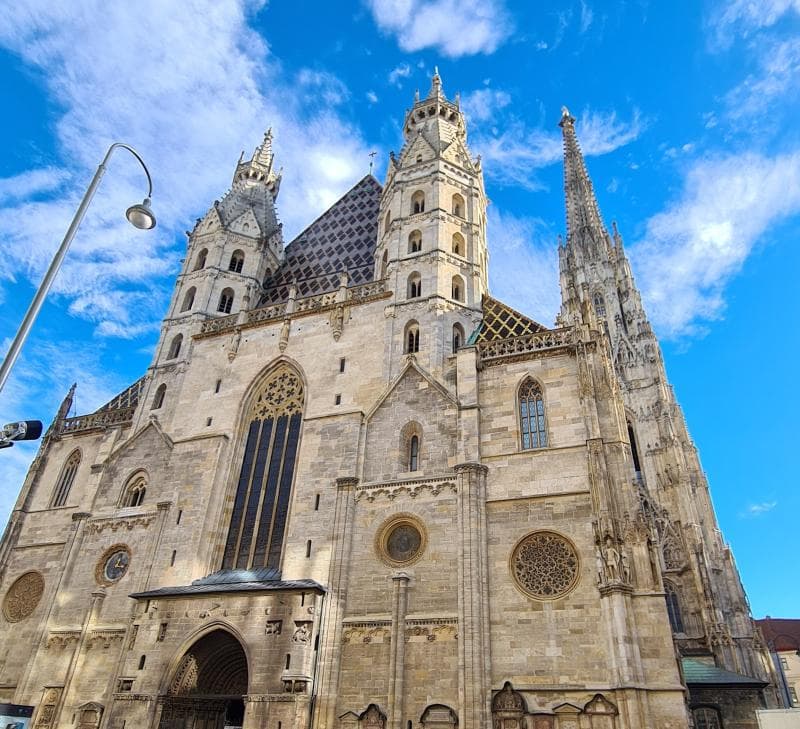
Discover the vibrant rooftop tiles of St. Stephen’s Cathedral in Vienna, Austria. Explore its history, unique patterns, and symbolic coats of arms.
Overview
Perched atop the venerable St. Stephen's Cathedral in Vienna, Austria, lies a marvel of architectural artistry: its distinctive rooftop tiles. Far from a mere covering, this vibrant mosaic of glazed tiles is one of the city's most recognizable symbols, captivating onlookers with its intricate patterns and rich history. Stretching an impressive 111 meters (364 ft) in length and reaching up to 38 meters (125 ft) at its highest point, the roof is a testament to both ingenious engineering and artistic expression.
Comprising an astonishing 230,000 glazed tiles, the roof creates a dazzling spectacle of green, black, white, and pastel shades. These tiles are meticulously arranged to form striking geometric patterns, most notably a distinctive zigzag design across the nave area. Beyond its aesthetic appeal, the roof serves a practical purpose: its remarkable steepness, reaching angles of up to 80 degrees, ensures that snow rarely accumulates and rainwater efficiently cleans its surface, maintaining its brilliant appearance year-round.
History & Cultural Background
The history of St. Stephen's Cathedral's roof is deeply intertwined with Vienna's own tumultuous past. While the cathedral itself boasts centuries of construction, evolving from Romanesque beginnings to a Gothic masterpiece, the current roof tells a more recent story of destruction and rebirth. The original roof, a magnificent wooden structure crafted from 2000 cubic meters of larch wood, stood for centuries as a feat of medieval carpentry.
Tragically, this historical masterpiece met its end in April 1945, when a devastating fire, ignited by the final stages of World War II, consumed the wooden framework. The painstaking task of reconstruction began swiftly. Instead of replicating the original wooden truss, a modern solution was adopted: a robust steel structure weighing over 600 tonnes was engineered to support the new roof. Completed in 1950 and the cathedral fully reopened in 1952, the new roof meticulously recreated the historic patterns, guided by preserved plans, photographs, and even salvaged fragments of the original tiles.
What Makes It Special
What truly sets St. Stephen's Cathedral's rooftop tiles apart is their dual role as both a functional architectural element and a grand canvas for national and civic identity. On the south side, positioned above the choir, the tiles form a majestic mosaic of the double-headed eagle, a powerful symbol of the former Habsburg empire, which ruled from Vienna for centuries. Conversely, the north side proudly displays the coats of arms of the City of Vienna and the Republic of Austria, signifying the nation's contemporary identity.
The sheer scale and vivid detail of these tiled coats of arms, visible even from a distance, contribute significantly to the roof's iconic status. Each of the 230,000 glazed tiles, weighing approximately 2.5 kg, was individually fastened with two copper nails and embedded in mortar, ensuring its longevity and resilience against the elements. The unique combination of historical symbolism, artistic execution, and engineering ingenuity makes these rooftop tiles a truly special feature of Viennese architecture.
Stories, Fun Facts & Local Details
The rooftop tiles of St. Stephen's Cathedral are not without their intriguing anecdotes and local lore. One fascinating detail lies in the dates depicted on the roof: 1831 and 1950. While many might assume these represent pivotal historical moments, they actually mark the completion dates of specific roofing work, offering a subtle nod to the ongoing maintenance and evolution of this grand structure.
A popular local legend suggests that the striking zigzag pattern of the tiles was inspired by a Saracen carpet, a whimsical tale that adds an emotional layer to its visual complexity. Another curious observation involves one of the eagles on the coat of arms, which is said to face the 'wrong' way. This artistic liberty was possibly taken for the sake of symmetry, prioritizing visual balance over strict heraldic rules – a delightful insight into the artisans' approach.
Furthermore, the enormity of the roof itself is a subject of local fascination. Architects intentionally designed such a massive roof structure, replacing the earlier timber roof with a steel one after the 1945 fire, to restore optical balance to the cathedral. The exceptionally tall South Tower had created a visual imbalance, and the expansive, intricately patterned roof served to counteract this, creating a harmonious overall impression.
Visitor Perspective
For the curious traveler, the rooftop tiles offer a unique perspective on St. Stephen's Cathedral and Vienna itself. While the intricate details of the coats of arms are best appreciated from higher vantage points, the roof's vibrant colors and patterns are distinctly visible from various parts of the city. To experience a closer look, visitors can ascend the South Tower, a journey of 343 steps that rewards with breathtaking panoramic views over the Old Town and a closer appreciation of the tile work. Alternatively, a lift in the North Tower provides access to an observation platform, offering another excellent viewing opportunity.
For those seeking a truly immersive experience, special guided tours into the attic space and along the rain gutters are available, providing an unparalleled 'behind-the-scenes' look at the roof's construction and offering unique vistas of the city. Seeing the rooftop tiles up close reveals the masterful craftsmanship involved in laying each of the quarter-million glazed pieces, transforming a functional necessity into an enduring symbol of Austrian heritage and resilience.
Coordinates: 16.373, 48.2085
View on Google Maps💬 How Travelers Describe This Place
Based on community votes
Photogenic
964Unique
926Beautiful
646Interesting
482Must See
380
Traveler Stories
Discover memorable experiences shared by travelers who have visited this place.
No traveler stories yet.
Be the first traveler to share what made this place memorable.

Tour
By
Spot
Discover amazing places around the world. Your journey starts here.
Explore
© 2026 TourBySpot. All rights reserved.