South Tower
Vienna, Austria
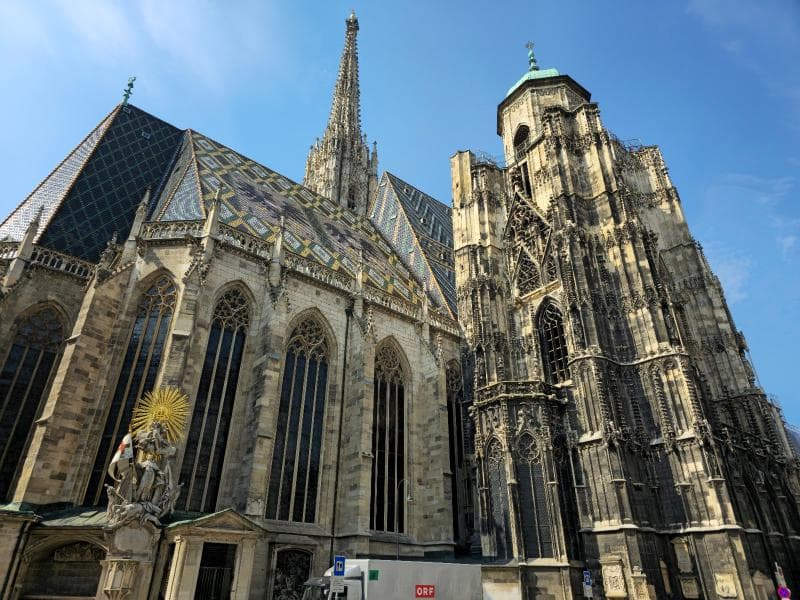
Explore the South Tower of St. Stephen's Cathedral in Vienna, Austria. Climb 343 steps for unparalleled Gothic architecture, rich history, and panoramic city views.
Overview
The South Tower of St. Stephen's Cathedral, affectionately known as 'Steffl' by the Viennese, stands as an unmistakable landmark dominating the skyline of Vienna, Austria. Rising to an impressive height of 136.7 meters, it is the tallest church tower in Austria and a prime example of Gothic architecture. This magnificent structure invites travelers to journey back in time, offering not just breathtaking panoramic views but also a profound connection to the city's rich history and cultural heritage. The climb to its watchman's room, via 343 winding steps, is an integral part of the experience, revealing the intricate details of its medieval construction and the enduring spirit of Vienna.
History & Cultural Background
The construction of the South Tower began in 1368, under Duke Rudolf IV, and was completed 65 years later in 1433. For centuries, this towering sentinel served a crucial civic function beyond its religious significance. It acted as an important watchtower, with watchmen diligently scanning the horizon for fires and other threats to the city. During the sieges of Vienna in 1529 and again in 1683, it transformed into a vital military observation and command post, playing a pivotal role in the city's defense. The tower's enduring presence has made it a symbol of Viennese identity and resilience, representing hope and the spirit of reconstruction after its damage during World War II.
What Makes It Special
The South Tower's distinct High Gothic design, characterized by its verticality, pointed arches, and intricate stone tracery, showcases the masterful precision of medieval stonemasons. Its sculptural ornamentation and structural elegance are celebrated worldwide, often cited as one of the most beautiful Gothic towers globally. For a significant period, it was among the tallest church towers in Europe, a testament to Vienna's prominence. The 'Steffl' not only offers unparalleled views but also serves as a constant orientation point within the city, visible from nearly every district and guiding visitors through Vienna's historic streets. The original sculptures decorating the tower are now preserved in the Historical Museum of the City of Vienna, with copies adorning the tower today.
Stories, Fun Facts & Local Details
Life in the South Tower was once quite unique. Watchmen, known as 'Türmer', lived in an apartment directly within the tower, diligently ringing bells to warn the city of danger until as late as 1955. While the famous 'Pummerin' bell, Austria's largest, is now housed in the shorter North Tower, the original 'Old Pummerin' was located in the South Tower until its destruction in the 1945 fire. The South Tower also holds a connection to stories of resistance. During the Nazi era, an 'O5' symbol, representing Austria, was carved into the stone near the Giant's Gate, symbolizing the defiance of a resistance group. Furthermore, the South Tower's bells have struck the hours, connecting generations of Viennese with St. Stephen's Cathedral since the 15th century.
Visitor Perspective
Embarking on the climb up the South Tower is an experience in itself. Visitors navigate 343 narrow, winding stone steps to reach the watchman's room, approximately 72 meters (245 feet) above street level. This challenging ascent is rewarded with magnificent 360-degree panoramic views of Vienna's historic center. From this vantage point, one can admire the city's rooftops, church spires, the winding Danube, and even glimpse the distant Vienna Woods and, on clear days, the foothills of the Alps. The journey through the authentic Gothic interior, with small openings offering glimpses of the city, truly connects you with the tower's past. Comfortable shoes with good grip are highly recommended for this memorable climb.
Coordinates: 16.373, 48.2085
View on Google Maps💬 How Travelers Describe This Place
Based on community votes
Must See
913Photogenic
748Interesting
499Beautiful
337Unique
94
Traveler Stories
Discover memorable experiences shared by travelers who have visited this place.
No traveler stories yet.
Be the first traveler to share what made this place memorable.

Tour
By
Spot
Discover amazing places around the world. Your journey starts here.
Explore
© 2026 TourBySpot. All rights reserved.