St. Mark's Basilica
Venice, Italy
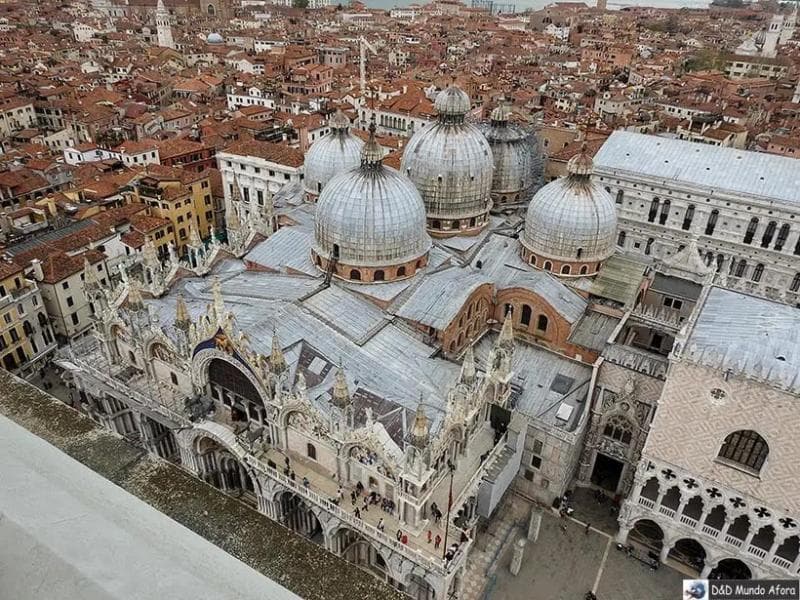
Explore St. Mark's Basilica in Venice, Italy – a breathtaking blend of Byzantine architecture and shimmering golden mosaics. Discover its rich history and unique treasures.
Overview
St. Mark's Basilica, or Basilica di San Marco, stands as a magnificent emblem of Venice, Italy, dominating the eastern end of the iconic Piazza San Marco. Often referred to as the 'Church of Gold' (Chiesa d'Oro) due to its opulent interior, it is undeniably the most significant religious edifice in the city. More than a church, it has served for centuries as the vibrant heart of Venice's public and religious life, intertwined with the Doge's Palace adjacent to it.
Visitors are immediately struck by its unique blend of architectural styles, primarily Byzantine, which speaks volumes about Venice's historical connections as a powerful maritime republic and a bridge between East and West. The basilica’s exterior hints at the treasures within, but it is upon entering that one truly understands its grandeur, surrounded by a dazzling expanse of golden mosaics that narrate centuries of sacred history.
History & Cultural Background
The origins of St. Mark's Basilica are rooted in a tale of ambition and faith, deeply connected to Venice's desire for spiritual and political prominence. In 828 AD, Venetian merchants famously smuggled the relics of St. Mark the Evangelist from Alexandria, Egypt, bringing them to Venice. This pivotal act transformed St. Mark into the city's patron saint and necessitated the construction of a grand basilica to house his sacred remains.
The first modest church, built in 828, was soon replaced by a more substantial structure in 832. However, this too was destroyed by fire in 976 during a rebellion. The present basilica, largely inspired by the Church of the Holy Apostles in Constantinople, began construction in 1063 under Doge Domenico Contarini and was consecrated in 1094. For most of its history, the basilica served as the Doge's private chapel, symbolizing the Republic's immense wealth, diplomacy, and spiritual devotion. It was not until 1807, after the fall of the Venetian Republic, that it officially became the cathedral of Venice.
What Makes It Special
What truly sets St. Mark's Basilica apart is its breathtaking collection of golden mosaics, covering over 8,000 square meters (or 85,000 square feet) of its interior. These shimmering artworks, created between the 11th and 17th centuries, depict biblical scenes, allegorical figures, and episodes from the lives of Christ, the Virgin Mary, and St. Mark, earning the basilica its 'Church of Gold' moniker.
Architecturally, the basilica is a masterpiece of Italo-Byzantine style, characterized by its Greek cross plan and five large domes. These domes, with their soaring wooden exteriors concealing inner masonry, give the basilica its distinctive silhouette. The interior is further adorned with over 500 columns and capitals, many of which are ancient spoils from the 6th to 11th centuries, primarily from Constantinople. Among its most prized possessions are the Pala d'Oro, an elaborate golden altarpiece encrusted with jewels and enamels, and the Treasury, which houses a vast collection of religious relics and artifacts accumulated over centuries, including many brought back from the Crusades. Over the main entrance, the famed Horses of St. Mark (the Triumphal Quadriga) stand as powerful symbols of Venetian pride and history, with the originals now preserved inside and replicas gracing the facade.
Stories, Fun Facts & Local Details
One of the most enduring stories associated with the basilica is how St. Mark's relics arrived in Venice. Legend has it that the merchants, to evade Muslim guards in Alexandria in 828 AD, hid the saint's body under layers of pork in a basket, a scene famously depicted in a 13th-century mosaic on the basilica's facade. The sheer volume of mosaics, if laid flat, would cover an area equivalent to over 1.5 American football fields, creating a uniquely luminous atmosphere that changes with the light throughout the day.
Visitors often notice the undulating, uneven floors within the basilica, which are not merely due to age but contribute to the feeling of walking on waves, a subtle nod to Venice's maritime identity. An intriguing detail also mentions a relief of the Virgin Mary with a gun, an addition from 1849 by Venetian sailors commemorating their survival of an Austrian bomb explosion. The basilica's construction itself incorporates an interesting optical illusion: the large outer domes are actually higher wooden coverings built over the internal masonry domes to enhance its Gothic appearance.
Visitor Perspective
St. Mark's Basilica is centrally located in Piazza San Marco, making it easily accessible on foot from most parts of Venice, or via vaporetto (water bus) to the San Zaccaria or San Marco Vallaresso stops. While general entry to the basilica is technically free, visitors often find long queues, especially during peak seasons. To truly appreciate its wonders and save time, booking a skip-the-line ticket or joining a guided tour is highly recommended.
Certain areas, such as the Pala d'Oro, the Treasury, and the St. Mark's Museum (which includes access to the terrace for stunning views of the Piazza), require separate admission fees. Inside, it's advised to allow your eyes to adjust to the dim light upon entering, as this allows the golden mosaics to gradually reveal their full splendor. Remember that St. Mark's Basilica remains an active place of worship; respectful attire and conduct are expected from all visitors.
Coordinates: 12.3396, 45.4345
View on Google Maps💬 How Travelers Describe This Place
Based on community votes
Photogenic
457Interesting
252Beautiful
147Must See
114Unique
19
Traveler Stories
Discover memorable experiences shared by travelers who have visited this place.
No traveler stories yet.
Be the first traveler to share what made this place memorable.
Things to see at St. Mark's Basilica



Tour
By
Spot
Discover amazing places around the world. Your journey starts here.
Explore
© 2026 TourBySpot. All rights reserved.