Facade Mosaics
Venice, Italy
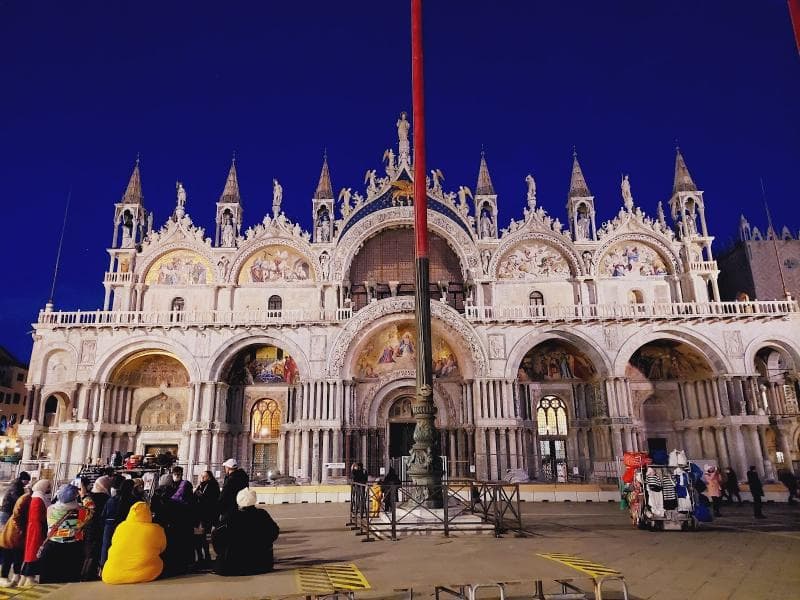
Discover the stunning facade mosaics of St. Mark's Basilica in Venice, Italy. Uncover their rich history, symbolic art, and compelling stories.
Overview
St. Mark's Basilica in Venice, Italy, is a testament to the city's rich history and profound spiritual devotion, captivating visitors with its opulent beauty and intricate artistry. Among its most striking features are the magnificent facade mosaics, which serve as a grand visual introduction to the basilica's narrative and Byzantine splendor. These mosaics adorn the Western facade, the primary entrance facing Piazza San Marco, and immediately draw the eye with their shimmering gold and vibrant storytelling.
These detailed artworks are not merely decorative; they are a vital part of the basilica's historical and cultural tapestry, telling the foundational legend of how Venice acquired its revered patron saint. The mosaics on the lunettes of the main facade specifically illustrate the dramatic journey of St. Mark's relics from Alexandria, Egypt, to their final resting place in Venice.
History & Cultural Background
The history of St. Mark's Basilica is inextricably linked to the relics of Saint Mark the Evangelist. In 828 AD, two audacious Venetian merchants, Bono of Malamocco and Rustico of Torcello, are said to have 'stolen' St. Mark's body from Alexandria. This bold act provided Venice with a powerful patron saint, elevating the city's religious and political status.
The current basilica, begun in 1063, was designed to house these precious relics and assert Venice's growing commercial wealth and power, mirroring the grandeur of Byzantine churches like the Church of the Holy Apostles in Constantinople.
The facade mosaics depicting the 'translatio' (translation) of St. Mark's relics were gradually installed, with the earliest surviving one dating back to the 13th century. This particular mosaic, located above the far-left portal (Porta di Sant'Alipio), is significant as it provides a rare visual record of the basilica's 13th-century appearance.
While many of the original facade mosaics were replaced over time due to damage, particularly in the 17th, 18th, and 19th centuries, the continuity of the narrative remained paramount. These replacements, though later, faithfully convey the original iconographic program, ensuring the story of Venice's divine destiny and the arrival of its saint is prominently displayed.
What Makes It Special
What truly sets the facade mosaics apart is their central role in narrating Venice's foundational myth. The sequence of scenes vividly recounts the daring recovery and transport of St. Mark's body, a tale steeped in local folklore and civic pride. The most ancient mosaic on the facade, a 13th-century masterpiece, uniquely showcases the basilica as it appeared centuries ago, offering a glimpse into the past. Its Byzantine style, characterized by hieratic figures and a radiant golden background made with 24-carat gold leaf, symbolizes divine light and eternity, creating an extraordinary visual effect that has endured for centuries.
These mosaics are not just static images; they are a dynamic visual sermon, a proclamation of Venetian identity and destiny. The use of gold tesserae, tiny pieces of colored glass and gold leaf, creates a luminous and shimmering surface that catches the sunlight, making the facade appear to glow.
Stories, Fun Facts & Local Details
One of the most engaging stories depicted in the facade mosaics is the cunning plan devised by the Venetian merchants to smuggle St. Mark's body out of Alexandria. To bypass suspicious Muslim customs officers, they concealed the saint's remains beneath layers of pork and vegetables in large baskets. The mosaics humorously portray the Egyptian officials reacting with disgust and pinching their noses, allowing the sacred cargo to pass uninspected.
Another fascinating detail is the 'Praedestinatio' – the angelic prophecy that Mark would one day find his final resting place in Venice. This belief underpinned Venice's claim to divine favor and justified its ambition. The fourth mosaic from the right, the oldest one, shows St. Mark's body being carried into the newly built basilica, a moment of triumph and spiritual fulfillment for the nascent Republic.
The artistic heritage of these mosaics continues to this day, with specialist furnaces like Orsoni Venezia 1888 still producing the glass enamel and gold leaf tesserae necessary for their conservation and restoration, maintaining the basilica's golden glow for future generations.
Visitor Perspective
For any traveler approaching St. Mark's Basilica, the facade mosaics are the first immersive encounter. They instantly transport you into Venice's rich past, inviting you to decipher the narratives etched in shimmering gold and vibrant stone. Standing in Piazza San Marco, one can trace the dramatic saga of St. Mark's journey, piece by piece, across the lunettes.
Observing these mosaics offers a unique perspective on the basilica's architectural evolution and artistic techniques. They set the emotional and informational tone for the wonders held within, providing a captivating prelude to the vast mosaic cycles that adorn the interior. Taking a moment to appreciate the details and stories on the facade enhances the entire experience of visiting this iconic Venetian landmark, connecting you directly to the city's ancient spirit and its enduring legend.
Coordinates: 12.3396, 45.4345
View on Google Maps💬 How Travelers Describe This Place
Based on community votes
Beautiful
950Must See
858Unique
287Interesting
231Photogenic
86
Traveler Stories
Discover memorable experiences shared by travelers who have visited this place.
No traveler stories yet.
Be the first traveler to share what made this place memorable.

Tour
By
Spot
Discover amazing places around the world. Your journey starts here.
Explore
© 2026 TourBySpot. All rights reserved.