Treasury
Venice, Italy
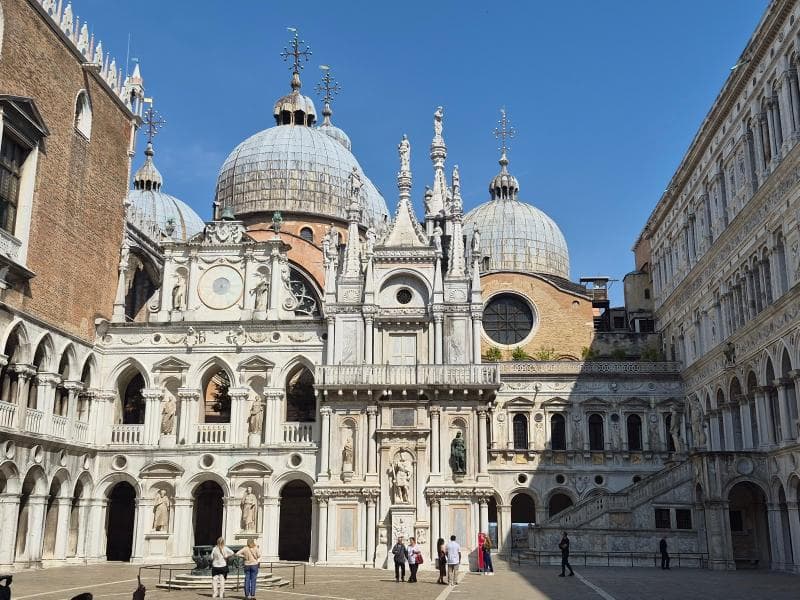
Discover the Treasury of St. Mark's Basilica in Venice, Italy, home to a stunning collection of Byzantine treasures, relics, and historical artifacts.
Overview
Tucked away within the magnificent St. Mark's Basilica in Venice, Italy, lies a lesser-known yet profoundly rich collection known simply as the Treasury. This sacred space, located between the church and the Doge's Palace, specifically off the southern transept, houses an extraordinary array of religious artifacts and precious objects. It is a captivating collection of approximately 283 to 300 items, encompassing Byzantine metalwork, enamels, chalices, reliquaries, and liturgical vessels. Visiting the Treasury offers a unique glimpse into centuries of religious devotion, artistic mastery, and the intricate historical tapestry of Venice's connections with the wider world.
History & Cultural Background
The history of the Treasury is inextricably linked with Venice's powerful past, particularly its role in the Fourth Crusade. Most of its ancient core was amassed after the sack of Constantinople in 1204, when Venetian forces brought a vast number of precious objects and relics back to the city as spoils of war. These treasures were initially kept in various locations within the basilica, with the formal creation of the Treasury dating to the early 13th century. However, a devastating fire in 1231 largely destroyed this initial collection, with only a fragment of the True Cross, an ampulla containing the Precious Blood of Christ, and a relic of Saint John the Baptist miraculously surviving. By 1283, a new inventory showed the Treasury had been recreated, supplemented by new acquisitions from the Venetians' expulsion from Constantinople in 1261, as well as gifts from foreign rulers and locally produced artworks. Under the Venetian Republic, when St. Mark's served as the Doge's private chapel, the Treasury's administration and finances were overseen by the procurators of Saint Mark. The collection was even publicly displayed five times a year, and distinguished foreign visitors were granted tours. This period of grandeur, however, faced a severe challenge with Napoleon's occupation of Venice in 1797. French forces ordered the melting down of many precious metal objects, resulting in the loss of 535 kilograms of gold and silver. Despite these losses, surviving items were returned, and the Treasury was subsequently restored, though some precious stones were sold off between 1815 and 1819 for further restoration efforts.
What Makes It Special
What truly sets the Treasury apart is its status as the single best surviving collection of Byzantine metalwork and enamels in the world. Many of these pieces are unique, representing art forms that were largely destroyed elsewhere. Among its most significant holdings are the Byzantine hardstone vessels, particularly outstanding examples carved from various semi-precious stones. A notable artifact is the 6th-century throne-reliquary, known as the 'Cathedra of Saint Mark,' a rather crudely carved alabaster piece that is one of the oldest in the collection. The Treasury also boasts numerous Islamic artworks, including a rare 9th-10th century relief-cut turquoise glass bowl from Iran or Iraq, mounted in an exquisite silver-gilt setting adorned with jewels and Byzantine enamels. The collection displays a fascinating blend of objects from Byzantine, Islamic, and Western European workshops, illustrating the diverse cultural influences that shaped Venice. From chalices and patens of semi-precious stones with elaborate gold and silver mountings to portable icons and reliquaries for fragments of the True Cross, each item tells a story of craftsmanship and devotion.
Stories, Fun Facts & Local Details
One compelling story connected to the Treasury involves the 1231 fire and the miraculous survival of the three key relics, a testament to their perceived divine protection. A 13th-century mosaic above the entrance to the Treasury itself depicts two angels bearing the reliquary of the Cross, commemorating this very event. Imagine a time when these treasures were not just static museum pieces but vital parts of grand liturgical ceremonies, openly displayed to both citizens and foreign dignitaries. The sight of these opulent objects was a powerful symbol of Venice's wealth, spiritual authority, and its command of trade routes that reached far across the Mediterranean. The contrast between the ancient Byzantine objects, often looted, and the later Venetian additions highlights the continuous evolution of the collection and Venice's enduring artistic legacy. Even the tale of Napoleon's forces melting down precious objects underscores the volatile history and immense value these pieces held, both spiritually and materially.
Visitor Perspective
For the curious traveler, a visit to the Treasury offers a profound experience. Located in two rooms off the south transept, it requires a separate admission fee, typically around €7, in addition to the main basilica entry ticket. Allocate about 20 to 30 minutes to explore this compact but densely packed area. The rooms are often dimly lit, creating an atmosphere of reverence and allowing the intricate details of the gold, silver, and jeweled artifacts to truly shine within their glass cases. This is an essential stop for anyone with a keen interest in Byzantine art, medieval goldsmithing, or the rich tapestry of religious history. It's a quiet contrast to the often-bustling main areas of the basilica, offering a moment of reflection amidst objects that have witnessed centuries of history and devotion. While reports from 2017 suggested potential renovations, visitors should check for the most current information regarding access.
Coordinates: 12.33984, 45.43456
View on Google Maps💬 How Travelers Describe This Place
Based on community votes
Interesting
995Unique
964Must See
926Photogenic
730Beautiful
482
Traveler Stories
Discover memorable experiences shared by travelers who have visited this place.
No traveler stories yet.
Be the first traveler to share what made this place memorable.

Tour
By
Spot
Discover amazing places around the world. Your journey starts here.
Explore
© 2026 TourBySpot. All rights reserved.