Senate Square
Helsinki, Finland
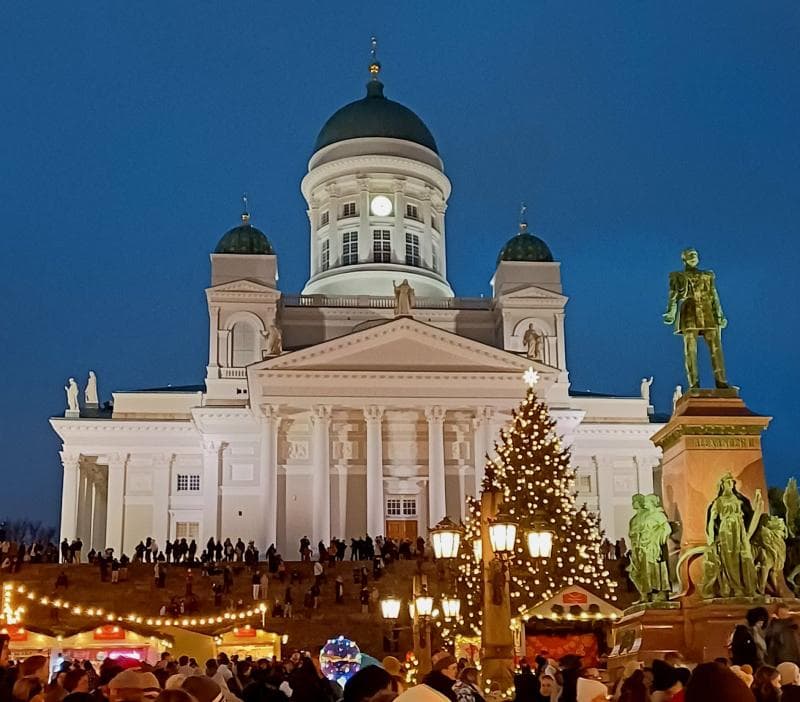
Discover Helsinki's historic Senate Square, an iconic Neoclassical masterpiece in Finland. Explore the Cathedral, Government Palace, and Alexander II statue.
Overview
Senate Square, or Senaatintori as it's known locally, stands as the historical and cultural heart of Helsinki, Finland. This magnificent public space is renowned for its strikingly unified Neoclassical architecture, a testament to the city's aspirations as a grand European capital. Dominated by the majestic Helsinki Cathedral, the square is an essential landmark and one of Finland's most significant attractions. The square is flanked by four key buildings, all designed by the influential architect Carl Ludvig Engel: the imposing Helsinki Cathedral to the north, the Government Palace to the east, the main building of the University of Helsinki to the west, and the National Library of Finland nearby. In the very center, a bronze statue of Emperor Alexander II watches over the square, while the Sederholm House, Helsinki's oldest stone building, anchors its southeast corner, now housing the Helsinki City Museum. Senate Square is more than just a collection of historical buildings; it's a vibrant, open space where history, politics, religion, and science converge, offering a compelling narrative of Finnish identity and heritage.
History & Cultural Background
The story of Senate Square begins in 1812, when Helsinki was designated the new capital of the Grand Duchy of Finland, then under Russian rule. The previous city center had been largely destroyed by a fire in 1808, paving the way for a grand redesign. Johan Albrecht Ehrenström's visionary town plan laid out the square as the new capital's monumental core. To realize this ambitious vision, Carl Ludvig Engel, a German-born architect, was commissioned. He embarked on a monumental project to reshape Helsinki in the elegant Neoclassical or Empire style, drawing inspiration from St. Petersburg. Construction began in 1818, transforming the area that once held the Ulrika Eleonora Church and a graveyard.
Engel's architectural symphony unfolded over decades. The Government Palace, originally the House of the Senate, was completed in 1822. The main building of the Imperial Alexander University (now the University of Helsinki) followed in 1832, relocating after the Great Fire of Turku. Engel's most enduring project, the Helsinki Cathedral (originally named St. Nicholas' Church), dominated the northern edge of the square, though it was finalized in 1852, twelve years after his death. This ensemble was carefully designed to represent the political, religious, scientific, and commercial powers, creating a coherent urban space that continues to define Helsinki's cityscape.
What Makes It Special
Senate Square's unique charm lies in its architectural harmony and profound symbolic significance. The Neoclassical buildings form a remarkably unified and well-preserved complex, providing a stunning backdrop that transports visitors to the 19th century. The Helsinki Cathedral, with its gleaming white facade and green domes, is arguably Finland's most iconic and photographed building, drawing the eye upwards with its serene grandeur. In the heart of the square, the statue of Emperor Alexander II is particularly poignant. Erected in 1894, it commemorates his significant reforms and the restoration of the Diet of Finland in 1863, which granted greater autonomy to Finland. This statue later became a powerful symbol of quiet resistance for Finns during periods of Russification.
Adding a modern touch to this historic setting is the 'Sound of the Senate Square,' a daily sound installation heard at 17:49. This contemporary take on a European glockenspiel, composed by Harri Viitanen and Jyrki Alakuijala, fills the square with a 5-minute and 18-second composition, creating an unexpected auditory experience amidst the visual splendor. Moreover, on the southeast corner stands the Sederholm House, dating back to 1757. It is recognized as the oldest stone building in central Helsinki and now hosts the Helsinki City Museum, offering a glimpse into the city's earlier life.
Stories, Fun Facts & Local Details
Beyond its grand facade, Senate Square holds fascinating details that tell a richer story. For instance, Carl Ludvig Engel's design carefully articulated the roles of the surrounding institutions through architectural language. The Corinthian columns of the Government Palace symbolize Rome and governance, reflecting its administrative function. In contrast, the University's main building features Ionic columns, representing Athens and civilization, an ode to its academic purpose. The very name 'Senate Square' derives from the former Senate House, now the Government Palace, which has housed Finland's governance since its early days as the capital.
A touching historical anecdote revolves around the statue of Alexander II. During the periods of Russification in the late 19th and early 20th centuries, when Finnish autonomy was threatened, people would quietly place flowers at the foot of Alexander II's statue. This act was a subtle yet powerful form of protest, honoring 'the good tsar' who had granted them greater freedoms, thereby signaling their yearning for independence without direct confrontation. If you look closely at the square's ground, you'll notice it's paved with over 400,000 grey and red Finnish granite slabs, meticulously arranged. The outlines of the former Ulrika Eleonora Church, which stood here before Engel's grand design, are also marked on the pavement, a subtle nod to the site's deeper past.
Visitor Perspective
Visiting Senate Square is an immersive experience, offering something for every traveler. It's a year-round destination, though the period from May to September offers particularly pleasant weather for exploring. For those seeking a quieter experience, early mornings on weekdays are ideal, allowing for unhurried appreciation of the architecture and atmosphere before the crowds gather. The square's symmetrical layout and grand buildings make it an incredibly popular spot for photography, capturing iconic Helsinki moments. You can spend hours simply admiring the intricate details of Engel's work, from the Cathedral's towering presence to the subtle nuances of the Government Palace and University buildings.
Senate Square is also a central hub for Helsinki's vibrant cultural life. Throughout the year, it hosts a variety of events, transforming with the seasons. During winter, it becomes home to the enchanting traditional Christmas Market, offering festive cheer, local delicacies, and handcrafted gifts. Other events, like the Samba Carnival, Helsinki Pride, and the dazzling Lux Helsinki light festival, also take over the square, making it a dynamic stage for public celebration and gathering. Its central location means it's an excellent starting point for further exploration, with the bustling Market Square and the serene Esplanade park just a short stroll away. Many city sightseeing tours also conveniently begin their journeys from Senate Square, making it an accessible gateway to discovering more of Helsinki's treasures.
Coordinates: 24.95227, 60.16951
View on Google Maps💬 How Travelers Describe This Place
Based on community votes
Must See
836Unique
795Photogenic
536Beautiful
522Interesting
489
Traveler Stories
Discover memorable experiences shared by travelers who have visited this place.
No traveler stories yet.
Be the first traveler to share what made this place memorable.
Things to see at Senate Square



Tour
By
Spot
Discover amazing places around the world. Your journey starts here.
Explore
© 2026 TourBySpot. All rights reserved.