Sederholm House
Helsinki, Finland
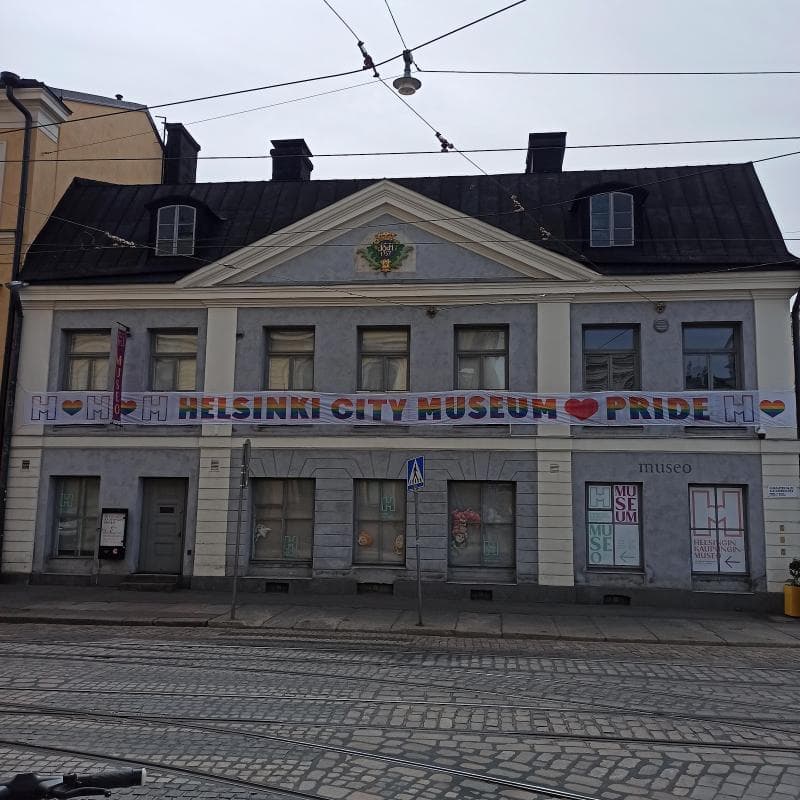
Discover Sederholm House, Helsinki's oldest stone building from 1757, now a part of the Helsinki City Museum. Explore Children's Town in Finland.
Overview
Nestled in the heart of Helsinki's historic Senate Square, the Sederholm House stands as a remarkable testament to the city's enduring past. Completed in 1757, it proudly holds the title of Helsinki's oldest surviving stone building, a true landmark of Finnish urban heritage. This elegant structure, once the residence and business hub of a prominent merchant, now invites visitors of all ages to journey through time. Today, the Sederholm House is an integral part of the Helsinki City Museum, famously housing the 'Children's Town' exhibition, offering a captivating and interactive exploration of Helsinki's history.
History & Cultural Background
The story of the Sederholm House begins with Johan Sederholm, a wealthy and influential merchant who commissioned its construction in 1757. During this period, Helsinki was largely characterized by wooden buildings, making a robust stone structure like this a rare symbol of affluence and permanence. The house's design, exemplifying the late Baroque style prevalent in Northern Europe, was innovative for its time, featuring a mansard roof, a rusticated ground floor, and thick stone walls. Its vaulted cellars served as storage for Sederholm's extensive commercial activities, while the upper floors provided a grand family residence. This dual-purpose design was typical for prosperous merchants of the era, blending business with domestic life under one impressive roof.
The Sederholm family retained ownership until 1822, after which the house embarked on a varied existence. Over the centuries, it transformed to accommodate a tobacco factory, a girls' school, a bakery, various shops, and even a city court. Notable figures, including King Gustav III, King Gustav IV Adolf, and Prince Henry of Prussia, were among its distinguished guests. In 1866, architect Konstantin Kiseleff oversaw renovations that, while updating the building, maintained its external appearance. The City of Helsinki acquired the property in 1949, and following extensive restoration in the late 20th century, it became a cherished part of the Helsinki City Museum, opening to the public in 1995.
What Makes It Special
What truly sets the Sederholm House apart is its dual significance: it is both an architectural survivor and a vibrant, living museum. As Helsinki's oldest stone building, it offers a tangible link to the city's 18th-century roots, a time of growth influenced by the construction of the Suomenlinna sea fortress. Its Baroque facade and preserved interiors provide a rare glimpse into the historical aesthetics and construction methods of the era. Beyond its structural integrity, the house hosts the 'Children's Town' exhibition, which transforms historical learning into an immersive adventure. This interactive approach encourages visitors, especially families, to engage directly with Helsinki's past, rather than merely observing it. The combination of historical authenticity and playful educational experiences makes it a uniquely captivating destination within the city.
Stories, Fun Facts & Local Details
The Sederholm House is rich with stories. Imagine the hustle and bustle in the 18th-century merchant's shop, where children today can role-play and learn about daily life and trade. Johan Sederholm himself was not just a merchant but also a lender to the Swedish Crown, a fact that surely contributed to the visits of royalty. The house's journey through various uses—from a tobacco factory to a girls' school—reflects the changing social and economic fabric of Helsinki over centuries.
A delightful aspect is the 'Children's Town' exhibition. Here, the past is not just displayed; it is lived. Children can step into a horse-drawn carriage from the 18th century, navigate a merchant ship, or even try their hand at writing on traditional blackboards. One popular exhibit recreates a 1970s 'Grandma's House', complete with period furniture and objects, allowing younger generations to connect with more recent Finnish history. These hands-on experiences, like crafting party accessories or understanding 18th-century beauty spot language, offer meaningful cultural details that bring history to life in a memorable way for all ages. The museum also regularly hosts workshops and events, further enhancing the interactive nature of the visit.
Visitor Perspective
For any curious traveler in Helsinki, the Sederholm House offers a uniquely accessible and engaging historical experience. Its location right next to the iconic Senate Square makes it an easy addition to any sightseeing itinerary. A visit typically takes one to two hours to fully explore the interactive exhibitions. Entry is always free of charge, making it an excellent option for budget-conscious travelers and families. The 'Children's Town' is specifically designed to be inclusive and engaging for children, with plenty of hands-on activities that make learning about history fun. While strollers are not permitted inside the museum itself, there is a designated stroller parking area. Visitors will also find a museum shop and the El Fant cafe nearby for refreshments, completing a comfortable and enriching cultural outing.
Coordinates: 24.95381, 60.16894
View on Google Maps💬 How Travelers Describe This Place
Based on community votes
Photogenic
800Beautiful
658Unique
589Must See
374Interesting
90
Traveler Stories
Discover memorable experiences shared by travelers who have visited this place.
No traveler stories yet.
Be the first traveler to share what made this place memorable.

Tour
By
Spot
Discover amazing places around the world. Your journey starts here.
Explore
© 2026 TourBySpot. All rights reserved.