Helsinki Cathedral
Helsinki, Finland
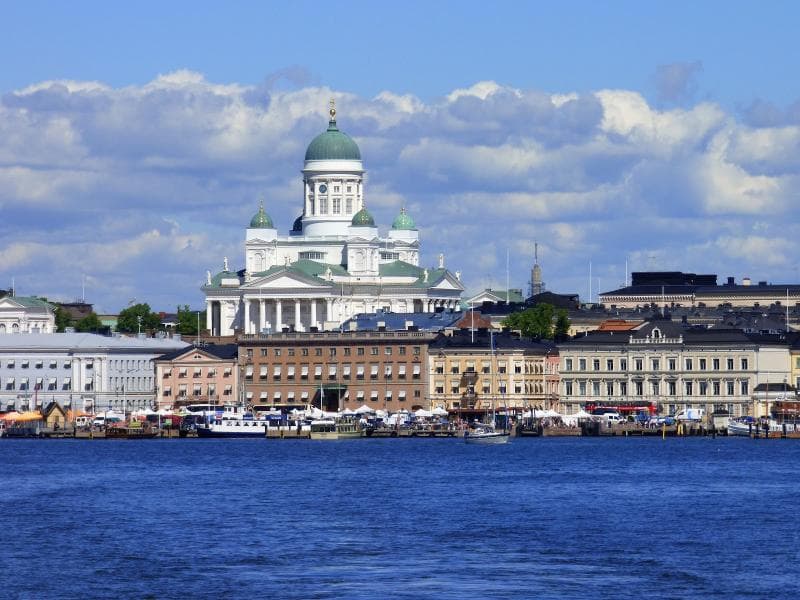
Discover Helsinki Cathedral, an iconic white Neoclassical masterpiece in Finland's capital. Explore its history, unique architecture, and spiritual serenity.
Overview
Dominating the heart of Finland's capital, Helsinki Cathedral stands as an iconic symbol of the city. Perched majestically atop Senate Square, its pristine white facade and striking green domes are instantly recognizable, making it one of Helsinki's most photographed landmarks. This grand Neoclassical masterpiece serves as the Finnish Evangelical Lutheran cathedral of the Diocese of Helsinki, welcoming visitors for quiet contemplation, religious services, and architectural appreciation. Its prominent position and distinctive architecture make it a focal point of the cityscape, visible even from the sea.
History & Cultural Background
The history of Helsinki Cathedral is deeply intertwined with Finland's past under Russian rule. Construction of the cathedral began in 1830 and it was officially consecrated in 1852. It was designed by the acclaimed German architect Carl Ludvig Engel, who also masterminded the cohesive Empire-style center of Helsinki, including other significant buildings around Senate Square. Originally, the church was named St. Nicholas' Church, in honor of Emperor Nicholas I of Russia, who was also the Grand Duke of Finland at the time.
Before the current structure, a smaller church, the Ulrika Eleonora Church, stood on the same site, dating back to 1727. Engel passed away in 1840, before the cathedral's completion. His work was continued and altered by architect Ernst Bernhard Lohrmann, who added important elements like the four smaller corner domes and the statues of the Twelve Apostles on the roof. Following Finland's declaration of full independence in 1917, the church's name transitioned to 'Suurkirkko' (Great Church). It was formally designated Helsinki Cathedral in 1959, coinciding with the establishment of the Diocese of Helsinki.
What Makes It Special
Helsinki Cathedral is a sublime example of Neoclassical architecture, characterized by its clean lines, symmetry, and impressive scale. Its design follows a Greek cross plan, ensuring perfect symmetry from all four cardinal directions. The building's exterior is dominated by its dazzling white walls, contrasting beautifully with the vibrant green of its central dome, which rises over 80 meters above sea level, and the four smaller surrounding domes. Each of the main facades features a pediment resting on six imposing Corinthian pillars.
Perhaps the most distinctive exterior feature is the collection of twelve larger-than-life zinc statues of the Apostles adorning the roofline. These statues, sculpted by August Wredow and Hermann Schievelbein, form one of the world's largest uniform collections of zinc sculptures. Inside, the cathedral presents a serene and understated interior, reflecting the Lutheran tradition's emphasis on simplicity and focus on spiritual contemplation, a stark contrast to more ornate Catholic churches. The interior is bathed in natural light through tall windows and features statues of key reformers such as Martin Luther, Philipp Melanchthon, and Mikael Agricola, Finland's own reformer.
Stories, Fun Facts & Local Details
This magnificent structure is more than just a church; it is deeply embedded in the Finnish psyche and is widely regarded as Finland's most famous and photographed building. The cathedral's imposing steps, leading up from Senate Square, are a popular gathering spot for locals and tourists alike, offering an ideal vantage point to observe the bustling square below. The bells housed in one of the side pavilions are notable as one of them is from the earlier Ulrika Eleonora Church that once stood here.
Helsinki Cathedral is a sought-after venue for significant life events, particularly weddings. Finnish couples often find themselves booking appointments well over a year in advance to celebrate their unions within its hallowed walls. The cathedral also frequently hosts academic festivals, national celebrations, and a variety of concerts, particularly organ recitals, which fill the vast space with harmonious music. The altarpiece within the church, depicting the entombment of Jesus, was a gift from Emperor Nicholas I, further connecting the cathedral to its imperial past.
Visitor Perspective
A visit to Helsinki Cathedral offers a memorable experience. Its position at the top of a wide flight of steps provides superb panoramic views over Senate Square and its surrounding Neoclassical buildings. The cathedral is open daily for those wishing to explore its tranquil interior, reflect quietly, or simply admire its architectural grandeur. While general admission may be free during certain periods, a suggested donation is sometimes requested, especially during peak seasons, and there can be an admission fee for particular months. For visitors requiring wheelchair access, an accessible entrance is available via the Crypt. During the summer months, English-speaking guided tours are often available, providing deeper insights into the cathedral's rich history and cultural significance.
Coordinates: 24.9521, 60.17039
View on Google Maps💬 How Travelers Describe This Place
Based on community votes
Photogenic
683Beautiful
536Must See
489Unique
251Interesting
88
Traveler Stories
Discover memorable experiences shared by travelers who have visited this place.
No traveler stories yet.
Be the first traveler to share what made this place memorable.

Tour
By
Spot
Discover amazing places around the world. Your journey starts here.
Explore
© 2026 TourBySpot. All rights reserved.