Square Plaza
Helsinki, Finland
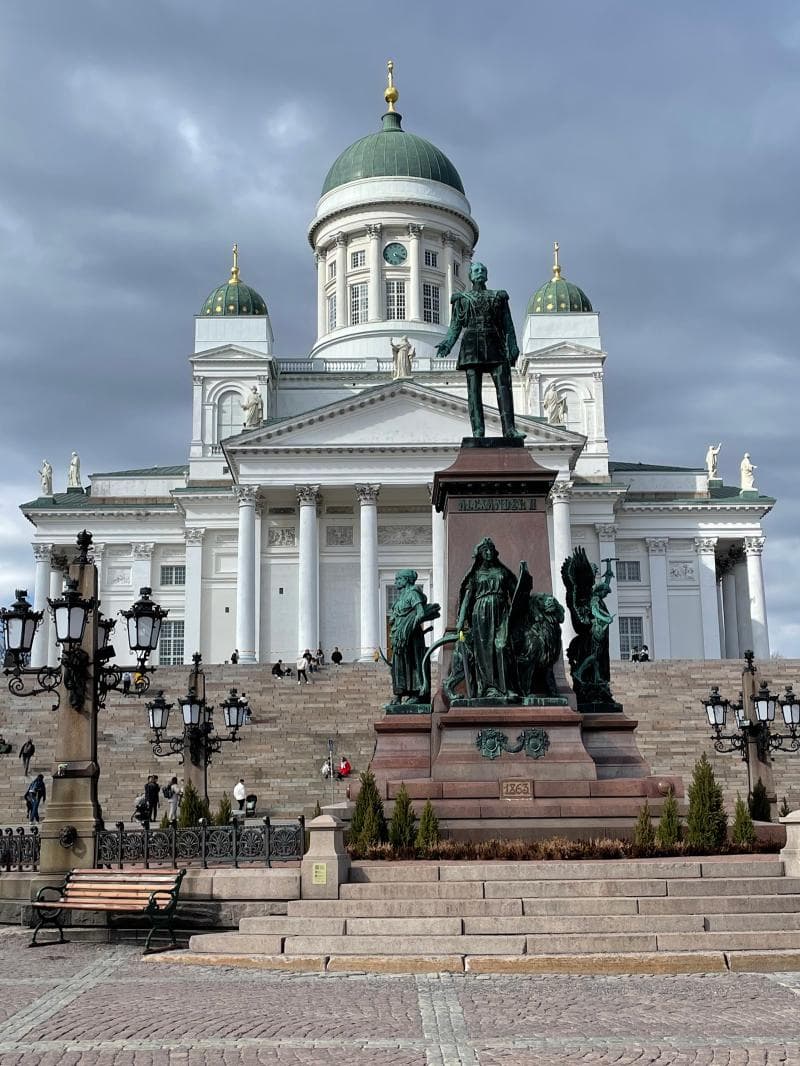
Discover Helsinki's Senate Square, a neoclassical marvel in Finland's capital. Explore its history, iconic architecture, and vibrant cultural life.
Overview
Stepping into Senate Square, or Senaatintori as it's known locally, is like walking onto a grand, open-air stage in the heart of Helsinki, Finland. This magnificent neoclassical plaza serves as the city's historical and spiritual center, a place where the past and present seamlessly intertwine. Dominated by the pristine white Helsinki Cathedral, the square is a cohesive architectural masterpiece designed primarily by Carl Ludvig Engel. It's a key landmark that encapsulates Helsinki's identity as a capital city, surrounded by some of Finland's most significant institutions.
The square is not just a visual delight; it's a vibrant public space that hosts a myriad of events throughout the year, from cultural festivals and concerts to traditional Christmas markets. Whether you're admiring the monumental architecture or simply soaking in the atmosphere, Senate Square offers a unique glimpse into Finnish heritage and urban life.
History & Cultural Background
The story of Senate Square begins in the early 19th century. After Helsinki became the capital of the autonomous Grand Duchy of Finland in 1812, following Finland's annexation by the Russian Empire, a new city plan was urgently needed. Much of the old city center had been destroyed by a devastating fire in 1808.
The vision was to transform Helsinki into a grand European capital, and Johan Albrecht Ehrenström's 1812 town plan laid the foundation, designating Senate Square as its monumental heart. Prussian-born architect Carl Ludvig Engel was instrumental in bringing this vision to life, designing the square and its surrounding buildings in a unified neoclassical (or Empire) style. Construction began in 1818, with the aim of creating a symbolic center representing political, religious, scientific, and commercial powers.
Before its transformation, the area held an older city center, including a church and a graveyard. These were cleared to make way for the expansive new square. The main buildings that define the square were constructed between 1822 and 1852. These include the stately Government Palace (originally the Senate House), the main building of the University of Helsinki, and the majestic Helsinki Cathedral, then known as St. Nicholas' Church, which took over two decades to complete.
What Makes It Special
Senate Square stands out as one of Europe's most beautiful and harmoniously designed public squares, an exceptional example of neoclassical architecture. What truly distinguishes it is the coherent vision of Carl Ludvig Engel, whose work ensures that all four main buildings flanking the square—Helsinki Cathedral, the Government Palace, the University of Helsinki's main building, and the National Library of Finland—present a unified and stately facade.
At the center of this architectural ensemble stands the statue of Emperor Alexander II, erected in 1894. This monument is unique because it commemorates a Russian tsar who was, surprisingly, revered by Finns for granting reforms and increasing Finland's autonomy during Russian rule. The square's symmetrical layout, paved with over 400,000 grey and red Finnish granite slabs, and the controlled cornice height of 22 meters for surrounding buildings, all contribute to its striking visual impact.
Stories, Fun Facts & Local Details
- A Symbol of Resistance: During the period of Russification in the late 19th and early 20th centuries, the statue of Alexander II became an unlikely symbol of quiet resistance. Finns would leave flowers at its base to protest against the decrees of Nicholas II, honoring the 'good tsar' who had granted them greater freedoms.
- The Sound of Senate Square: Every day at precisely 17:49, a unique sound installation known as 'The Sound of Senate Square' fills the air. This modern take on a European glockenspiel features a five-minute and eighteen-second composition by Harri Viitanen and Jyrki Alakuijala, traveling from one building to the next, creating a captivating audial experience.
- Helsinki's Oldest Stone Building: While surrounded by monumental architecture, the southeastern corner of the square is home to the Sederholm House, the oldest stone building in Helsinki, dating back to 1757. Today, it houses the Helsinki City Museum.
- A Stage for Life: Beyond its historical significance, Senate Square is a dynamic hub for public life. It hosts major national celebrations, protests, outdoor concerts, art exhibitions, and transforms into the enchanting Tuomaanmarkkinat, Helsinki's traditional Christmas Market, during the festive season.
Visitor Perspective
For any traveler to Helsinki, Senate Square is an unmissable experience. It's often described as the city's beating heart and a perfect starting point for exploration. Climbing the broad steps of Helsinki Cathedral not only offers a moment of contemplation but also rewards you with breathtaking panoramic views of the square itself, the surrounding neoclassical buildings, and glimpses of the city towards the harbor. The expansive, cobblestoned plaza invites leisurely strolls, people-watching, and photography, especially given the stunning white facades of the buildings against a clear blue sky.
Visiting during different seasons offers varied charms. In winter, the Christmas market creates a magical, festive atmosphere with warm lights and traditional Finnish treats. In summer, the square buzzes with outdoor events and cultural activities. The blend of historical grandeur, cultural vibrancy, and stunning aesthetics makes Senate Square a truly memorable destination, allowing visitors to connect deeply with Finland's past and present.
Coordinates: 24.95227, 60.16951
View on Google Maps💬 How Travelers Describe This Place
Based on community votes
Photogenic
996Unique
494Interesting
193Beautiful
125Must See
82
Traveler Stories
Discover memorable experiences shared by travelers who have visited this place.
No traveler stories yet.
Be the first traveler to share what made this place memorable.

Tour
By
Spot
Discover amazing places around the world. Your journey starts here.
Explore
© 2026 TourBySpot. All rights reserved.