Rustaveli Avenue
Tbilisi, Georgia
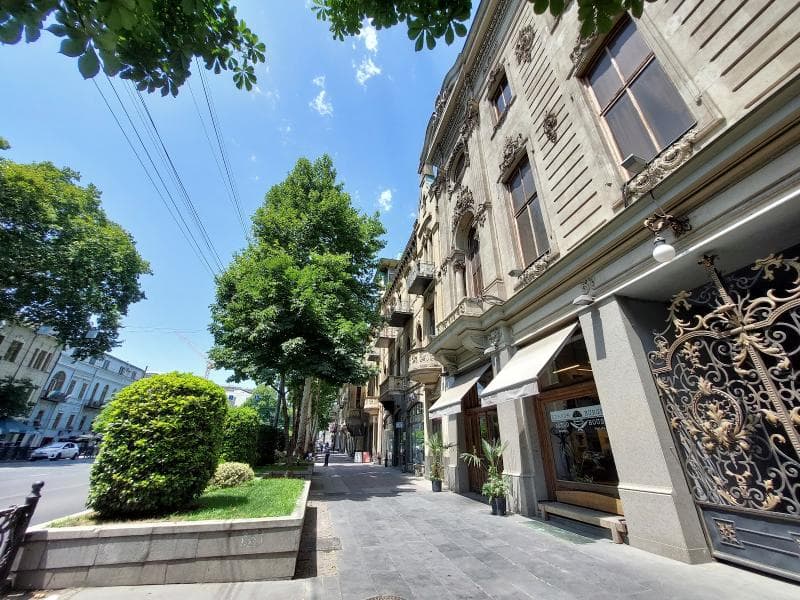
Explore Rustaveli Avenue, the vibrant cultural and historical heart of Tbilisi, Georgia. Discover grand architecture, museums, theaters, and compelling stories.
Overview
Rustaveli Avenue, stretching approximately 1.5 kilometers through the heart of Tbilisi, Georgia, is more than just a main thoroughfare; it is the vibrant pulse of the nation's capital. Named after the revered medieval Georgian poet Shota Rustaveli, author of 'The Knight in the Panther's Skin', this grand boulevard serves as the cultural, political, and social epicenter of the city. From its start at Freedom Square to its end near the Rustaveli Metro Station, the avenue showcases a captivating blend of historical grandeur and modern vitality. Tree-lined sidewalks invite leisurely strolls, past an impressive array of architectural styles that narrate Tbilisi's complex past and dynamic present.
History & Cultural Background
The origins of Rustaveli Avenue trace back to the early 19th century when it was part of the Digomi Road, connecting Tbilisi to the North Caucasus. During the Russian Imperial period in the 1840s, Mikhail Vorontsov, the Russian viceroy, initiated its transformation into a wide, European-style boulevard as part of an effort to modernize the city. It was initially known as Golovin Avenue or Golovin Prospect, named after an earlier Russian viceroy, Yevgeny Golovin. The avenue saw significant development in the 1860s and onwards, with the construction of monumental public buildings.
Following Georgia's declaration of independence in 1918, the street was renamed Rustaveli Avenue, honoring the national poet Shota Rustaveli. This renaming marked a significant cultural reclamation. Throughout the 20th century, Rustaveli Avenue became a stage for pivotal moments in Georgian history. It witnessed the signing of Georgia's and Azerbaijan's declarations of independence in 1918. It was also the site of anti-Stalinization demonstrations in 1956 and, more tragically, the violent dispersal of pro-independence protesters on April 9, 1989, a moment etched into Georgia's collective memory. The avenue also played a central role in the 2003 Rose Revolution and other significant political protests, underscoring its enduring importance as a public forum.
What Makes It Special
Rustaveli Avenue stands out as a living museum, featuring an extraordinary concentration of institutions that define Georgian cultural and political life. Here, visitors encounter the majestic Parliament of Georgia building, a symbol of the nation's democratic aspirations, often serving as a backdrop for public demonstrations. The Georgian National Opera Theater, with its opulent Neo-Moorish architecture, and the Rustaveli State Academic Theater, one of the oldest theatrical institutions in the Caucasus, offer world-class performances. The Georgian National Museum houses a vast collection spanning millennia, including Georgia's archaeological treasures and exhibitions detailing the Soviet occupation.
Beyond these grand edifices, the avenue is adorned with smaller, yet equally significant, landmarks. The Kashveti Church, an exquisite example of Georgian ecclesiastical architecture from the early 20th century, offers a serene counterpoint to the bustling avenue. The Youth Palace, originally the Pioneers Palace during the Soviet era, is notable for its distinctive modernist architecture. The blend of 19th-century European-style buildings, Soviet-era monumentalism, and modern developments creates a unique architectural tapestry that reflects Tbilisi's layered history.
Stories, Fun Facts & Local Details
Imagine the avenue in the 1880s, when a horse-drawn railway, 'Konka', traversed its length, later replaced by a tram in 1905. Today, you might spot small bronze statues by Georgian artist Levan Bujiashvili, depicting whimsical characters like a saxophone player or a traditional Georgian toastmaster, adding an artistic touch to the streetscape. Souvenir vendors often gather near the Academy of Sciences, offering traditional Georgian crafts and mementos.
The Rustaveli Metro station, located at the northern end of the avenue, is a marvel in itself. Opened in 1966, it is one of the deepest stations in the Tbilisi metro system, lying approximately 60 meters underground, and boasts one of the world's longest escalators. The station's walls and columns are famously covered with red marble. This deep dive underground provides a brief, unique experience as you descend into the city's transport network.
Visitor Perspective
A stroll along Rustaveli Avenue offers an immersive experience into the heart of Tbilisi. It's a place where you can begin your day with a strong Georgian coffee in one of the many cafes, surrounded by historic facades. As you walk, you'll hear street musicians filling the air with diverse melodies, from classical to traditional Georgian polyphonic singing. The avenue is a hub for cultural enthusiasts, with numerous art galleries, exhibition halls, and museums waiting to be explored.
For those interested in history and politics, a visit to the Parliament building and the Georgian National Museum provides profound insights. Evenings transform the avenue, with theaters and the Opera House inviting guests to performances, offering both cultural enrichment and architectural appreciation. Whether it's the buzz of daily life, the echoes of history, or the vibrant cultural scene, Rustaveli Avenue provides an essential introduction to Tbilisi's unique charm, making it a must-see destination for any curious traveler.
Coordinates: 44.7932, 41.6898
View on Google Maps💬 How Travelers Describe This Place
Based on community votes
Unique
722Beautiful
698Photogenic
358Must See
126Interesting
19
Traveler Stories
Discover memorable experiences shared by travelers who have visited this place.
No traveler stories yet.
Be the first traveler to share what made this place memorable.
Things to see at Rustaveli Avenue



Tour
By
Spot
Discover amazing places around the world. Your journey starts here.
Explore
© 2026 TourBySpot. All rights reserved.