Kashveti Church
Tbilisi, Georgia
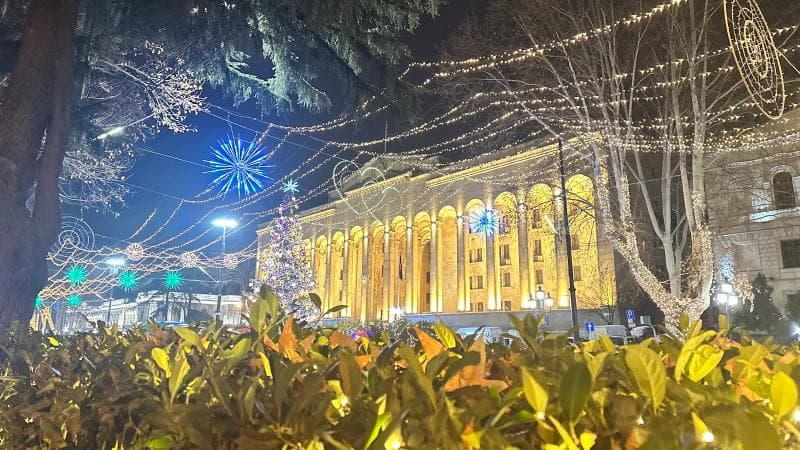
Discover Kashveti Church in Tbilisi, Georgia. Explore its unique legend of the stone birth, stunning frescoes, and Neo-Georgian architecture on Rustaveli Avenue.
Overview
Nestled amidst the vibrant heart of Tbilisi, Georgia, on the iconic Rustaveli Avenue, stands the Kashveti Church of St. George. This impressive Georgian Orthodox church, a serene sanctuary directly across from the Parliament building, offers a profound blend of spiritual tranquility and rich historical narrative. Its striking Neo-Georgian architecture, with its distinctive cross-domed design, immediately captures the eye, inviting travelers to delve into centuries of faith, art, and intriguing folklore.
Kashveti Church serves not only as an active place of worship but also as a living monument, reflecting the enduring spirit and cultural heritage of the Georgian people. Visitors stepping from the bustling avenue into its quiet interior are greeted by a space adorned with vibrant frescoes and intricate stone carvings, each element telling a piece of Georgia's story. It's a place where history resonates, art inspires, and ancient legends come to life.
History & Cultural Background
The site where Kashveti Church now stands has been a place of religious significance for well over a millennium. The earliest chapel here is believed to have been founded in the 6th century, linked to St. David of Gareja, one of the revered Thirteen Assyrian Fathers who played a pivotal role in strengthening Christianity in Georgia. This initial structure was later replaced in 1753 by a brick church, sponsored by the Amilakhvari family. However, time and elements took their toll, leading to its dilapidation by the late 19th century.
The current edifice, the Kashveti Church we see today, was constructed between 1904 and 1910. Its creation was a testament to Georgian collaboration, with funding from Georgian nobility and bourgeoisie, and design by the German architect Leopold Bilfeldt, a long-time resident of Tbilisi. Bilfeldt drew significant inspiration from the 11th-century Samtavisi Cathedral, a masterpiece of medieval Georgian architecture, ensuring Kashveti embodied a classical Georgian ecclesiastical style while incorporating modern influences. The ornate design saw significant contributions from skilled craftsmen like N. Agladze, renowned for their intricate stone carving work.
What Makes It Special
Beyond its prominent location and historical roots, Kashveti Church is particularly distinguished by several key features. Its architectural design, a Neo-Georgian interpretation of the classic cross-domed style, showcases exquisite stonework and intricate relief carvings. These details, featuring traditional Georgian motifs like grapevines, crosses, and stylized animals, represent some of the finest examples of early 20th-century Georgian revival architecture.
However, what truly sets Kashveti apart are the vibrant frescoes adorning its interior. These masterpieces were painted by the celebrated Georgian artist Lado Gudiashvili in 1946 and 1947. Created during a period when religious art faced suppression during the Soviet era, Gudiashvili's work is remarkable for its departure from rigid Byzantine traditions. His saints possess distinctly human and emotive features, imbued with a deeply Georgian sensibility. The frescoes depict poignant biblical scenes, including the Virgin Mary cradling baby Jesus, the Eucharist of the apostles, and the Archangel Gabriel announcing the Annunciation, all rendered with the ancient and enduring technique of encaustic painting.
Stories, Fun Facts & Local Details
The very name 'Kashveti' (ქვაშვეთი) is steeped in a captivating legend, translating from Georgian as 'stone-birthing' or 'deliver a stone' ('kva' meaning stone and 'shva' meaning to give birth). This unusual name stems from a 6th-century tale involving St. David of Gareja. According to folklore, a woman in Tbilisi falsely accused the monk of impregnating her. St. David, prophesying divine intervention to reveal the truth, declared that if he was guilty, she would bear a child, but if innocent, she would deliver a stone. Miraculously, on her due date, the woman gave birth to a stone, thereby vindicating the monk and giving the place its unique name.
Another fascinating detail surrounds the church's survival during the Soviet era. In the 1920s, when many religious structures were being closed or demolished, the intricate stone carvings by Neophyte Agladze were slated for destruction. Agladze, a master stone carver, sought help from his friend, artist Gigo Gabashvili, who in turn appealed to contacts in Moscow. Their efforts successfully halted the demolition, preserving this architectural gem for future generations.
Visitor Perspective
Visiting Kashveti Church offers a deeply immersive cultural and spiritual experience. Its central location on Rustaveli Avenue makes it incredibly accessible, serving as an easily identifiable landmark. The church is generally open daily until early evening, typically around 8 PM, and there is no entry fee, allowing travelers to experience its beauty at their leisure.
Unlike some overtly tourist-centric sites, Kashveti remains a vibrant, active place of worship for the local community. It is common to see parishioners lighting candles and engaging in prayer, offering visitors an authentic glimpse into Georgian Orthodox traditions. Photography is usually permitted inside, but it's important to do so respectfully, mindful of worshippers. Whether you are drawn by its ancient legends, its significant artistic contributions, or simply seek a moment of quiet reflection amidst the city's bustle, Kashveti Church provides a welcoming and enriching stop on any Tbilisi itinerary. Its blend of history, art, and living faith offers a profound connection to the soul of Georgia.
Coordinates: 44.799324, 41.697954
View on Google Maps💬 How Travelers Describe This Place
Based on community votes
Interesting
722Unique
698Must See
276Beautiful
126Photogenic
19
Traveler Stories
Discover memorable experiences shared by travelers who have visited this place.
No traveler stories yet.
Be the first traveler to share what made this place memorable.

Tour
By
Spot
Discover amazing places around the world. Your journey starts here.
Explore
© 2026 TourBySpot. All rights reserved.