Opera House
Tbilisi, Georgia
Explore the Tbilisi Opera House on Rustaveli Avenue, Georgia. Discover its stunning Neo-Moorish architecture, rich history, and cultural significance.
Overview
Nestled along the historic Rustaveli Avenue in the heart of Tbilisi, Georgia, stands the magnificent Opera House, officially known as the Tbilisi Zakharia Paliashvili State Academic Theatre of Opera and Ballet. This architectural jewel is not merely a venue for performances; it is a cornerstone of Georgian culture and one of the oldest and most significant opera houses in Eastern Europe. Its distinctive Neo-Moorish facade immediately captures the eye, making it a prominent landmark amidst the city's vibrant landscape. The Opera House is a central hub for artistic expression, hosting a diverse array of opera and ballet productions that draw both local enthusiasts and international visitors.
History & Cultural Background
The story of Tbilisi's Opera House is deeply intertwined with Georgia's rich and often turbulent history. The foundation for the first opera theatre was laid on April 15, 1847, initiated by Viceroy Mikhail Vorontsov. This initial construction, overseen by Italian architect Giovanni Scudieri, opened in 1851 and was intended to 'charm' and integrate the local population following Georgia's annexation by the Russian Empire. The first season commenced on November 9, 1851, with Gaetano Donizetti's opera 'Lucia di Lammermoor'. Tragically, less than 25 years later, on October 11, 1874, a devastating fire consumed the entire theatre, including costumes, decor, and a significant music library.
Despite this setback, the opera company continued to perform in a temporary 'Summer Theatre' for 22 years. The current, iconic building was constructed between 1880 and 1896, designed by the Baltic German architect Victor Schröter in a striking Neo-Moorish style. It reopened on November 3, 1896, with Mikhail Glinka's opera 'Ivan Susanin'. In 1937, the theatre was officially renamed in honor of Zakaria Paliashvili, the revered founder of the Georgian national school of composition, acknowledging his profound contribution to Georgian classical music. The 20th century saw periods of decline due to financial constraints, but a comprehensive six-year restoration, completed in January 2016, revitalized the theatre, blending historical elegance with modern facilities.
What Makes It Special
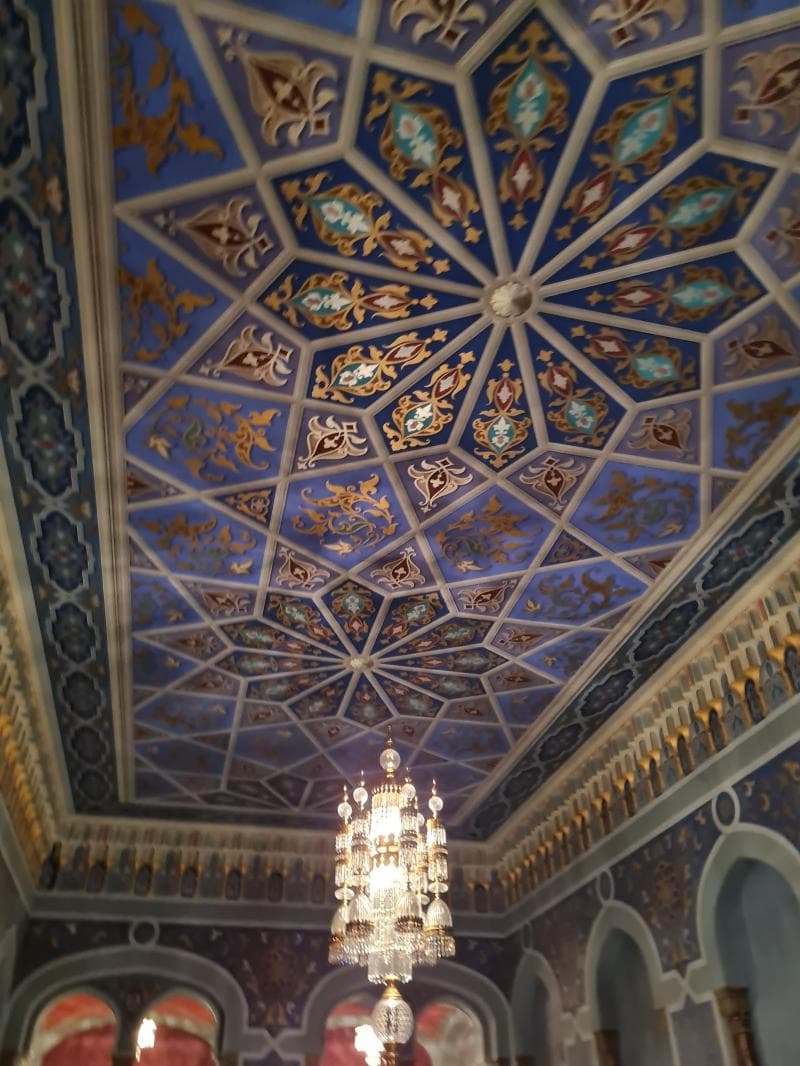
The Tbilisi Opera House is celebrated for its unique blend of architectural styles. Its exterior is a vibrant example of Neo-Moorish design, featuring intricate facades with alternating yellow and reddish bands, ornate arches, geometric patterns, and muqarnas plasterwork. These elements evoke the grandeur of ancient Arab palaces, making it distinct from the predominantly European architecture lining Rustaveli Avenue. Inside, however, the layout, foyers, and main auditorium adhere to the classic European opera house structure, with a fan-shaped seating arrangement across five tiers designed for optimal sightlines. The interior boasts lavish decorations, including striking chandeliers, colored velvet, gold, and silver detailing, and a stage curtain famously designed by Sergo Kobuladze. This fusion of Eastern aesthetics and Western functionality creates a truly exceptional artistic space.
Beyond its visual splendor, the Opera House serves as Georgia's primary cultural institution for opera and ballet, hosting both revered international masterpieces and foundational Georgian works, such as Paliashvili's 'Abesalom and Eteri'. It is also the esteemed home of the State Ballet of Georgia, enriching Tbilisi's cultural life with world-class performances.
Stories, Fun Facts & Local Details
The theatre is rich with captivating stories and details. One famous anecdote recounts the arrival of the massive central chandelier, weighing over 1,200 kilograms, which was shipped from Marseille and then transported more than 300 kilometers to Tbilisi by buffaloes. Upon its opening, the French writer Alexandre Dumas, visiting Tbilisi in 1858, lauded the theatre, stating, 'I can say without hesitation that I, in my entire life, have never seen such a delightful hall...'. The political motivations behind its inception highlight the strategic importance placed on culture to foster societal integration.
The devastating fire of 1874 sparked public outrage, fueled by suspicions about the delayed response of firefighters stationed directly across the street. Today, the Opera House continues to honor its legacy; its seasons traditionally open with Zakaria Paliashvili's iconic opera 'Abesalom and Eteri', a cornerstone of Georgian national music. The theatre has also welcomed celebrated international opera stars, including Montserrat Caballé and José Carreras. Visitors can find a small garden adjacent to the Opera House, which serves as the final resting place for Zakaria Paliashvili and other esteemed Georgian singers.
Visitor Perspective
Visiting the Opera House on Rustaveli Avenue offers an enriching experience for any traveler seeking to immerse themselves in Tbilisi's artistic heritage. Even if attending a performance isn't possible, simply marveling at its unique Neo-Moorish architecture from the outside is a rewarding experience. For those who do step inside, an evening at this iconic theatre promises not just a performance, but a journey through Georgia's vibrant cultural soul. The grand interiors, with their intricate details and plush seating, provide a majestic setting for enjoying opera and ballet. The theatre's central location makes it easily accessible, inviting curious travelers to discover its beauty and the enduring legacy of Georgian performing arts. Guided tours are also available, offering a deeper insight into its history and backstage workings, including rehearsal rooms.
Coordinates: 44.7955862, 41.7006581
View on Google Maps💬 How Travelers Describe This Place
Based on community votes
Photogenic
964Unique
926Beautiful
646Interesting
482Must See
380
Traveler Stories
Discover memorable experiences shared by travelers who have visited this place.
No traveler stories yet.
Be the first traveler to share what made this place memorable.

Tour
By
Spot
Discover amazing places around the world. Your journey starts here.
Explore
© 2026 TourBySpot. All rights reserved.