Cultural Centers
Tbilisi, Georgia
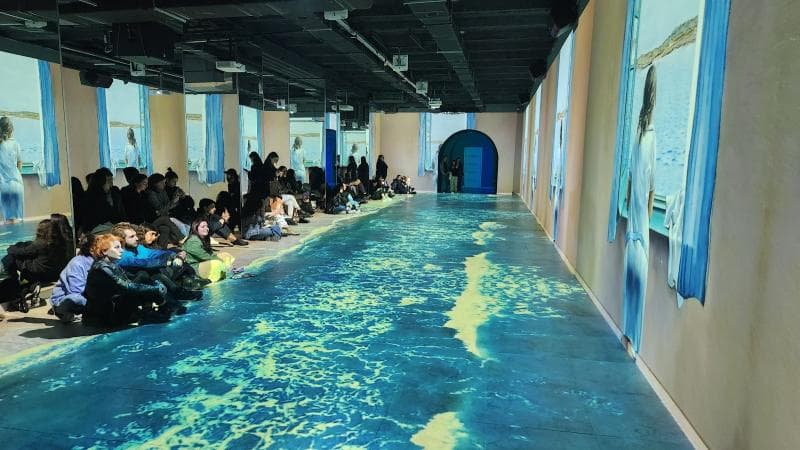
Explore the vibrant cultural centers of Rustaveli Avenue in Tbilisi, Georgia. Discover historical theaters, the national opera, and museums showcasing Georgia's rich heritage.
Overview
Rustaveli Avenue, the pulsing artery of Tbilisi, Georgia, is more than just a thoroughfare; it is a grand stage where the nation's cultural narrative unfolds. Lined with majestic buildings and tree-shaded sidewalks, this 1.5-kilometer stretch from Freedom Square is home to an extraordinary concentration of cultural centers, each a testament to Georgia's rich heritage and vibrant artistic spirit. From world-class performing arts venues to comprehensive museums and historic educational institutions, these cultural hubs collectively offer a profound insight into the country's past and present. Walking along Rustaveli Avenue, visitors encounter architectural marvels housing centuries of artistic endeavor and historical memory, making it an essential destination for any curious traveler seeking to understand the soul of Tbilisi.
History & Cultural Background
The cultural tapestry of Rustaveli Avenue began to weave itself in the mid-19th century when the street, then known as Golovin Avenue, underwent significant urban development during the Russian Imperial period. It was designed as a European-style boulevard, intended to modernize the expanding city. This era saw the establishment of foundational institutions like the Georgian National Opera and Ballet Theatre of Tbilisi, founded in 1851, making it one of Eastern Europe's oldest opera houses. The Simon Janashia Museum of Georgia, the main historical building of the Georgian National Museum, traces its roots back to 1852, starting as the Museum of the Caucasian Department of the Russian Imperial Geographic Society.
Later in the 19th century, in 1887, the Artists' Society founded what would become the Shota Rustaveli State Academic Theatre, further solidifying the avenue's role as a cultural beacon. The avenue was renamed Rustaveli Avenue in 1918, honoring the medieval Georgian poet Shota Rustaveli. Throughout the 20th century, especially during the Soviet era, the avenue continued to be a site of significant cultural and political events. The National Youth and Children's Palace, originally the Viceroy Palace, transformed into a prominent cultural and educational center for young people during Soviet times, showcasing a unique blend of architectural styles and historical transitions. These institutions have not only preserved Georgian culture but have also been central to the nation's identity and its journey through pivotal historical moments, including various demonstrations and movements for independence.
What Makes It Special
The cultural centers of Rustaveli Avenue are distinguished by their rich history, architectural grandeur, and the enduring artistic legacies they uphold. The Georgian National Opera and Ballet Theatre, with its exotic Neo-Moorish edifice, stands out for its unique design, featuring ornate arches and vibrant colors reminiscent of ancient Arab palaces. It has housed world-class productions and served as a venue for national celebrations. The Shota Rustaveli State Academic Theatre, housed in an ornate Rococo-style building, is celebrated for nurturing generations of Georgian actors and for its historical frescoes painted by prominent Georgian artists.
The Georgian National Museum, particularly the Simon Janashia Museum, is a treasure trove of Georgian history and prehistory. Its collections include remarkable archaeological finds, such as the Dmanisi hominins – some of the oldest human fossils found outside Africa – and an exquisite gold treasury from ancient Colchis and the Bronze Age. The museum also offers a sobering exhibition on the Soviet Occupation, providing crucial insights into Georgia's recent past. The Georgian National Gallery (often known as the 'Blue Gallery') contributes significantly to the avenue's artistic allure, showcasing Georgian fine arts. Each institution, with its distinct character and contribution, makes Rustaveli Avenue a unique cultural landscape where history, art, and performance converge.
Stories, Fun Facts & Local Details
Rustaveli Avenue holds many fascinating stories and local details. For instance, the original Tbilisi Opera House, built in the mid-19th century, was tragically destroyed by fire in 1874, forcing the company to perform in a 'Summer Theatre' for over two decades before the current magnificent building was opened in 1896. The frescoes within the Rustaveli Theatre, painted by renowned Georgian artists like Lado Gudiashvili and David Kakabadze, were unfortunately whitewashed during the Soviet era, with only a small portion restored, highlighting a period of cultural suppression. The avenue itself has been the backdrop for many pivotal moments in Georgian history, from political rallies to celebrations, earning it the moniker 'the stage where Tbilisi performs.'
A notable fun fact is that the Rustaveli Metro station, located at the northern end of the avenue, is one of the deepest in the Tbilisi metro system, and some sources claim its escalator is the world's sixth longest. Another interesting detail is the National Youth and Children's Palace, which served as the Viceroy Palace during the Imperial Russian era. It later became the Pioneers Palace during Soviet rule, a cultural and educational hub for young people, and famously, Georgia's independence was declared from within its walls in 1918. These layers of history and personal stories add depth and emotional resonance to the cultural centers of Rustaveli Avenue, making a visit here an immersive journey into the Georgian spirit.
Visitor Perspective
For a visitor, exploring the cultural centers of Rustaveli Avenue is an incredibly rewarding experience. The avenue invites leisurely strolls, allowing one to absorb the architectural beauty and vibrant atmosphere before diving into specific institutions. Attending a performance at the Georgian National Opera and Ballet Theatre or the Rustaveli State Academic Theatre offers a chance to witness world-class artistry in historic settings, often with programs showcasing both Georgian and international works. A visit to the Georgian National Museum provides an essential contextual understanding of the country's long and complex history, from its ancient origins to modern times, making it an ideal starting point for any exploration of Georgia. The proximity of these cultural gems, alongside art galleries and other landmarks, means that a significant portion of Tbilisi's cultural essence can be experienced within a compact area, offering both intellectual stimulation and aesthetic pleasure.
Coordinates: 44.7932, 41.6898
View on Google Maps💬 How Travelers Describe This Place
Based on community votes
Interesting
926Unique
646Photogenic
482Beautiful
380Must See
291
Traveler Stories
Discover memorable experiences shared by travelers who have visited this place.
No traveler stories yet.
Be the first traveler to share what made this place memorable.

Tour
By
Spot
Discover amazing places around the world. Your journey starts here.
Explore
© 2026 TourBySpot. All rights reserved.