Royal Palace
Phnom Penh, Cambodia
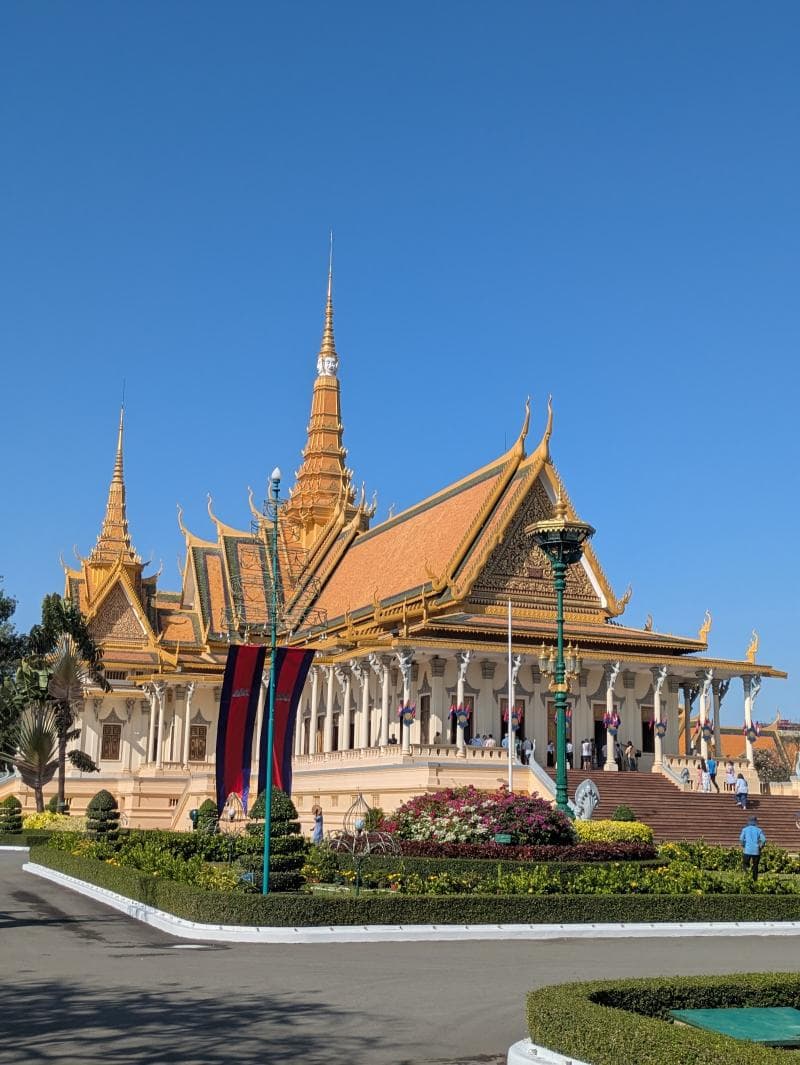
Explore the Royal Palace in Phnom Penh, Cambodia, a magnificent complex housing the Throne Hall and the dazzling Silver Pagoda. Discover Cambodia's rich royal history and stunning Khmer architecture.
Overview
Nestled gracefully alongside the Tonle Sap River, the Royal Palace in Phnom Penh, Cambodia, stands as a magnificent testament to Khmer royal heritage. This sprawling complex, officially known in Khmer as Preah Barom Reacheaveang Chaktomuk Serey Mongkol, serves as the official residence of the King of Cambodia. It is not merely a historical landmark but a living symbol of the nation's monarchy and cultural pride. As a key attraction in Phnom Penh, the palace complex invites curious travelers to explore its stunning architecture, lush gardens, and significant cultural sites, offering a deep dive into Cambodia's regal past and spiritual traditions.
History & Cultural Background
The establishment of the Royal Palace at its current location dates back to 1866, during the reign of King Norodom. This marked a pivotal moment when the royal capital was officially moved from Oudong to Phnom Penh. The chosen site holds profound geographical significance, situated at the confluence of the Tonle Sap and Mekong Rivers, a location considered auspicious in Khmer geomancy for its protective and prosperity-bringing qualities. The initial construction, led by architect Neak Okhna Tepnimith Mak, combined traditional Khmer architectural styles with notable French influences, reflecting the historical context of the French Protectorate. While parts of the original complex were built between 1866 and 1870, many of the structures visible today, including the current Throne Hall, were rebuilt and expanded between 1912 and 1919 under King Sisowath, incorporating traditional Khmer artistic and Angkorian-inspired designs.
What Makes It Special
The Royal Palace complex is a treasure trove of architectural marvels and sacred spaces. The central and most prominent building is the Throne Hall, or Preah Tineang Tevea Vinichhay. This grand hall is the heart of royal activities, hosting coronations, royal weddings, and the reception of foreign dignitaries. Its distinctive 59-meter high golden spire, inspired by the Bayon temple at Angkor, is topped with a four-faced Brahma head, symbolizing divine power. Inside, visitors can observe three royal thrones, blending traditional and Western influences.
Adjacent to the Throne Hall lies the exquisite Silver Pagoda, officially known as Wat Preah Keo Morakot, meaning 'Temple of the Emerald-Crystal Buddha.' This pagoda earns its popular name from its floor, which is famously covered by more than 5,000 solid silver tiles, each weighing approximately one kilogram. It houses invaluable national treasures, including a small Emerald Buddha statue made of Baccarat crystal and a life-sized 90-kilogram gold Maitreya Buddha, adorned with 9,584 diamonds, with the largest weighing 25 carats. Surrounding the pagoda, the cloister walls are adorned with intricate murals depicting the entire Reamker epic, the Cambodian version of the Ramayana.
Other notable structures include the Chanchhaya Pavilion, or Moonlight Pavilion, an open-sided pavilion sometimes used for classical Khmer dance performances and for the King to view parades. An intriguing historical artifact within the grounds is the cast-iron Napoleon III Pavilion, a gift from France in 1876, though it is currently closed to the public due to its delicate state.
Stories, Fun Facts & Local Details
The Royal Palace is steeped in fascinating stories and cultural nuances. Its full Khmer name, Preah Barom Reacheaveang Chaktomuk Serey Mongkol, symbolically alludes to the four-faced Brahma, referring to its strategic location at the confluence of four rivers. While renowned as the Silver Pagoda, it is sometimes affectionately called the 'Golden Pagoda' by locals, a nod to the magnificent gold Maitreya Buddha housed within its walls. A remarkable aspect of the palace's history is that it, particularly the Silver Pagoda, was largely spared from the widespread destruction of religious sites during the tumultuous Khmer Rouge regime, possibly due to its strong association with the Cambodian monarchy.
For those visiting, a subtle detail to observe is the golden royal flag. If it is seen flying above the palace's tallest spire, it signifies that the reigning monarch, King Norodom Sihamoni, is currently within the palace grounds. The palace's four gates also carry symbolic meanings: the Victory Gate faces east and is typically used by royalty and VIPs, while the South Gate is designated for commoners and leads directly to the Silver Pagoda.
Visitor Perspective
Visiting the Royal Palace offers a unique glimpse into Cambodia's rich history and vibrant culture. The complex is generally open to visitors daily, typically in two shifts: from 8:00 AM to 11:00 AM and again from 2:00 PM to 5:00 PM, though these hours may change during royal ceremonies or public holidays. Due to its status as an active royal residence and sacred site, a strict dress code is enforced; visitors are required to cover their shoulders and knees to gain entry, and modest attire is highly recommended. Many of the private residential areas remain closed to the public, offering a curated experience that focuses on the ceremonial and historically significant portions of the palace. For photography enthusiasts, the best time to capture the grandeur of the east-facing buildings is often in the morning light. While you cannot enter all buildings, like the Throne Hall, you can often view its opulent interior through open windows, though photography inside is generally prohibited.
Coordinates: 104.93081, 11.56365
View on Google Maps💬 How Travelers Describe This Place
Based on community votes
Beautiful
972Unique
787Must See
720Interesting
85Photogenic
73
Traveler Stories
Discover memorable experiences shared by travelers who have visited this place.
No traveler stories yet.
Be the first traveler to share what made this place memorable.
Things to see at Royal Palace



Tour
By
Spot
Discover amazing places around the world. Your journey starts here.
Explore
© 2026 TourBySpot. All rights reserved.