Silver Pagoda
Phnom Penh, Cambodia
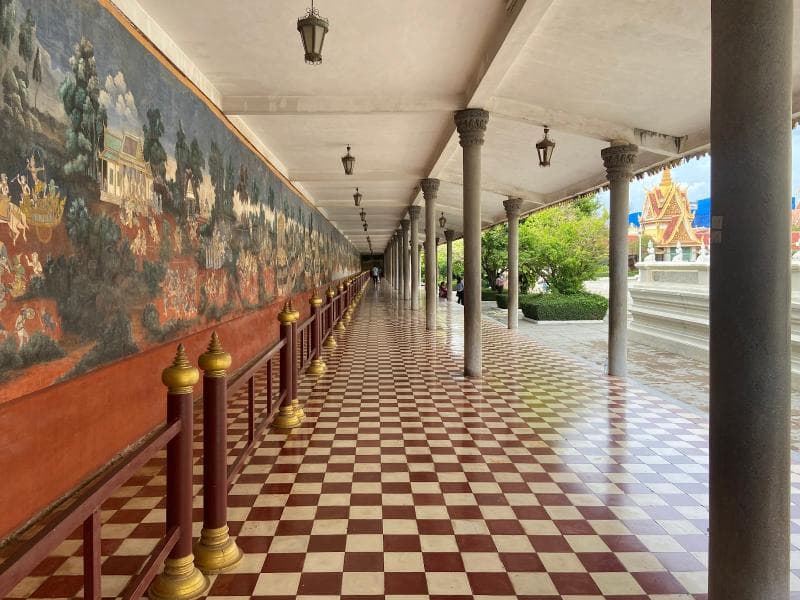
Explore the Silver Pagoda in Phnom Penh, Cambodia's Royal Palace. Discover its dazzling silver floor, Emerald Buddha, and diamond-studded gold Buddha, embodying rich cultural heritage.
Overview
The Silver Pagoda, nestled within the Royal Palace complex in Phnom Penh, Cambodia, stands as a profound testament to the nation's rich spiritual and cultural heritage. Officially known as Wat Preah Keo Morokat, or 'Temple of the Emerald Buddha,' and also as Wat Ubaosoth Ratanaram, it acquired its popular name from its dazzling floor adorned with thousands of silver tiles. More than just a temple, it functions as a repository for Cambodia's most sacred artifacts and a significant venue for royal ceremonies, offering a unique glimpse into the country's royal Buddhist traditions.
History & Cultural Background
The original structure of the Silver Pagoda was built in 1892 under the reign of King Norodom as a wooden temple, serving as a dedicated space for royal Buddhist ceremonies and enshrining the ashes of the Cambodian royal family. Over six decades later, in 1962, the pagoda underwent a significant reconstruction. Under King Norodom Sihanouk's rule, the wooden edifice was replaced with the current concrete and marble building, and it was during this renovation that the iconic silver floor tiles were installed. Uniquely, the Silver Pagoda was largely spared the widespread destruction of religious sites during the Khmer Rouge regime, likely due to its close association with the monarchy, thus preserving a substantial portion of its treasures. Surrounding the central temple, a gallery features a spectacular mural depicting the entire Reamker, the Cambodian version of the epic Ramayana. These paintings, stretching 642 meters long and 3 meters high, were created by 40 Cambodian artists between 1903 and 1904.
What Makes It Special
The Silver Pagoda's distinctiveness largely stems from its opulent interior and the priceless artifacts it houses. Its most celebrated feature is the floor, covered by 5,329 solid silver tiles, each weighing about 1 kilogram, totaling around five tons of silver. While most of this shimmering floor is protected by coverings, a small section near the entrance remains visible to visitors, offering a glimpse of its splendor. Dominating the central altar is the revered Emerald Buddha, a small but exquisite green crystal statue believed by some to be Baccarat crystal, although its exact origin is debated. Alongside it, a life-sized, 90-kilogram solid gold Buddha, known as the Maitreya Buddha, captivates with its adornment of 9,584 diamonds, including a monumental 25-carat diamond on its crown. The staircase leading into the pagoda is crafted from Italian marble, adding to the grandeur. The temple also boasts a collection of over 1,650 art objects, primarily Buddha figures made from gold, silver, bronze, and other precious materials, many of which were gifts from kings, royalty, and dignitaries.
Stories, Fun Facts & Local Details
Unlike most Buddhist pagodas, the Silver Pagoda does not house resident monks. Instead, it serves as a sacred space where the King meets with prominent monks, listens to sermons, and conducts significant royal and Buddhist ceremonies. Notably, King Norodom Sihanouk himself lived here for a year when he entered the monkhood in 1947, further cementing its royal connection. The pagoda is a place where the royal family and officials pray for peace, happiness, and the preservation of Cambodia's cultural heritage. The surrounding grounds include several stupas, such as those holding the cremains of King Norodom and King Ang Duong, as well as a memorial sanctuary for Princess Kantha Bopha, King Sihanouk's daughter. An equestrian statue of King Norodom, gifted by Napoleon III of France, stands proudly near the entrance.
Visitor Perspective
Visiting the Silver Pagoda offers a deeply enriching cultural experience, though it requires adherence to certain protocols out of respect for its sacred nature. As it is part of the Royal Palace complex, visitors are expected to dress modestly, ensuring shoulders and knees are covered. Upon entering the pagoda itself, removing shoes is a mandatory sign of reverence. Photography is generally not permitted inside the Silver Pagoda, allowing for a more reflective and respectful experience of its interior treasures. However, taking photos in the surrounding grounds is allowed. It's recommended to allocate sufficient time for the visit, as the entire Royal Palace complex, including the Silver Pagoda, can take one to two hours to explore, offering a comprehensive look into Cambodia's royal and religious history.
Coordinates: 104.9317, 11.5625
View on Google Maps💬 How Travelers Describe This Place
Based on community votes
Beautiful
881Unique
598Photogenic
555Interesting
387Must See
375
Traveler Stories
Discover memorable experiences shared by travelers who have visited this place.
No traveler stories yet.
Be the first traveler to share what made this place memorable.

Tour
By
Spot
Discover amazing places around the world. Your journey starts here.
Explore
© 2026 TourBySpot. All rights reserved.