Royal Gardens
Phnom Penh, Cambodia
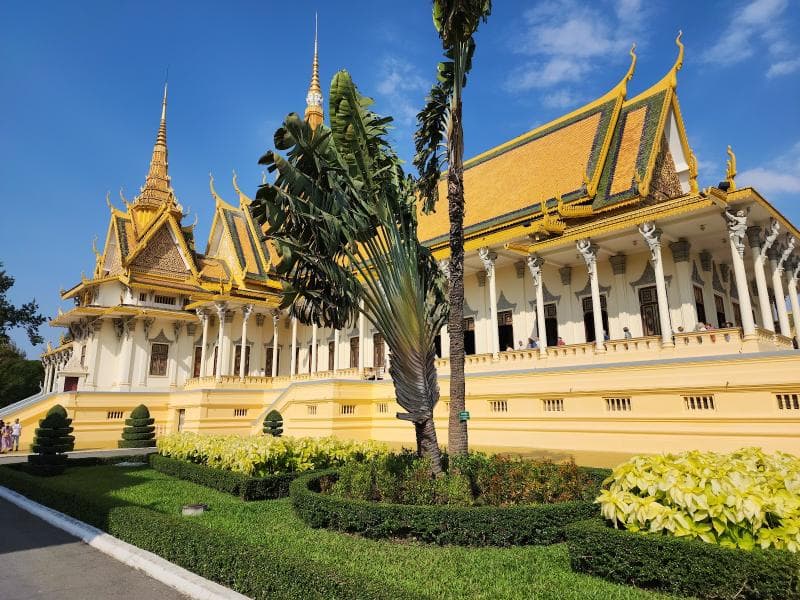
Explore the Royal Gardens within Phnom Penh's Royal Palace, a serene oasis blending Khmer and French design amidst historical Cambodian royalty.
Overview
Stepping into the Royal Gardens, nestled within the magnificent Royal Palace complex in Phnom Penh, Cambodia, is like entering a serene oasis amidst the city's vibrant pulse. These meticulously maintained gardens serve as a verdant counterpoint to the golden spires and ornate architecture of the palace buildings. While some private sections remain exclusively for the royal family, large parts of the sprawling grounds and formal gardens are open to the public, offering a tranquil escape and a deeper appreciation for Cambodian royal heritage. Visitors can expect beautifully landscaped spaces, French-inspired pathways, and a peaceful atmosphere that encourages quiet contemplation.
History & Cultural Background
The establishment of the Royal Palace in Phnom Penh, along with its gardens, dates back to 1866 when King Norodom I relocated the capital from Oudong. This marked a significant period in Cambodian history, solidifying Phnom Penh's role as the nation's political and cultural heart. The design of the Royal Gardens reflects a fascinating blend of Khmer tradition and European influence, notably French administrators and Thai designers contributed to the palace complex's overall aesthetic. This fusion is evident in the formal garden layouts, which provide a harmonious setting for the various royal buildings. Over the decades, successive monarchs have contributed to the palace's and gardens' evolution, with significant rebuilding and additions occurring between 1912 and 1932. These gardens are not merely decorative; they are an integral part of a complex that has served as the official royal residence for Cambodian monarchs since the 1860s.
What Makes It Special
What truly sets the Royal Gardens apart is their ability to blend natural beauty with architectural grandeur. Here, carefully manicured lawns provide a soft carpet, while artistic topiary adds whimsical shapes to the landscape. Lush tropical greenery flourishes alongside fanned palmyra trees and colorful bougainvillea, creating a vibrant palette of textures and hues. The 'French-style paths' winding through the grounds invite leisurely strolls, allowing visitors to discover hidden corners and admire the palace buildings from various vantage points. One notable feature often found within the garden spaces is the unique Napoleon III Pavilion. This curious iron structure, gifted to King Norodom by Napoleon III of France, was originally built for the inauguration of the Suez Canal in 1869 before being shipped to Cambodia in pieces. Its presence is a fascinating testament to historical diplomatic ties and adds an unexpected European flair to the traditional Khmer setting.
Stories, Fun Facts & Local Details
While the Royal Gardens are primarily a place of royal residence and public enjoyment, they hold subtle stories. The strategic location of the Royal Palace itself, at the confluence of the Tonle Sap and Mekong rivers, known as Chaktomuk, symbolizes Brahma and has deep cultural significance. The gardens, in turn, embody the tranquility and beauty that such a sacred site demands. They are frequently photographed, with the best light often found in the morning hours due to the east-facing orientation of many palace buildings. Though the royal family's private living quarters are off-limits, the public areas of the gardens offer a glimpse into the serene environment that surrounds them. Observing the beautifully maintained flora and the peaceful ambiance provides a moment of reflection on the long-standing traditions of the Cambodian monarchy and the natural beauty of the region.
Visitor Perspective
For the curious traveler, a visit to the Royal Gardens is an essential part of the Royal Palace experience. The moment you step through the gates, the bustling city sounds often recede, replaced by a quiet calm. Walking among the stately trees and fragrant flowers, you'll feel a sense of peace and historical weight. It's a place to slow down, to observe the intricate details of Khmer architecture framed by natural beauty, and to imagine the centuries of royal life that have unfolded within these walls. The gardens offer ample opportunities for photography, with the ornate palace structures dramatically rising from the manicured greenery. Visitors often find themselves drawn to the shady lawns for a moment of rest, appreciating the blend of grandeur and natural serenity. It is recommended to allow sufficient time, perhaps 1.5 to 2 hours, to truly absorb the beauty and peacefulness of the gardens and the wider palace complex, ideally visiting earlier in the morning or later in the afternoon to avoid the heat and larger crowds.
Coordinates: 104.93081, 11.56365
View on Google Maps💬 How Travelers Describe This Place
Based on community votes
Unique
748Photogenic
304Must See
85Beautiful
73Interesting
35
Traveler Stories
Discover memorable experiences shared by travelers who have visited this place.
No traveler stories yet.
Be the first traveler to share what made this place memorable.

Tour
By
Spot
Discover amazing places around the world. Your journey starts here.
Explore
© 2026 TourBySpot. All rights reserved.