Moonlight Pavilion
Phnom Penh, Cambodia
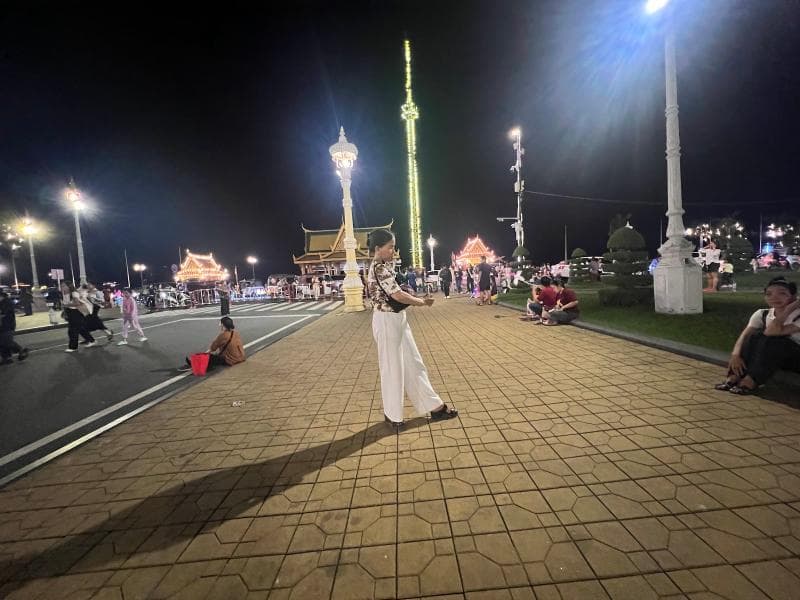
Explore the Moonlight Pavilion (Preah Tineang Chan Chhaya) at the Royal Palace in Phnom Penh, Cambodia. Discover its history, cultural significance, and architectural beauty.
Overview
The Moonlight Pavilion, known in Khmer as Preah Tineang Chan Chhaya, is an elegant open-air structure forming a prominent part of the Royal Palace complex in Phnom Penh, Cambodia. Situated along Sothearos Boulevard, its distinctive design makes it easily visible from outside the palace walls, standing as a testament to Cambodia's rich cultural and royal heritage. This beautiful pavilion has historically served multiple significant functions, primarily as a stage for the graceful performances of Khmer classical dance, a grand tribune from which the King addresses his people and observes parades, and a distinguished venue for state and royal banquets.
History & Cultural Background
The Royal Palace itself, a sprawling complex of magnificent buildings, was established between 1866 and 1870 under the reign of King Norodom when the capital was relocated to Phnom Penh. This marked a pivotal moment in the nation's history, solidifying Phnom Penh as the heart of the Cambodian monarchy. The original Moonlight Pavilion, a wooden structure, was also built during King Norodom's era. However, the current, more enduring iteration of the Preah Tineang Chan Chhaya was constructed between 1913 and 1914 under King Sisowath, thoughtfully designed to replace its predecessor while maintaining a similar aesthetic. Its existence reflects a continuous link to Cambodia's royal traditions and artistic expressions, particularly the revered Khmer classical dance, which has been performed here for generations. The pavilion’s architecture, characterized by its traditional Khmer style, embodies the enduring spirit and artistic prowess of the Cambodian people and its monarchy.
What Makes It Special
The Moonlight Pavilion's unique open-air design is one of its most striking features, allowing for a seamless integration with the surrounding environment and enabling large public gatherings to witness royal events. Its strategic location, fronting Sothearos Boulevard, means it is not merely an internal palace structure but also a public-facing symbol of the monarchy. The pavilion's elevated balcony is particularly special, serving as a ceremonial platform where the monarch could once survey grand parades and address subjects, fostering a direct connection between the royalty and the populace. This architectural choice underscores its dual role as a private royal space and a public ceremonial stage. Furthermore, as a dedicated venue for Khmer classical dance, it celebrates an art form deeply ingrained in Cambodian identity, preserving ancient stories and intricate movements within a historically significant setting. Its visual prominence and historical purpose make it a landmark of profound cultural importance within Phnom Penh.
Stories, Fun Facts & Local Details
The name 'Moonlight Pavilion' evokes a romantic image, suggesting a place where performances might have taken place under the soft glow of the moon. Indeed, its open-air nature would have lent itself perfectly to evening cultural spectacles. A notable recent historical event involving the pavilion was its use during the 2004 coronation of King Norodom Sihamoni, where it hosted a banquet and served as a tribune, reaffirming its enduring role in contemporary royal ceremonies. The Khmer classical dance performed here is more than mere entertainment; it is a sacred art, traditionally performed by Apsara dancers, recounting ancient Hindu myths and epics like the Reamker. The pavilion thus acts as a living bridge to Cambodia's spiritual and mythological past. Its position, easily visible from outside, means that even passers-by can glimpse a piece of royal history and the country's architectural grandeur, making it an accessible symbol of national pride.
Visitor Perspective
For visitors approaching the Royal Palace, the Moonlight Pavilion is often one of the first and most impressive structures to catch the eye, standing majestically along the eastern wall. While access to the interior for independent exploration might be limited, its external beauty and architectural significance are undeniable. Observing its elegant design from the outside offers a tangible sense of its historical importance and its role as a focal point for royal events. Imagining the King standing on its balcony or dancers performing on its stage under the Phnom Penh sky connects visitors directly to the living history of Cambodia's monarchy and its vibrant cultural traditions. It represents an enduring link between the past and the present, offering a powerful visual narrative of Cambodian heritage within the bustling capital. Visitors can appreciate its ornate detailing and consider the countless historical moments it has witnessed, making it a compelling stop on any journey through the Royal Palace grounds.
Coordinates: 104.93081, 11.56365
View on Google Maps💬 How Travelers Describe This Place
Based on community votes
Beautiful
961Photogenic
710Must See
555Unique
448Interesting
156
Traveler Stories
Discover memorable experiences shared by travelers who have visited this place.
No traveler stories yet.
Be the first traveler to share what made this place memorable.

Tour
By
Spot
Discover amazing places around the world. Your journey starts here.
Explore
© 2026 TourBySpot. All rights reserved.