Napoleon III Pavilion
Phnom Penh, Cambodia
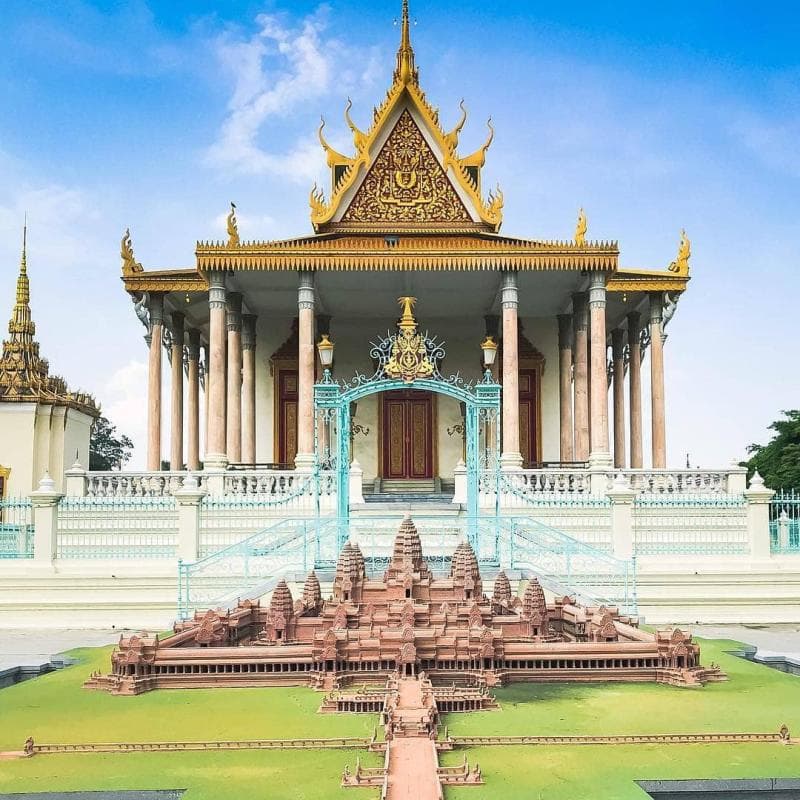
Explore the Napoleon III Pavilion, a unique iron European-style structure within the Royal Palace in Phnom Penh, Cambodia. Discover its rich history as a diplomatic gift and its role as a royal museum.
Overview
Nestled within the majestic Royal Palace complex in Phnom Penh, Cambodia, stands the Napoleon III Pavilion, a striking and somewhat unexpected architectural gem. This unique structure, made entirely of iron, presents a distinct European aesthetic that contrasts vividly with the traditional Khmer-style buildings surrounding it. Initially, it was the first permanent building to grace the Royal Palace grounds. Today, the pavilion serves as a captivating small museum, offering visitors a glimpse into Cambodia's royal heritage through various memorabilia and photographic exhibitions.
History & Cultural Background
The story of the Napoleon III Pavilion is one of international diplomacy and fascinating journeys. Its origins trace back to France, where it was commissioned in 1869 for Empress Eugenie, the wife of Emperor Napoleon III, to be used during the inauguration of the Suez Canal in Egypt. Seven years later, in 1876, Emperor Napoleon III presented this exquisite iron pavilion as a diplomatic gift to King Norodom of Cambodia. The pavilion was meticulously dismantled, shipped across continents from Egypt or France, and then carefully re-erected on the Royal Palace grounds in Phnom Penh. This act underscored the burgeoning ties between France, then a colonial power in the region, and the Cambodian monarchy. In 1991, the pavilion underwent significant refurbishment, supported by financial assistance from the French government, ensuring its preservation for future generations. The pavilion stands as a tangible symbol of the historical connections and cultural exchanges that have shaped Cambodia's past.
What Makes It Special
The Napoleon III Pavilion's undeniable allure lies in its sheer distinctiveness. Its European design, characterized by French Gothic influences, intricate iron fretwork, and a 'dollhouse' like appearance, creates a remarkable visual anomaly amidst the sweeping, gilded roofs of traditional Khmer architecture. The fact that it is constructed entirely of iron further sets it apart within a palace primarily built with local materials. A delightful historical coincidence adds to its charm: the royal emblem 'N', originally emblazoned throughout the structure in honor of Napoleon, serendipitously suited King Norodom, negating the need for any alteration upon its transfer to Cambodia. Moreover, its status as the very first permanent structure to be built on the Royal Palace site gives it significant historical precedence. Today, its interior, repurposed as a museum, showcases a rich collection of royal regalia, costumes, and photographic exhibitions, making it a unique repository of Cambodian royal history.
Stories, Fun Facts & Local Details
Locally, the pavilion is affectionately known as 'Prasat Napoleon' or 'Prasat Dek', which translates to 'Iron Palace' in Khmer, a testament to its unique construction material. The intriguing story of the 'N' emblem, which coincidentally served for both Emperor Napoleon and King Norodom, adds a layer of charm and historical continuity to the pavilion's narrative. Its out-of-place yet captivating appearance makes it a focal point for visitors, embodying a fascinating blend of Western and Eastern aesthetics that is truly one-of-a-kind. The journey of the pavilion itself—from being built for a grand European event, to being gifted to a Southeast Asian monarch, and then carefully transported and reassembled—is a remarkable tale of 19th-century logistics and international relations.
Visitor Perspective
For the curious traveler, the Napoleon III Pavilion offers a compelling journey through time and culture. As you wander through the Royal Palace grounds, this iron structure immediately catches the eye, inviting contemplation on the historical ties between Cambodia and France. Inside, the pavilion transforms into a treasure trove of Cambodian royal history, displaying an array of royal memorabilia, including ceremonial costumes, busts, gifts received from international dignitaries, elegant glassware, and historical photographs. Visitors can admire royal silver and china tableware on the lower floor, while the upper floor often features portraits of past monarchs, including oil paintings of King Sihanouk. While its distinct European style might initially seem 'out-of-place' amidst the Khmer architecture, it ultimately enriches the experience, providing a unique architectural and historical counterpoint within the grand Royal Palace. For photography enthusiasts, the pavilion is particularly stunning when captured in the morning light.
Coordinates: 104.9305, 11.56348
View on Google Maps💬 How Travelers Describe This Place
Based on community votes
Beautiful
881Unique
598Photogenic
555Interesting
387Must See
375
Traveler Stories
Discover memorable experiences shared by travelers who have visited this place.
No traveler stories yet.
Be the first traveler to share what made this place memorable.

Tour
By
Spot
Discover amazing places around the world. Your journey starts here.
Explore
© 2026 TourBySpot. All rights reserved.