Throne Hall
Phnom Penh, Cambodia
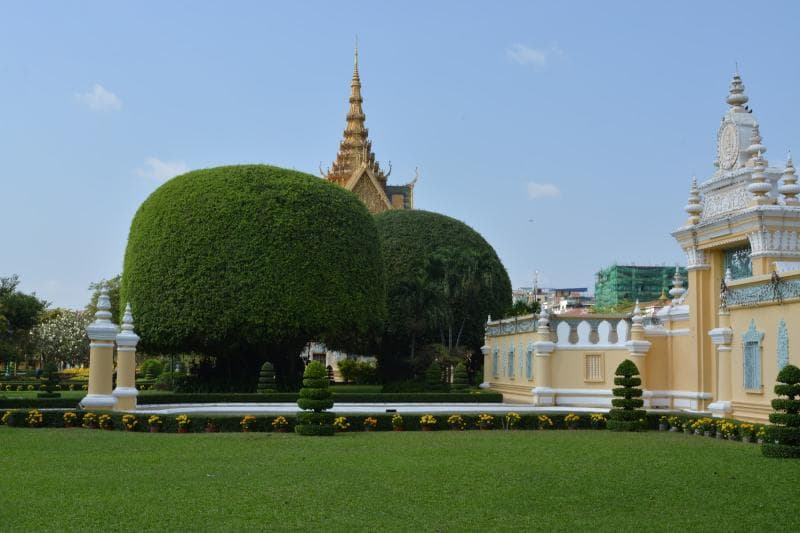
Explore the majestic Throne Hall within the Royal Palace in Phnom Penh, Cambodia. Discover its rich history, Angkorian architecture, and royal ceremonies.
Overview
The Throne Hall, officially known as Preah Tineang Tevea Vinichhay Mohai Moha Prasat, is the majestic heart of the Royal Palace complex in Phnom Penh, Cambodia. This iconic structure serves as the primary audience hall for the Cambodian King, embodying centuries of royal tradition and national identity. It is a focal point for significant state ceremonies, royal weddings, coronations, and diplomatic receptions. Nestled within the larger Royal Palace grounds, the Throne Hall's gilded spires and intricate design stand as a powerful symbol of Cambodia's enduring monarchy and rich cultural heritage.
Visitors to Phnom Penh are often drawn to its grandeur, observing its unique blend of traditional Khmer architecture with subtle historical influences. While the Royal Palace itself is the official residence of the current King, Norodom Sihamoni, the Throne Hall is one of the principal buildings accessible to the public, offering a glimpse into the ceremonial life of the Cambodian monarchy.
History & Cultural Background
The establishment of the Royal Palace in Phnom Penh was a relatively recent event in Khmer history, with King Norodom moving the capital from Oudong to Phnom Penh and beginning construction in 1866. The first Throne Hall on this site was a wooden structure built between 1869 and 1870 under King Norodom's reign. This original hall was later demolished in 1915.
The current Throne Hall, a more permanent and elaborate structure, was constructed between 1917 and 1919 and inaugurated by King Sisowath. Its design marked a revival of classical Khmer architectural styles, heavily inspired by the ancient temples of Angkor, particularly evident in its spire. However, it also subtly incorporated some European elements, reflecting the historical context of the early 20th century. During the tumultuous period of the Khmer Rouge regime, the Royal Palace, including the Throne Hall, endured significant challenges, with many items once displayed here being destroyed. Following the restoration of the monarchy in 1993, many of the palace buildings, including this esteemed hall, underwent restoration and refurbishment.
What Makes It Special
The Throne Hall is particularly special due for its commanding architecture and rich symbolism. It boasts an impressive 59-meter-high central spire, adorned with a four-faced Brahma head, a design reminiscent of the Bayon temple at Angkor. The hall's cruciform layout and rooflines are intricately decorated with gilded finials, elaborate carvings, and vibrant colors. The roof tiles, often seen in orange, sapphire, and green, are not merely decorative but hold symbolic meaning, representing prosperity, nature, and freedom respectively in Khmer culture.
Inside, the grandeur continues with three royal thrones. Two are designed in a traditional Khmer style, used for ceremonial purposes, while the third is a Western-style throne, reflecting Cambodia's historical interactions with foreign powers. Gilded busts of past Cambodian kings and queens, starting from King Ang Doung, line the interior, emphasizing the continuity and lineage of the royal family. The walls and ceilings are often adorned with detailed murals, further enriching the visual and cultural experience.
Stories, Fun Facts & Local Details
The Throne Hall is not just a historical monument; it remains an active and sacred space for the Cambodian monarchy. It is where coronations, such as that of King Sihamoni, and significant royal weddings take place, continuing traditions that stretch back generations. Ambassadors present their credentials to the King here, cementing its role as a key venue for diplomatic engagements.
A fascinating detail is the inclusion of a Western-style throne alongside traditional Khmer ones, illustrating the kingdom's historical openness to external influences while maintaining its unique identity. The elaborate murals within the hall often depict scenes from the Reamker, the Cambodian version of the Indian epic Ramayana, linking royal narratives with ancient myths and moral tales. Furthermore, the Royal Palace complex itself is strategically located at the confluence of the Tonle Sap and Mekong Rivers, known as Chaktomouk, a name symbolizing the divine Brahma and aligning with the four-faced Brahma head on the Throne Hall's spire.
Visitor Perspective
When planning a visit to the Throne Hall, travelers should remember that it is part of an active royal residence. While open to the public, certain areas may be closed, especially during official ceremonies or if the King is in residence. Visitors are required to adhere to a modest dress code: shoulders and knees must be covered, for both men and women. Appropriate attire might include a t-shirt or blouse that reaches the elbows and shorts or a skirt that reaches the knees.
Photography is generally permitted in the palace grounds, but it is strictly prohibited inside the Throne Hall itself, allowing visitors to immerse themselves fully in the present moment and respect the sacred nature of the space. Entering the Throne Hall offers a profound sense of stepping into Cambodian history, offering a rare opportunity to witness the grandeur and spiritual significance of the kingdom's enduring traditions.
Coordinates: 104.9305, 11.56348
View on Google Maps💬 How Travelers Describe This Place
Based on community votes
Photogenic
881Unique
733Beautiful
642Interesting
375Must See
12
Traveler Stories
Discover memorable experiences shared by travelers who have visited this place.
No traveler stories yet.
Be the first traveler to share what made this place memorable.

Tour
By
Spot
Discover amazing places around the world. Your journey starts here.
Explore
© 2026 TourBySpot. All rights reserved.