Royal Palace Of Brussels
Brussels, Belgium
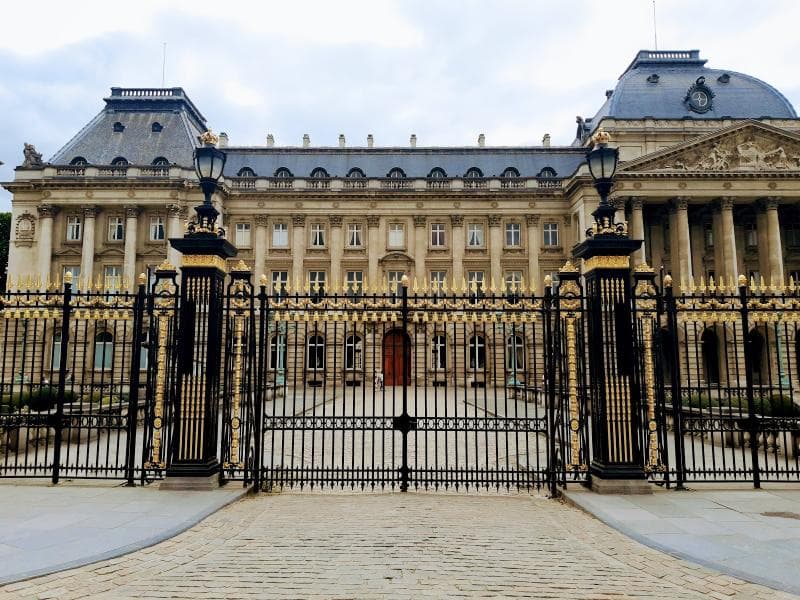
Explore the Royal Palace of Brussels, Belgium: the King's administrative heart, filled with stunning art and history, open to visitors in summer.
Overview
The Royal Palace of Brussels, situated in the heart of Belgium's capital, stands as a grand symbol of the Belgian monarchy. While it is the King's administrative residence and primary workplace, hosting official receptions and state visits, it is not the private home of the Royal Family. The King and Queen reside at the Royal Palace of Laeken, located north of Brussels. This stunning neoclassical building, set opposite the picturesque Brussels Park, opens its doors to the public annually during the summer months, a tradition established in 1965.
Its elegant facade, characterized by pilasters, grand staircases, and iconic flags, makes it one of the most photographed landmarks in the city. The palace is a significant landmark, embodying centuries of history and serving as a vital center for Belgian state affairs.
History & Cultural Background
The Royal Palace's story begins long before its current neoclassical form. It is built on the site of the former Coudenberg Palace, which dated back to the 11th century and belonged to the Dukes of Brabant. This earlier palace suffered several devastating fires, most notably in 1731, which largely destroyed the building. The ruins were eventually cleared, and the area was redeveloped in the late 18th century.
The current palace began to take shape in the early 19th century under King William I of the Netherlands, when two mansions on the site were connected by a gallery and a new neoclassical facade was added. After Belgium gained independence in 1831, the palace became the official working residence of the Belgian monarchy. King Leopold I, the first King of the Belgians, primarily used it for official duties, preferring to live at the Palace of Laeken.
It was King Leopold II, however, who dramatically enlarged and embellished the palace throughout his reign until 1909, nearly doubling its surface area. He commissioned architect Alphonse Balat for many imposing spaces, including the Grand Staircase and Throne Room. The palace's construction and various renovations continued until 1934, shaping it into the architectural masterpiece seen today.
What Makes It Special
The Royal Palace of Brussels is distinguished by its magnificent interiors and the significant artworks it houses. Visitors can marvel at the majestic Grand Staircase, designed by Alphonse Balat, which sets an opulent tone upon entry. Key rooms include the opulent Throne Room, featuring impressive ceiling decorations and, historically, four wall sculptures by Auguste Rodin. The Empire Room, dating from King William I's period, combines classical elegance with historical significance, often featuring a Persian rug gifted by the Shah.
Perhaps the most striking is the Mirror Room, where Belgian artist Jan Fabre created 'Heaven of Delight' in 2002, covering the entire ceiling and a chandelier with nearly 1.5 million iridescent jewel-beetle wing cases, shimmering in green, blue, and gold hues. This installation is a profound piece of modern art within a historical setting. The palace also displays important items from the Royal Collection, including state portraits, furniture, silverware, and fine crystal.
Stories, Fun Facts & Local Details
Despite its grand title, the Royal Palace of Brussels functions purely as the King's office and a venue for official state events, rather than a private home. This unique arrangement allows the public to visit during the royal family's summer vacation. The palace's neoclassical facade is notably expansive, stretching approximately 50 percent longer than that of Buckingham Palace in London.
An intriguing local detail involves hidden underground passages beneath the palace. For many years, these were rumored, but it's known that a military complex designed to protect the royal family and ministers from bombardment was built under the Warande Park in 1939. During the Cold War, these tunnels were even converted into fallout shelters, though they are now disused.
The tradition of opening the palace to the public every summer dates back to 1965, turning a functional governmental building into an accessible cultural landmark each year.
Visitor Perspective
Visiting the Royal Palace offers a unique glimpse into the official life of the Belgian monarchy and the country's rich heritage. The palace typically opens from late July to early September, following Belgium's National Day on July 21st, though exact dates and times can vary annually. For the 2026 season, the palace will be open from July 3rd to August 16th, daily except Mondays.
While entry has traditionally been free, a fee of 10 euros per person (for visitors aged 13 and over) has been introduced for 2026, with children aged 12 and under entering free. Online booking for a specific time slot is now required for all visitors to manage crowd numbers. The visit allows exploration of various magnificent state rooms, adorned with priceless art, antique furniture, and dazzling chandeliers. It's an opportunity to immerse oneself in the atmosphere of solemnity and historical significance. The palace is easily accessible, located opposite Brussels Park, and is a short walk from Grand-Place. It is also well-served by public transport, with nearby metro stations Parc/Park and Trône/Troon.
Coordinates: 4.36222, 50.84167
View on Google Maps💬 How Travelers Describe This Place
Based on community votes
Interesting
799Must See
639Beautiful
526Unique
181Photogenic
30
Traveler Stories
Discover memorable experiences shared by travelers who have visited this place.
No traveler stories yet.
Be the first traveler to share what made this place memorable.
Things to see at Royal Palace Of Brussels



Tour
By
Spot
Discover amazing places around the world. Your journey starts here.
Explore
© 2026 TourBySpot. All rights reserved.