Throne Room
Brussels, Belgium
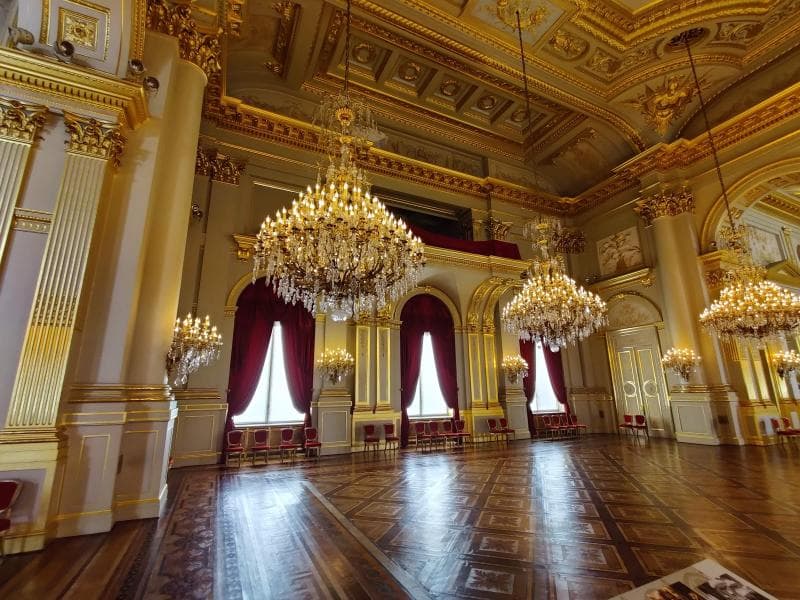
Explore the majestic Throne Room within the Royal Palace of Brussels, Belgium. Discover its rich history, Rodin's art, and royal significance.
Overview
Nestled in the heart of Brussels, Belgium, the Royal Palace of Brussels stands as a symbol of the nation's constitutional monarchy. While serving as the King's administrative residence and primary workplace, parts of this grand edifice open their doors to the public each summer, offering a unique glimpse into Belgium's royal heritage. Among its most magnificent chambers is the Throne Room, a space steeped in history and adorned with remarkable artistic and architectural details.
History & Cultural Background
The Royal Palace of Brussels, as we know it today, is a result of centuries of construction and transformation. Its foundations lie on the ruins of the old Coudenberg Palace, with the current structure evolving through various architectural phases since the 18th century. The Throne Room itself was primarily conceived and built under the ambitious reign of King Leopold II, who sought to significantly enlarge and embellish the palace. During this period, the palace's surface area nearly doubled, with esteemed architect Alphonse Balat playing a pivotal role in designing imposing new spaces, including the Grand Staircase, the Grand Gallery, and the resplendent Throne Room. Historically, a different chamber, the Large Anteroom, served as the Throne Room during the reign of William I of the Netherlands, showcasing the evolution of the palace's functions and spaces over time.
Beyond its architectural grandeur, the Throne Room has been a silent witness to significant moments in Belgian history. It has hosted pivotal state events and ceremonies, including the civil marriage of King Baudouin and Queen Fabiola in December 1960 and the wedding banquet of Prince Philippe and Princess Mathilde in 1999. In a poignant turn during both World Wars, this majestic room temporarily shed its ceremonial guise to serve as a hospital, a testament to its role beyond mere royal pomp and circumstance.
What Makes It Special
The Throne Room's allure lies in its exceptional decorative elements and profound symbolism. Central to its design are four striking low reliefs created by the renowned sculptor Auguste Rodin. These artworks represent the economic activities characteristic of the various Belgian provinces. Uniquely, the province of Brabant is not depicted among them, a subtle nod to the fact that the Royal Palace itself stands on Brabant soil, implying its implicit presence.
Further enhancing its grandeur, above the doors of the Throne Room are two significant figures sculpted by Thomas Vinçotte. These figures embody the major Belgian rivers: the Scheldt, represented as a male figure, and the Meuse, depicted as a female figure. Together, they powerfully symbolize the regions of Flanders and Wallonia, respectively, uniting the country's diverse geographical and cultural landscapes within this single space. The room's monumental and prestigious ambiance is further accentuated by its exquisite oak and exotic wood parquet flooring, complemented by magnificent bronze and gilded chandeliers that cast a warm glow upon the intricate details. Today, the Throne Room continues to be a vibrant space for important state functions, hosting New Year receptions for government officials and annual Spring and Christmas concerts, maintaining its role as a key venue for national gatherings.
Stories, Fun Facts & Local Details
Imagine the whispers of history echoing through this grand hall. The decision to omit Brabant from Rodin's provincial reliefs is a charming detail, playfully acknowledging the palace's direct location and integrating it into the artistic narrative. The transformation of such a regal space into a wartime hospital provides a fascinating human element, reminding visitors of the palace's adaptability and service beyond its monarchical duties. Furthermore, the Throne Room has been the backdrop for truly intimate, yet nationally significant, family moments for the Belgian Royal House, including the civil unions and celebrations of its prominent members. The overall neoclassical architectural style of the palace, featuring simple geometries and symmetry, contrasts with the opulent interiors of rooms like the Throne Room, creating a unique visual experience that speaks to different eras of design and purpose.
Visitor Perspective
For curious travelers, visiting the Throne Room is an immersive journey into Belgian heritage. The Royal Palace of Brussels, including this iconic room, typically opens its doors to the public annually during the summer months, usually from early July until mid-August. For 2026, the specific dates are from July 3 to August 16. To ensure a smooth experience and manage visitor flow, booking your visit in advance online is mandatory, with specific time slots allocated. As of 2026, there is an admission fee of 10 euros for visitors aged 13 and over, while children aged 12 and under can enter for free, though their tickets must also be booked online. While guided tours are not typically offered, visitors are encouraged to explore at their own pace, soaking in the architectural splendor and rich history. Photography is generally permitted, allowing you to capture memories of this majestic space, though the use of tripods and lengthy photoshoots are restricted to ensure a pleasant experience for all. A visit to the Throne Room offers a rare opportunity to step into the heart of Belgian royalty, witnessing firsthand the elegance and history that define this remarkable nation.
Coordinates: 4.36222, 50.84167
View on Google Maps💬 How Travelers Describe This Place
Based on community votes
Unique
804Interesting
733Beautiful
563Photogenic
404Must See
63
Traveler Stories
Discover memorable experiences shared by travelers who have visited this place.
No traveler stories yet.
Be the first traveler to share what made this place memorable.

Tour
By
Spot
Discover amazing places around the world. Your journey starts here.
Explore
© 2026 TourBySpot. All rights reserved.