State Rooms
Brussels, Belgium
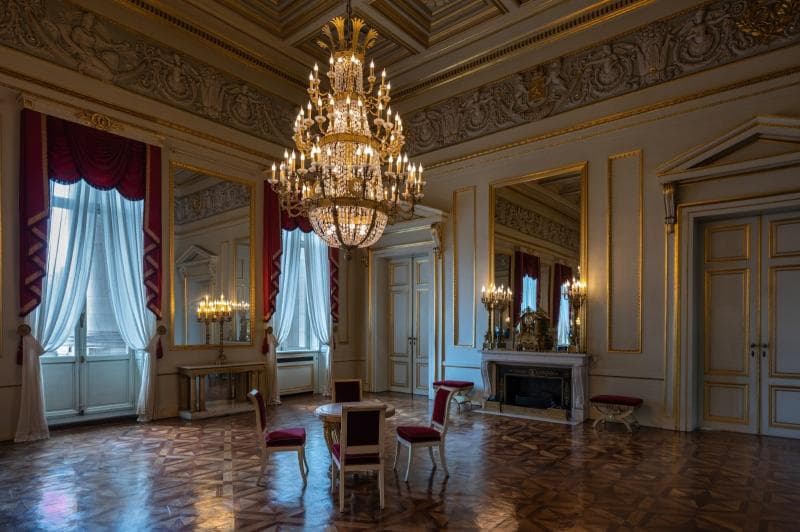
Explore the opulent State Rooms of the Royal Palace of Brussels, Belgium. Discover rich history, art, and the ceremonial heart of the Belgian monarchy.
Overview
Nestled in the heart of Brussels, Belgium, the State Rooms of the Royal Palace of Brussels offer a rare glimpse into the grandeur and operational heart of the Belgian constitutional monarchy. While not the private residence of the King and Queen – who reside at the Palace of Laeken – this neoclassical edifice serves as their official administrative workplace and a prestigious venue for state receptions, audiences, and ceremonial functions. Each summer, typically from late July until early September, the palace opens its doors to the public, transforming from a private royal domain into a captivating historical and artistic exhibition accessible to all curious travelers.
History & Cultural Background
The Royal Palace stands on grounds steeped in centuries of history, overlying the remnants of the ancient Coudenberg Palace, a significant princely court dating back to the Middle Ages. The present structure evolved from a collection of 18th-century mansions, which were gradually unified and transformed. A major architectural overhaul took place under the ambitious reign of King Leopold II, between 1904 and 1912, giving the palace its imposing, unified neoclassical facade that visitors admire today. Following Belgium's independence in 1831, the palace formally became the working residence of the Belgian monarchy, solidifying its role as a symbol of national governance and heritage. The various periods of construction and renovation have left distinct architectural and decorative layers, offering a journey through different eras of Belgian royal history.
What Makes It Special
The State Rooms are a lavish ensemble, each boasting unique architectural and artistic treasures. Upon entry, the magnificent Grand Staircase, designed by Alphonse Balat for King Leopold II, immediately impresses with its grand proportions, pristine white marble, and gilded accents. The opulent Throne Room, also constructed under Leopold II, features remarkable low reliefs by Auguste Rodin, symbolizing the economic activities of the Belgian provinces, alongside intricate carvings by Thomas Vinçotte. Its impressive appearance is further enhanced by oak and exotic wood parquet, complemented by bronze and gilded chandeliers.
Perhaps the most talked-about space is the extraordinary Mirror Room (Salle des Glaces). Originally intended to evoke the Congo, this room underwent a stunning transformation in 2002 with Belgian artist Jan Fabre's installation, 'Heaven of Delight'. The ceiling and one of its chandeliers are now entirely covered with approximately 1.4 million iridescent jewel beetle wing cases, creating a shimmering, otherworldly green mosaic. Another highlight is the Empire Room, one of the palace's oldest sections, which has preserved its original 18th-century decorations and houses exquisite Empire-style furniture that was a wedding gift to Queen Louise-Marie. The Goya Room captivates with valuable tapestries woven after the famous drawings of Francisco de Goya, including 'The Dance' and 'Blind Man's Buff', a gift to King Leopold I from Queen Isabella II of Spain. The Marble Room, formerly King Leopold II's dining room, is striking with its abundant use of green marble and portraits of historical figures like Godfrey of Bouillon and Charles V, linking the palace to the foundational narratives of the Belgian state.
Stories, Fun Facts & Local Details
A fascinating detail is that the Royal Palace of Brussels, though grand and ceremonial, is not where the Belgian royal family actually lives; they reside at the Royal Palace of Laeken, located north of the city. The palace's imposing façade is reportedly 50% longer than that of London's Buckingham Palace, asserting its own unique scale and majesty. Beneath the palace and the nearby Place Royale lie the monumental, vaulted cellars of the original Coudenberg Palace, providing a tangible link to medieval Brussels and offering a separate archaeological site for exploration. The contemporary art installation in the Mirror Room, 'Heaven of Delight', featuring millions of beetle wing cases, is a striking example of modern art integrated into a historical setting, sparking conversation about heritage and creativity.
Visitor Perspective
For those planning a visit, the Royal Palace opens its State Rooms to the public each summer, typically from July 21st (Belgium's National Day) until early September. This provides a limited but invaluable window to experience the official life and splendor of the Belgian monarchy. As of 2026, an admission fee of 10 euros will be charged for visitors aged 13 and over, a change from previous years when entry was free. Importantly, booking tickets online in advance will be mandatory, and visitors must adhere to specific time slots to manage crowd flow. While no guided tours are offered, visitors are free to explore the magnificent rooms at their own pace, absorbing the rich history and artistic details. Photography is generally permitted, though the use of tripods or extensive photo sessions is not allowed, encouraging visitors to enjoy the experience rather than solely documenting it. Exploring these rooms offers a unique insight into Belgium's royal heritage and artistic legacy.
Coordinates: 4.36222, 50.84167
View on Google Maps💬 How Travelers Describe This Place
Based on community votes
Photogenic
989Must See
791Interesting
613Beautiful
514Unique
207
Traveler Stories
Discover memorable experiences shared by travelers who have visited this place.
No traveler stories yet.
Be the first traveler to share what made this place memorable.

Tour
By
Spot
Discover amazing places around the world. Your journey starts here.
Explore
© 2026 TourBySpot. All rights reserved.