Palace Façade
Brussels, Belgium
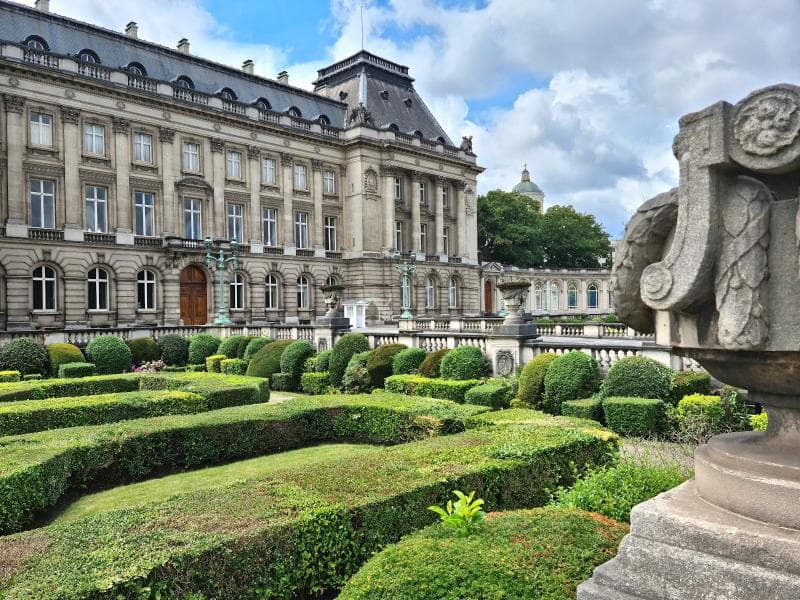
Explore the magnificent neoclassical Palace Façade of the Royal Palace of Brussels, Belgium. Discover its rich history and architectural splendor.
Overview
The Palace Façade of the Royal Palace of Brussels, nestled in the vibrant capital of Belgium, stands as a grand testament to the nation's history and enduring monarchy. This magnificent neoclassical frontage, directly opposite Brussels Park, is more than just a wall of stone; it is the official workplace of the Belgian monarch and a potent symbol of the country's constitutional system. While the King and Queen reside elsewhere, this imposing façade marks the heart of their administrative and ceremonial duties, hosting state visits, official meetings, and significant national events.
Its stately presence, characterized by classical elements, symmetry, and impressive scale, immediately draws the eye, offering a silent narrative of power, tradition, and artistry. For any traveler exploring Brussels, witnessing this iconic façade is to glimpse into the very essence of Belgian national identity.
History & Cultural Background
The story of the Royal Palace's façade is one of continuous evolution, built upon centuries of history. The site itself holds deep roots, once home to the medieval Coudenberg Palace, a significant princely court that tragically succumbed to fire in 1731. The current structure began to take shape in the late 18th century, incorporating two existing aristocratic mansions.
A pivotal moment in its architectural journey occurred under King William I of the Netherlands, who commissioned architect Tilman-François Suys to connect these mansions with a neoclassical façade and a central peristyle in the early 19th century. However, the façade we admire today is largely the vision of King Leopold II. Deeming the existing structure too modest, he initiated a significant expansion and redesign project in the late 19th and early 20th centuries. His architect, Alphonse Balat, designed many of the opulent interior spaces and planned a new façade, though he passed away before its execution.
It was Henri Maquet who, after 1904, brought Leopold II's ambition to fruition, executing the true neoclassical façade we see today. This transformation profoundly altered the palace's external appearance, nearly doubling its surface area and giving it the commanding presence it holds over the Place des Palais.
What Makes It Special
The Palace Façade distinguishes itself through its exemplary neoclassical architecture. Visitors will notice its strict symmetry, a long peristyle, and towering Corinthian columns, all hallmarks of the style that evokes dignity and authority. At its heart, the pediment features a significant sculpture by Thomas Vinçotte, allegorically representing Belgium flanked by figures symbolizing Industry and Agriculture, a powerful reflection of national pride and values at the time of its creation.
Beyond its aesthetic appeal, the sheer scale of the façade is remarkable. It is famously noted to be fifty percent longer than the façade of Buckingham Palace in London, making it an imposing and impressive landmark in its own right. Furthermore, its strategic placement, directly facing the Palace of the Nation (Belgium's Federal Parliament building) across Brussels Park, symbolizes the delicate balance of power in Belgium's constitutional monarchy. The two buildings, connected by the park's central axis, visually represent the interaction between the monarchy and the parliament.
Stories, Fun Facts & Local Details
Despite its designation as the Royal Palace, the Belgian King and Queen do not reside here. Their private home is the Royal Castle of Laeken, on the outskirts of Brussels. The Royal Palace, and by extension its façade, serves purely as their official workplace and a venue for state functions, a tradition established by Leopold I.
A fascinating detail for the curious is the historical layering beneath the palace. The current structure stands on the foundations of the much older Coudenberg Palace. The monumental vaulted cellars of this medieval palace still exist and can be visited as an archaeological site beneath the modern street level, offering a unique glimpse into Brussels' distant past.
Each summer, a cherished local tradition allows the public to step beyond the impressive façade and explore parts of the palace's opulent interiors. From Belgium's National Day on July 21st until early September, the palace opens its doors, offering a rare opportunity to experience its grandeur firsthand, free of charge.
Visitor Perspective
Approaching the Palace Façade from Brussels Park, a traveler is immediately struck by its commanding presence. The long, elegant lines of the neoclassical design, punctuated by grand windows and the central sculptural pediment, convey a sense of gravitas and historical significance. It's easy to imagine dignitaries arriving and important events unfolding behind these walls. The Belgian flag, often flying above the central pavilion, signals when the monarch is in the country, adding a dynamic element to the static architecture.
The sheer length of the façade, stretching along the Place des Palais, invites a leisurely stroll, allowing one to appreciate the intricate details of its stone and the harmonious proportions. The palace's position, overlooking the serene expanse of Brussels Park, creates a beautiful juxtaposition between the natural tranquility of the green space and the majestic, man-made grandeur of the royal edifice. It is a place that invites contemplation, offering a tangible connection to Belgium's rich monarchical heritage and political landscape.
Coordinates: 4.36222, 50.84167
View on Google Maps💬 How Travelers Describe This Place
Based on community votes
Photogenic
995Beautiful
989Must See
613Interesting
603Unique
581
Traveler Stories
Discover memorable experiences shared by travelers who have visited this place.
No traveler stories yet.
Be the first traveler to share what made this place memorable.

Tour
By
Spot
Discover amazing places around the world. Your journey starts here.
Explore
© 2026 TourBySpot. All rights reserved.